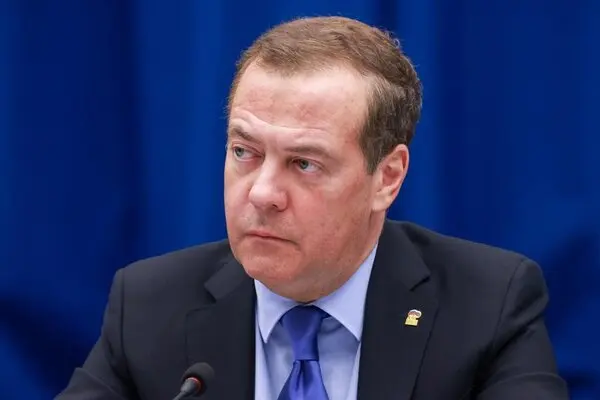
In an article titled “State Sovereignty and Nuclear Weapons: International Legal Aspects of Ensuring National Security” for the Moscow Journal of International Law, Dmitry Medvedev argued that appeals to the nuclear non-proliferation regime are frequently invoked for political purposes, disregarding the reality on the ground.
Medvedev pointed out that Washington attacked Iran under the pretext of defending the non-proliferation regime, despite Tehran’s clear commitment to its obligations.
“Through its complete openness to negotiations and inspections in the field of peaceful nuclear energy, Tehran has demonstrated, not in words but in deeds, that it has no desire to possess nuclear weapons. And even in the face of direct threats of nuclear bombardment and aggression, including against civilian nuclear facilities, the Iranians have not yet renounced their status as a non-nuclear state under the NPT,” he stated.
The Russian official emphasized that Washington’s actions “demonstrate the double standards of American non-proliferation policy and are driven exclusively by geopolitical considerations: restrictions are imposed on unfriendly states.”
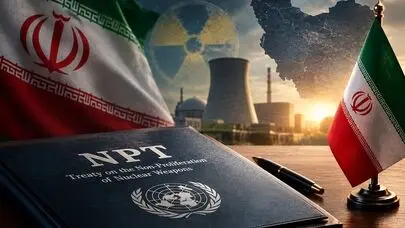
Elsewhere in the article, the Russian official pointed to the NPT and stated that the text of the Treaty on the Non-Proliferation is self-sufficient. However, the document’s status undermines its enforcement, which depends on the degree of loyalty of one of the great powers: “The universality of the NPT is gradually being eroded, not by any flaws in the treaty's text, but by the uneven nature of its political application.”
“When the scope of permissible nuclear activities effectively depends on whether a state is an adversary or an ally of a major power or a military bloc, the non-proliferation regime loses some of its normative persuasiveness. Formally, the law remains uniform, but political practice makes its application selective.”
Withdrawal from the NPT automatically frees countries of their non-proliferation obligations: “A state’s withdrawal from the NPT removes its responsibility under international law for developing nuclear weapons,” Medvedev added.