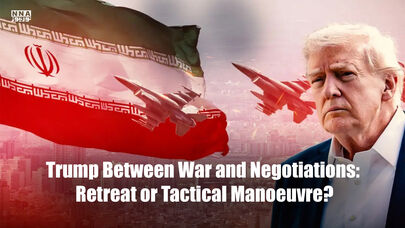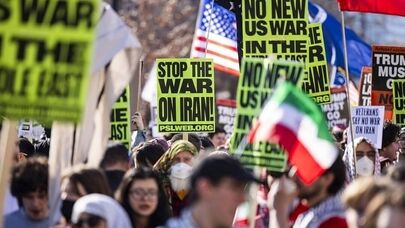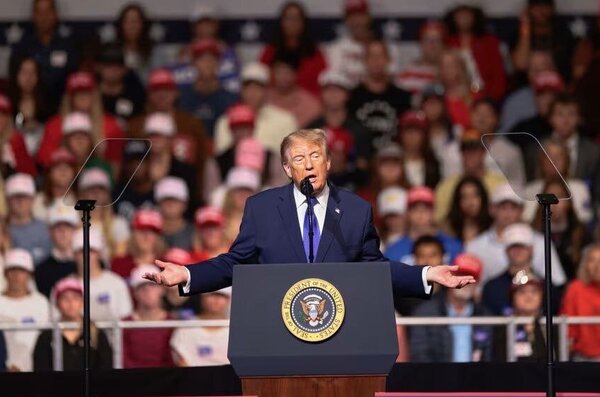
Nournews: On the eve of the U.S. congressional midterm elections, Trump is facing a sharp decline in his popularity and a weakening Republican position. Yet at several campaign rallies, he has claimed that Iran started the war, saying: “We didn’t start this war; they—the Islamic Republic of Iran—started it, not us. We are ending it.”
Trump had previously claimed during a campaign speech in Corpus Christi, Texas, that the Islamic Republic of Iran began its war with the United States in 1979.
These claims come despite the fact that a closer examination of history not only exposes the falsity of this narrative, but also sheds light on why Trump is attempting to conceal historical realities and whitewash U.S. crimes—an effort rooted in Iran’s strength and Washington’s failures against the Iranian nation.
The War Against Iran: A Reality That Did Not Begin Four Decades Ago
Trump portrays 1979 as the beginning of Iran’s war against the United States, yet history shows that Americans had launched their campaign against the Iranian nation’s independence and will years earlier.
The first signs of such intervention can be traced back to World War II and the Allied occupation of Iran—an episode symbolized by the famous photograph of Roosevelt, Churchill and Stalin together in Tehran. In 1953, the United States, alongside Britain, organized and carried out the August 19 coup against Iran’s democracy and its people’s aspirations for independence.
On December 7, 1953, during Nixon’s visit to Iran, students at the University of Tehran’s Faculty of Engineering were killed while protesting U.S. interference in the country’s affairs—an event that later became a symbol of resistance to imperialism and authoritarianism.
Even before the victory of the Islamic Revolution, the United States had effectively positioned itself against the Iranian people by helping shape and direct Iran’s security and intelligence apparatus and by imposing the capitulation law.
Therefore, reducing the history of confrontation between Iran and the United States to 1979 is a clear distortion—an attempt to erase at least four decades of U.S. intervention and crimes against Iran.
The Islamic Revolution: Breaking the Monopoly of Global Powers
Trump’s attempt to redefine 1979 cannot change historical realities.
Through the Islamic Revolution, the Iranian people opened a new chapter in the international order by refusing dependence on global powers—whether the United States or the former Soviet Union—and embracing the slogans “Neither East nor West, the Islamic Republic” and “Independence, Freedom, the Islamic Republic.”
It presented a model of independence, demonstrating that nations could determine their own destiny without dependence on major powers.
The takeover of the U.S. Embassy—described by Iran as the “Den of Espionage”—on November 4, 1979, must also be understood within this framework. Iranians took this action at a time when, in their view, no other nation dared to challenge the U.S. Embassy in such a manner.
The move shattered the aura of American power and gave other nations the courage and determination to confront what they regarded as centers of espionage, burn U.S. flags and even demand the expulsion of American forces from their countries.
This historical reality—the breaking of the aura surrounding a power that considered itself invincible—cannot be denied through political storytelling or by portraying 1979 as the starting point of Iran’s war against the United States.
The Record of U.S. Crimes: A Reality Beyond Trump’s Narrative
Trump’s claim that Iran started the war cannot serve as a cover for whitewashing decades of crimes against the Iranian people.
The record includes the arming of Saddam Hussein with chemical weapons and weapons of mass destruction during the eight-year Iran-Iraq War; the downing of an Iranian civilian airliner by the USS Vincennes and the awarding of a medal to its commander; the assassination of Iranian nuclear scientists; and support for terrorist groups involved in assassinations and acts of sabotage.
It also includes what Iran describes as economic terrorism resulting from sanctions—measures that Alena Douhan, the UN Special Rapporteur on the negative impact of unilateral coercive measures, has characterized as potentially amounting to crimes against humanity.
Sanctions affecting access to medicine and the deaths of patients, the imposed 12-day and 40-day wars, and crimes including the killing of the Leader of the Islamic Revolution, schoolchildren in Minab and thousands of other citizens are cited as further parts of this record. Official declarations of attempts to erase Iran from the map, Iranophobia and threats against the lives of Iranians abroad are also seen as extensions of the same policy.
These crimes, the article argues, stand as evidence of the suffering inflicted on the Iranian people and the criminal nature of U.S. policies—a record that should lead to accountability and prosecution of those responsible for crimes against humanity.
Trump cannot conceal this reality simply by reversing the roles of aggressor and victim.
The Battlefield Determines the Outcome of War, Not Trump’s Narrative
By rewriting history, Trump is attempting to portray himself as a victorious superpower and a leader capable of ending wars—a superhero bringing conflict to a close.
Yet the experience of the 12-day and 40-day wars, along with the consequences of Iran’s military strength, has exposed what the article describes as the hollowness of this self-created image.
The effects of these developments are now becoming visible in the U.S. midterm elections and in America’s declining global standing. The state of U.S. military capabilities and the economic and political consequences of the war—at a time when even Americans are speaking of a major setback in the face of Iran’s strength—have confronted Trump with a bitter reality: not only has no meaningful achievement been secured, but failure against the Iranian nation has become a political embarrassment for him.
Trump continues to speak of new adventures, while Iranian political and military officials emphasize that any future response would be more forceful and broader in scope, without geographical limitations.
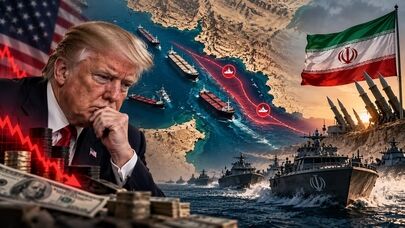
Today, Iran, through what it describes as the unity of its various fronts, is shaping the equation of confrontation and will determine the fate of any future war. Iran’s control over the Strait of Hormuz is also presented as a strategic reality whose consequences Trump cannot escape—a reality that is imposing ever heavier costs on Washington and on those who seek Iran’s destruction.
Ultimately, what Trump is attempting to conceal through his rewriting of history is not merely the truth about how the war began. It is the long record of U.S. intervention and aggression, the failure of Washington’s project to dominate Iran, and America’s inability to impose its will on an independent nation.