Nournews: In a blunt assessment of the U.S. war against Iran, Dr. Sarah Paine, a leading historian of warfare and great-power strategy, described the conflict as one of the most ineffective wars in human history. She said Washington’s decision to launch the war ignored the most basic principles of strategic assessment and, rather than imposing costs on its adversary, inflicted the greatest damage on the United States and its allies.
A War Whose Costs Have Come Back to Haunt the U.S. and Its Allies
Paine stressed that an effective war should impose costs on the enemy while minimizing damage to one’s own side, but said the war against Iran has produced precisely the opposite outcome.
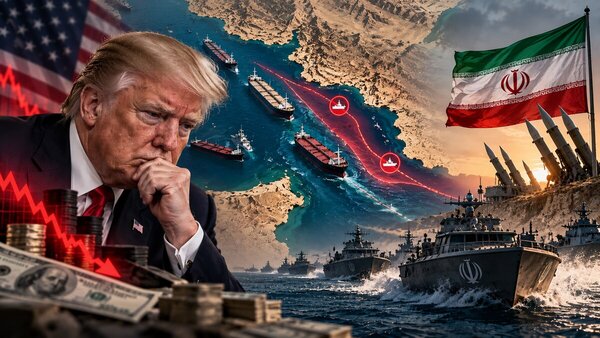
According to her, the conflict has placed severe pressure on the U.S. economy, destabilized Washington’s alliance structure and, by triggering far-reaching economic consequences, put the global economy at risk as well.
The American historian warned that if the situation continues, the United States could be transformed from a reliable partner into a disruptive force—and even an enemy—in the eyes of many countries, which now see their economies and national interests threatened by Washington’s decisions.
Describing the scale of the failure, she said: “This level of incompetence is truly astonishing.”
Ignoring the Strait of Hormuz: Washington’s Strategic Blind Spot
Paine identified one of the most fundamental mistakes made by U.S. decision-makers as their failure to conduct a comprehensive assessment of Iran’s capabilities and the possible consequences of other actors entering the war.
In her view, any realistic military assessment must examine the enemy’s strengths, one’s own weaknesses, and the capabilities of all actors that could potentially enter the conflict. But, she said, such a calculation essentially did not exist before the war began.
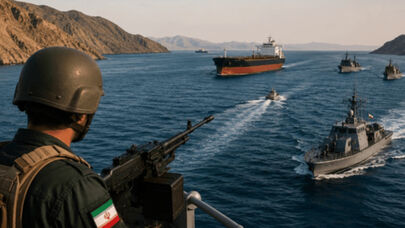
Referring to Iran’s geographical position, Paine stressed that one of Tehran’s most predictable moves would have been to close the Strait of Hormuz, a strategic waterway where maritime traffic could be brought to a halt during wartime.
To illustrate the point, Paine referred to Ukraine’s experience in the Black Sea, saying that coastal artillery, naval mines and other military tools can disrupt or halt maritime traffic—something she argued was neither complicated nor difficult to foresee.
She also pointed to the large U.S. naval base in Bahrain, saying its accessibility would be severely constrained under such circumstances. As an alternative, she mentioned Diego Garcia, a remote base located some 2,500 miles from the region.
Paine stressed that such conditions could have turned into a full-scale disaster for the U.S. military.
Political Arrogance and a Lack of Strategic Competence
The war historian attributed another part of America’s failure to the lack of historical knowledge and professional expertise among those responsible for making major strategic decisions.
She identified two forms of arrogance that contributed to the situation.
The first, she said, is the assumption that all major developments and decisive decisions in the world are shaped solely within the United States, while other actors play no determining role.
The second is the belief that possessing ability and achieving success in one field automatically means having expertise and competence in every other field.
To explain these two miscalculations, Paine compared the United States to a tennis player who sees only half the court and, instead of studying the opponent and understanding how they play, focuses solely on his own performance.
In this context, she stressed that Iranians have a far deeper understanding of Americans than Americans have of Iran and its capabilities.
An Impossible Objective: Trying to Solve the Problem of a Nation of 90 Million
Paine argued that any attempt to “solve” the Iran problem was unrealistic from the outset, given the country’s population of around 90 million.
For comparison, she referred to Nazi Germany, which had a population of roughly 80 million, noting that even after World War II, maintaining control over the country required an occupying force of around 1.5 million personnel, excluding other forces.
From the historian’s perspective, pursuing an objective that is fundamentally unattainable leads to excessive depletion of resources and military power and ultimately produces an unfavorable outcome.
The Dangerous Message of the Iran War: Encouraging the World to Acquire Nuclear Weapons
One of Paine’s most important warnings concerns the international consequences of the war and its impact on the security calculations of other countries.
She believes the lesson many countries could draw from the conflict is deeply dangerous: if you want to protect yourself from military threats posed by great powers, acquire nuclear weapons.
In this way, the U.S. war against Iran has not only failed to solve the problem it was meant to address, but has effectively increased incentives for nuclear proliferation worldwide.
Paine described this development as a potentially decisive strategic mistake, stressing that the opportunities and options that existed to manage the crisis before the war began have now been lost and cannot be recovered.
Speaking about the future of America’s international standing, she said: “We will never again be a trusted partner. It’s over.”
Strategic Damage Beyond the Battlefield
In Paine’s final assessment, the consequences of the Iran war cannot be measured solely by military losses or the outcome of battlefield operations. The conflict has imposed heavy economic costs on the United States and the global economy, weakened allies’ trust in Washington and given U.S. rivals further reason to view the country as a threat to their own prosperity and economic well-being.
She argues that an approach based on competence, a realistic understanding of conditions on the ground and strategic rationality could have contained the crisis at a manageable cost. Instead, political arrogance and overconfidence pushed U.S. decision-makers in precisely the opposite direction.
From this perspective, the war against Iran stands as an example of the long-term strategic damage that even a global power can inflict upon itself when it ignores political, military and economic realities.