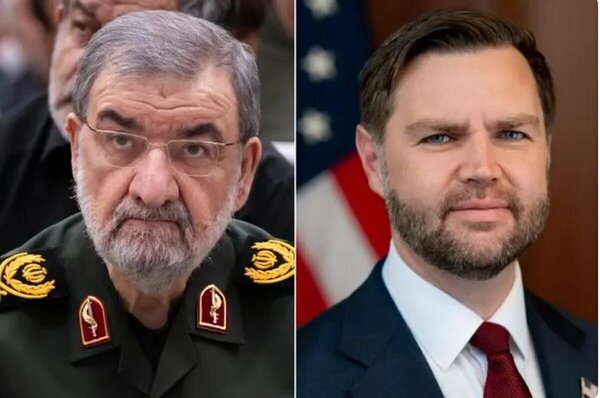
US President Donald Trump’s remarks in response to reporters, in which he confirmed that US Vice President JD Vance had sent a letter to Mohsen Rezaei, secretary of Iran’s Supreme National Security Council, have raised more questions about Washington’s objectives than they have resolved. The Wall Street Journal reported on Wednesday, October 28, that Vance, acting at Trump’s direction, had sent a letter to Rezaei to explore the possibility of resuming peace negotiations and preventing a new military attack on Iran. Trump confirmed that the correspondence had taken place but claimed that the letter concerned the provision of medical equipment and supplies needed by patients.
This explanation faces serious questions under the current circumstances. Why would the US vice president correspond directly with Iran’s secretary of the Supreme National Security Council about medical supplies amid military threats and a security confrontation with Iran? If the sole objective was to facilitate humanitarian assistance, why was direct communication at this level of the two countries’ political and security establishments necessary?
The discrepancy between the level of the correspondence and its purported subject is the most significant weakness in Trump’s account. The US president’s explanation not only differs from The Wall Street Journal’s report that the letter was intended to explore negotiations, but also reinforces the suspicion that Trump is trying to conceal the US need for negotiations behind a subject that is difficult to believe by offering a misleading account. Moreover, if shortages of medical equipment exist, they are the result of sanctions and restrictions imposed under the US pressure campaign, deliberately designed to increase social pressure. The US could lift these restrictions without the need for any correspondence.
On this basis, it is reasonable to hypothesize that Trump’s reference to humanitarian issues was a public narrative intended to downplay the political significance of sensitive correspondence. According to The Wall Street Journal, the letter was intended to explore the possibility of reviving negotiations.
Regional Diplomacy: A Complementary Link in Vance’s Message
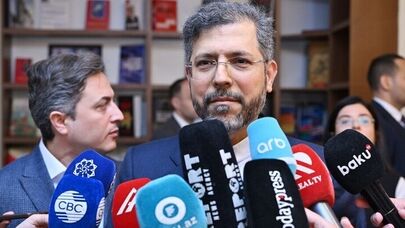
The timing of this correspondence alongside visits to Tehran by senior officials from Türkiye, Pakistan and Saudi Arabia is particularly significant. The presence of security and military representatives from these three countries in Iran, at a time when Washington is speaking of possible renewed attacks, points to serious regional concern about a return to war and its consequences. These activities cannot be dismissed as merely a series of ceremonial meetings, as an escalation of the conflict would directly affect energy security, the Strait of Hormuz, regional trade and the political stability of neighboring countries.
The three countries whose defense and security representatives visited Iran are considered US allies and maintain close political and military ties with Washington. Their visits, therefore, were certainly coordinated with the US, which could provide further evidence of Washington’s efforts to reopen a path to negotiations. At the same time, these countries’ shared interests in preventing the war from spreading, as well as Washington’s important role in the region’s security equations, are undoubtedly contributing factors in diplomatic efforts to manage the crisis.
More importantly, the simultaneous presence of these countries in Tehran amid US military threats demonstrates that the notion that military and economic pressure has shifted the balance in Washington’s favor, leaving Iran in a position where it must accept US political and security demands, is entirely mistaken. From this perspective, recent diplomatic activity could indicate a significant increase in Iran’s role and influence in arrangements aimed at ending the crisis and establishing regional stability.
Netanyahu and Trump: Pressure on Two Electoral Fronts
These developments are unfolding as Benjamin Netanyahu, Trump’s main ally in the confrontation with Iran, also faces political constraints. Preliminary results from Israel’s October 28 election showed that Netanyahu’s bloc, despite winning around 53 seats, had fallen short of the 61 seats required for a parliamentary majority and the formation of a government. His opposition bloc won around 48 seats, while Arab parties secured a total of 19 seats. The results point to an impasse in government formation and continued uncertainty over Israel’s political landscape.
In the US, meanwhile, the November 3 midterm elections have become a major factor in Trump’s decision-making. Published polls, including Reuters reports, indicate that Republicans face a difficult position in the races for the House of Representatives and the Senate, although the final outcome remains uncertain. At the same time, the costs of war, rising energy prices and pressure on household finances have intensified criticism of the White House’s foreign policy. For Trump, continuing a confrontation whose economic costs are rising without producing a clear political or security outcome has effectively become an electoral liability.
Under these circumstances, Netanyahu faces domestic political constraints, while Trump is under electoral and economic pressure. This situation demonstrates that a decision to enter a new phase of military action cannot easily be taken without regard for its domestic consequences and political costs. Trump is therefore seeking to manage existing political and economic challenges by opening a path to negotiations and securing a political victory at a lower cost.
Negotiations Under the Shadow of Threats: A Shift in Washington’s Calculations?
Taken together, these developments suggest that Trump, facing a strategic challenge, is testing the possibility of negotiations to break the deadlock in the confrontation with Iran while maintaining the military threat. Continuing this deadlock could impose mounting military, economic and political costs on the Trump administration. Vance’s letter to Mohsen Rezaei, Trump’s differing account of its contents, the diplomatic activity involving Türkiye, Pakistan and Saudi Arabia, and electoral pressures in the US and Israel collectively paint a picture of a possible Washington effort to find a less costly way to manage the crisis.
In this context, Trump’s explanation that the letter concerned the provision of medical equipment should be viewed as a deceptive attempt to downplay the political significance of correspondence that available indications suggest was intended to explore negotiations. Direct communication between the US vice president and Iran’s secretary of the Supreme National Security Council, particularly amid threats of another attack, does not fit neatly with Trump’s purely humanitarian account. This is especially true given that The Wall Street Journal had previously identified the letter’s purpose as exploring the possibility of resuming negotiations and preventing a new attack. Under these circumstances, it is plausible that the White House is emphasizing a less contentious subject in an effort to manage the political consequences of its attempt to return to the negotiating table becoming public. Amid mutual threats, such an effort by Washington would be interpreted as a sign of retreat.
The visits to Tehran by senior officials from three regional countries can also be viewed as a complementary part of these developments. The security and political standing of these countries, together with their shared concern about the spread of war, makes regional consultations all the more important. These developments also show that, contrary to the assumptions of advocates of maximum pressure, Iran continues to play a decisive role in regional security calculations, and any plan to end the crisis must take Tehran’s position and political will into account.
Meanwhile, Netanyahu is struggling to form a government following Israel’s election, while Trump faces the prospect of Republicans losing their majorities in the House of Representatives and the economic pressure arising from the confrontation with Iran ahead of the US midterm elections. This situation increases Washington’s incentive to secure a political outcome at a lower cost, one that could be presented as an achievement for the Trump administration without entering a prolonged and costly war.
The central hypothesis, therefore, is that Vance’s letter should be regarded as a serious indication of a possible Washington effort to reopen negotiations while retaining the threat of military action, rather than merely as correspondence about medical assistance. However, the seriousness of this effort must be judged by the substance of any US proposals, changes in Washington’s actions on the ground, and its willingness to accept Iran’s demands.