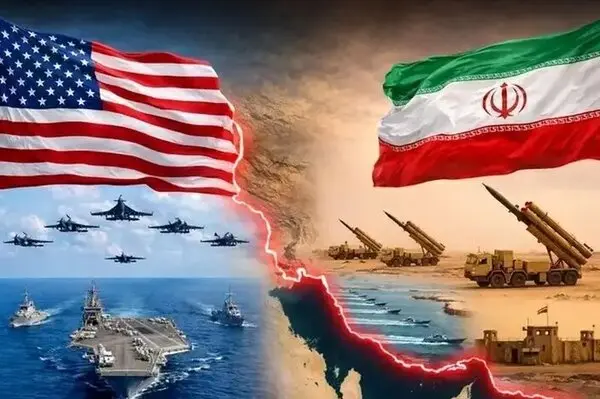
The US-Iran war has entered a new phase of military confrontation, economic pressure and political maneuvering over the past 12 hours. Developments range from direct threats by Trump and flights by US aerial refueling aircraft to growing concerns among Washington’s allies and diplomatic efforts to prevent a renewed outbreak of hostilities.
Pentagon Withholds Information on War Damage in Iran from Congress
The Atlantic reported that the Pentagon, citing operational security concerns, has restricted congressional representatives’ access to classified information, military bases, and details of the damage and costs resulting from the war against Iran. The move has made it more difficult for lawmakers to oversee the administration’s military operations.
Trump: If Talks Fail, We Will Resume the War and Sink Iranian Oil Tankers
Donald Trump, claiming that indirect negotiations with Iran are continuing, threatened to resume major military operations against the country after the New Year if no agreement is reached.
He also claimed that Iran had broken records for missile and drone launches, that Tehran’s leaders viewed Democrats as weak, and that Iran and the Democrats were responsible for rising oil prices.
Trump further threatened to sink Iranian oil tankers if they attempted to breach the US naval blockade, while blaming Democrats for a $6 trillion decline in US financial markets.
Six US Aerial Refueling Aircraft Spotted Over the Strait of Hormuz
Reports indicate that six US Air Force aerial refueling aircraft were operating simultaneously in the Strait of Hormuz region. These aircraft can extend the flight time of US fighter jets and enable them to sustain military missions for longer periods.
Iranian Oil Tanker Turns Back Amid US Naval Blockade
The Iranian tanker Tania Star, carrying liquefied gas, changed course and turned back after encountering the US naval blockade in the Strait of Hormuz. The vessel is reportedly the second Iranian ship to have attempted to pass through the blockade.
Media Reports Claim Attempted Breach of Blockade Was a Deception Operation
Some media outlets have claimed that Iranian oil tankers’ attempts to pass through the US naval blockade were part of a deception operation aimed at exposing the enemy’s military deployment and operational capabilities, adding that the main operation would take place at a later stage.
Washington Issues Security Alert for US Citizens in Bahrain
The US Embassy in Bahrain, citing potential threats of attacks by Iran and Yemen against US officials and government facilities, urged American citizens to exercise increased vigilance and monitor developments involving flight cancellations, airspace closures and travel disruptions.
Democratic Lawmakers: Ending the War with Iran Must Be a Priority for the New Congress
Ro Khanna, Hakeem Jeffries and Zohran Mamdani stressed the need to end what they described as America's costly war against Iran.
Alongside calls for higher wages, they highlighted growing public fatigue with endless wars and the need for the new Congress to change its priorities.
Egypt: War with Iran Has Cost Suez Canal $20 Billion in Revenue
Egyptian Foreign Minister Badr Abdelatty described the war with Iran as devastating, warning of its far-reaching economic and social consequences. He said the Suez Canal alone had lost $20 billion in revenue as a result of the conflict.
Cairo is working to facilitate the resumption of talks between Tehran and Washington.
South Korea: We Will Not Join a War Against Iran in the Strait of Hormuz
South Korea’s defense minister stressed that the extension of his country's military mission in the Gulf of Aden was aimed at combating piracy and did not mean Seoul would participate in a war or potential escalation against Iran in the Strait of Hormuz.
Trump Blames Democrats for $6 Trillion Decline in US Markets
Trump claimed that the Democrats’ victory in the November 3 elections had wiped more than $6 trillion off the value of US financial markets, while the Nasdaq index had fallen by 20 percent.
He identified the party’s policies as the main cause of the decline.
New York Times: UAE Expanding Military Bases in the Horn of Africa
According to a New York Times report and satellite imagery, the United Arab Emirates has expanded the airports of Berbera in Somaliland and Bosaso in Puntland by developing military infrastructure, underground storage facilities, air defense systems and drone installations.
The presence of US special forces in these areas has also been reported.
Joe Kent: Possibility of an Israeli False-Flag Operation Cannot Be Ruled Out
Joe Kent, the former director of the US National Counterterrorism Center, said the possibility of an Israeli false-flag operation could not be ruled out.
He said he had personally witnessed Israel providing the United States with unreliable intelligence in an effort to push Washington toward actions favored by Tel Aviv.
War with Iran Has Reduced US Advantage Over China to Its Lowest Level Since 2018
An Australian think tank has reported that the United States' military and diplomatic focus on West Asia following the war with Iran has weakened Washington's strategic advantage over China in Asia, narrowing the power gap between the two countries to its smallest level since 2018.