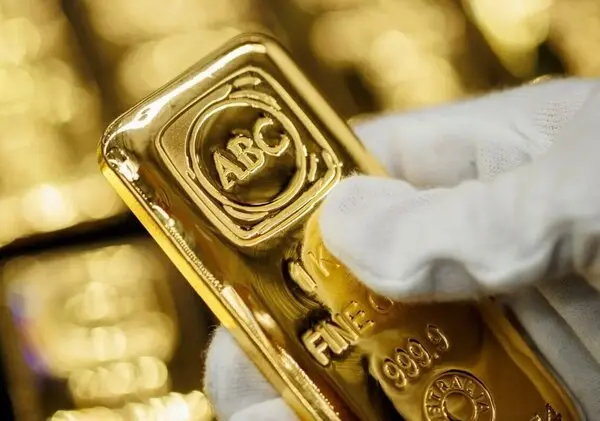
The global gold market is undergoing one of its steepest price corrections amid a series of monetary and financial developments. Gold has fallen 29% to around $3,502 per ounce, hitting its lowest level in a year. The decline underscores that even traditional safe-haven assets are not immune to shifts in capital flows and pressure from financial markets.
One of the main drivers of the decline is rising expectations for US interest rates. The prospect of higher rates reduces gold's investment appeal, as the metal generates no periodic income, unlike bonds and other interest-bearing financial instruments. Under such conditions, capital tends to flow toward assets offering more predictable returns.
Higher US Treasury yields and a stronger dollar have also contributed to the trend. Treasury yields have risen to 2.9% above the inflation rate, further enhancing the appeal of dollar-denominated financial instruments relative to holding gold.
When Investors Sell Safe-Haven Gold
Another decisive factor is the wave of asset sales to cover financial losses and secure liquidity. When financial markets decline, investors sell valuable assets to cover losses, settle obligations, and raise cash. Gold is no exception under such circumstances.
Consequently, even rising political tensions and wartime conditions have failed to prevent prices from falling. In fact, immediate liquidity needs and losses in other markets have outweighed precautionary demand for gold. This demonstrates that gold's status as a safe-haven asset does not mean it is permanently immune to volatility and selling pressure.
Funds Retreat as Central Banks Continue Buying
On the demand side, declining investment in major gold funds has also intensified downward pressure. Holdings in major gold investment funds have fallen by 4.9%, signaling that some investors are pulling back and increasing selling pressure in the market.
Central banks, however, continue to buy gold. Their purchases of 321 tons of gold over the past quarter reflect sustained structural demand and a long-term outlook among monetary authorities toward the metal. Nevertheless, official purchases have been insufficient to fully offset investor selling and outflows from funds.
An analysis of five historical price-correction periods also shows that the final bottom was reached, on average, 19 months after the downward trend began. The figure of 15 was also cited as an indicator of further downside. This historical pattern underscores the need for caution when forecasting the end of the correction, although past patterns are not guaranteed to repeat.
Iran's Market: Buying Opportunity or Continued Wait-and-See?
In Iran's domestic market, the decline in global gold prices in recent days has led to a weekly drop in prices. By the end of the week leading up to Azar 1, 18-karat gold fell 5.47%, the Emami coin 4.14%, the Bahar Azadi coin 5.39%, the half-coin 3.78%, the quarter-coin 4.03%, and the gram coin 8.31% compared with the previous week. However, trading today has seen a partial price recovery, reversing some of the losses recorded in recent days.
The decisive factor in Iran's market is gold's dependence on two variables: the global ounce price and the dollar exchange rate. Therefore, a decline in global prices does not necessarily translate into a proportionate decline in domestic prices. If the global gold price falls while the exchange rate rises, part of the downward impact will be offset. However, simultaneous declines in both variables could lead to a sharper drop in 18-karat gold and melted gold.
The coin market is also influenced by the price premium, or bubble, and investment demand, in addition to the exchange rate and global gold prices. As a result, coin prices may move contrary to the global trend or decline less than the price of raw gold.
Under these conditions, people are advised to avoid emotional purchases based on the assumption that prices will inevitably rebound, as well as rushed asset sales. Consumer buyers should consider their actual needs, workmanship and transaction fees, and the spread between buying and selling prices. Investors should also assess the coin price premium, dollar fluctuations, and the possibility of a continued global correction, while avoiding investing all their capital in gold at once.
Overall, the global gold plunge does not yet signal the end of the downward trend, and a temporary price recovery in Iran's market is not definitive evidence of a renewed upward trend. Cautious decision-making, staggered purchases when necessary, and avoiding investments with funds needed for living expenses are increasingly important amid current market volatility.