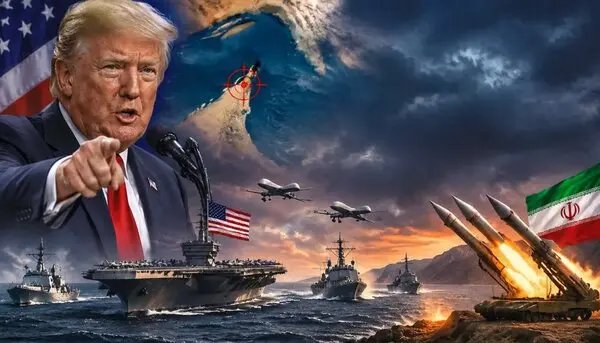
Trump’s bid to turn a trilateral meeting with the presidents of China and Russia in Shenzhen into a historic display of power and a demonstration of consensus against Iran ended in failure and political embarrassment. At the same time, the U.S. president has blamed Democrats and Iran for his country’s economic crisis and, citing the lack of progress in indirect negotiations, threatened to resume the war against Iran after the New Year if no agreement is reached. While acknowledging an increase in Iran’s missile and drone attacks, he has claimed that the country’s naval capabilities have been destroyed, portraying any Iranian attempt to break the blockade as tantamount to the sinking of Iranian vessels.
These statements indicate that Trump is pursuing two objectives simultaneously: seeking domestic and foreign scapegoats to justify America’s current and future economic troubles, and attempting to create a new political and strategic environment by setting a timeline for a possible resumption of the war. Regardless of Washington’s potential scenarios, however, breaking the blockade, maintaining comprehensive readiness to respond to any aggression, and upholding the seven conditions will remain decisive factors in completing the picture of America’s failures.
Blaming Democrats: Evading Responsibility for the Economic Crisis
One of the most notable aspects of Trump’s recent remarks is his emphasis on the role of Democrats in exacerbating the U.S. economic crisis and his attempt to link election results to stock market declines and an increase in Iranian attacks. He claims that he had previously warned that a Democratic victory would produce such consequences and that the economic situation would deteriorate further unless Democrats changed course.
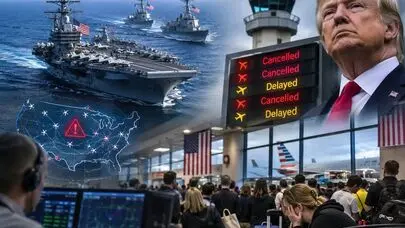
These claims come as the economic crisis, particularly in the energy sector, has been unfolding since the United States launched its war against Iran in March of last year. Trump’s insistence on diverting resources from social services and welfare programs to the war effort has further aggravated the situation. Disruptions to infrastructure, including airline operations, coupled with a warning from Jay Clayton, Director of National Intelligence, about the possibility of wider disruptions to technology services, paint an increasingly troubling picture.
Trump presents global militarization as evidence of America's restored power. Yet the economic crisis, transportation disruptions and cyber threats raise serious questions about the credibility of that claim. Under these circumstances, blaming Democrats and external actors, including Iran, appears less an indication of crisis management than an attempt to justify failures and shift responsibility for the consequences that may lie ahead. This is particularly evident in Trump's explicit remarks about the difficulty of working with Chuck Schumer, the Senate Democratic leader.
Acknowledging Iran’s Missile Capabilities: Cracks in America’s Victory Narrative
Trump’s acknowledgment that Iran fired more missiles and drones over the past week than at any other point during the previous year is a significant admission of the reality of Iran’s military capabilities. Although he is attempting to link the increase in attacks to the Democrats’ electoral victory, apparently to discourage voters opposed to the war, his remarks themselves undermine Washington’s earlier claims that Iran’s military capabilities had been destroyed.
The president, who previously spoke of Iran as having no military capabilities, is now acknowledging an expansion in the scale of its attacks, an increase in missile range and the emergence of previously unknown Iranian weapons. Moreover, Iran’s attacks on U.S. bases and interests across the region have been carried out as defensive responses to acts of aggression. Attacks on Kuwait and Bahrain, for instance, were also responses to U.S. strikes against cities in southern Iran and Iranian vessels.
Trump speaks of these attacks while remaining silent about the downing of strategic drones, damage inflicted on U.S. bases, and the destruction of radar infrastructure and Patriot missile defense systems. That silence is itself part of an effort to conceal the true scale of the costs incurred in the confrontation with Iran.
Setting a Timeline for War: Four Scenarios in Washington’s Calculations
Trump’s announcement that the war could resume after the start of the New Year if negotiations fail carries several distinct messages and points to four possible scenarios.
First, Trump faces domestic political constraints. Although Republicans still hold a majority in Congress, some party members have begun distancing themselves from Trump to protect their political standing ahead of the 2028 elections. Divisions within the White House, along with opposition to the war from certain regional lobbies, have further compounded these constraints.
Second, setting a date could be part of a deception operation. The move may be intended to mislead Iran in its strategic calculations, intensify international pressure on Tehran, and simultaneously create an opportunity for a surprise attack.
Third, Washington may be prioritizing economic warfare and the continuation of the blockade. This is particularly relevant given that certain misguided domestic positions and actions have projected a negative image of the country's economy and infrastructure, reinforcing Washington’s illusion that the blockade is effective.
Fourth, Trump may be aware of the serious limitations facing the United States in launching another war. America’s economic, military and political circumstances would impose staggering costs on any new military adventure. This is especially significant given assessments pointing to the strengthening of Iran’s military capabilities, the increased range of its missiles and the potential expansion of the geographical scope of its response. Meanwhile, buying time until the new Congress takes office, then using its alleged unwillingness to cooperate as a justification for backing down, could also form part of Trump's calculations.
Breaking the Blockade: The Need to Move from Threats to Initiative
Regardless of which of these scenarios unfolds, the fundamental issue remains unchanged. Iran must uphold its seven conditions while strengthening its comprehensive military, economic and social preparedness. The enormous potential of public mobilization in the streets, improvements in defensive capabilities and the activation of diplomacy to enhance national resilience are complementary elements in confronting Washington’s pressure strategy.
Relying solely on diplomacy to break the blockade appears to be becoming progressively less effective. Initiatives such as deploying a fleet of oil tankers, backed by military capabilities and preparedness to counter any act of aggression, could play a role in achieving this objective.
The central issue is neither the date announced by Trump nor his psychological warfare through threats of renewed conflict. Rather, it is the need to turn national preparedness into an effective initiative to break the blockade and thwart American calculations.