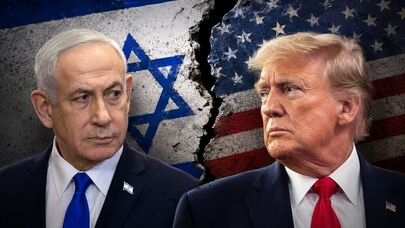
The outcome of the US congressional midterm elections represented, on the one hand, a forceful rejection of Trump and the Republicans by the American people and, on the other, a clear warning to the Democrats. The message was that if they, too, deviate from the course of change demanded by the public and, instead of addressing the structural and livelihood problems facing American society, follow the path of the oligarchs, prioritize Israel and pursue warmongering around the world, they will meet the same fate as the Republicans. The central message of the elections was clear: distancing themselves from Trump and the thinking that drives him has become a necessity for those seeking to remain in power. The Democrats’ victory, moreover, was driven less by a coherent program or a positive record than by criticism of Trump and opposition to him.
From Abraham Lincoln’s Dream to Trump’s Isolation
Trump entered the White House in 2025, claiming he would revive the era of Abraham Lincoln and promising to restore America’s greatness. Yet his two-year record has done nothing to fulfill that vision. Instead, the midterm results showed that Trumpism has suffered a serious erosion of its social base among the American public. The defeat of Republican candidates, even in states that had been traditional strongholds of the party for decades, demonstrated that aligning with Trump is no longer an electoral advantage. The victories of Democratic candidates with Latino, nonwhite, Muslim and immigrant backgrounds also reflected, in practical terms, society’s rejection of Trump’s policies.
The situation has become so evident that American media outlets, too, view distancing themselves from Trump as a condition for the Republicans’ political survival. The Wall Street Journal has stressed that politicians seeking reelection or a higher position in 2028 must make their distance from Trump clear publicly starting now.
In 2016, Trump presented himself as a critic of endless wars by drawing attention to government corruption and questioning US wars in Afghanistan, Iraq and Syria. He even challenged Washington’s past policies by pointing to the US role in the emergence of al-Qaeda and ISIS. These slogans helped him defeat Hillary Clinton. However, his failure to deliver on promises to fight corruption and end wars paved the way for his defeat in the 2020 election.
Trump’s Corruption: The Price of Republican Support
One of the major factors behind the Republicans’ defeat was the numerous financial and moral corruption cases and alleged backroom dealings involving Trump and his family. From the Epstein case and women’s lawsuits alleging sexual assault and rape to accusations of financial corruption, exploiting political office for economic gain, ties to economic and political cartels, and bringing billionaires such as Elon Musk into the sphere of power, a series of controversies and allegations has eroded Trump’s political credibility.
Warmongering, meanwhile, has become a source of economic interests and billions of dollars in revenue, even as it imposes heavy costs on the lives of ordinary Americans. By refusing to confront Trump and consistently supporting him in Congress, Republicans effectively made the cost of these scandals their party’s own. Today, in an era of expanding social media networks and the widespread circulation of information, concealing such cases is no longer as effective as it once was. To rebuild their credibility, Republicans have no choice but to distance themselves from Trump and even accept the pursuit of legal action over the allegations against him, his family and his associates.
Ramadan War: The Collapse of the Claim to End Endless Wars
Another major factor in the Republicans’ defeat was Trump’s abandonment of his promise to end endless wars. Having criticized Bush, Obama and Biden over the wars in Afghanistan and Iraq, he effectively turned the United States into an instrument for advancing Israel’s priorities. The warmongering against Iran was the clearest manifestation of this reversal. Trump believed that a few days of crimes and bloodshed, including the attack on the Minab school and the martyrdom of the Leader of the Islamic Revolution, would be enough to achieve his anti-Iranian objectives, seize Iran’s oil and turn the Strait of Hormuz into the Strait of Trump. But the strength and determination of the Iranian people thwarted these calculations. Today, he has neither the ability to continue down this path nor a way out that does not require him to accept the realities on the ground.
Even after the election, and despite the evident role of the war against Iran and the Strait of Hormuz issue in the Republicans’ defeat, Trump continues to emphasize threats and the continuation of his previous course. The American people’s vote, however, conveyed a message that went beyond opposition to a single party. It also demonstrated rejection of warmongering and the failure of Trump’s claims.
Reality on the Ground Against an Empire of Lies
Using his media power and the technological support of Elon Musk, Trump spoke every day of victory over Iran, the Strait of Hormuz remaining open and falling prices after the election. But the overwhelming vote against the Republicans showed that, contrary to Hollywood-style propaganda and images generated through artificial intelligence, Americans make their decisions based on the realities of their lives and the marketplace. The US defeat in the face of Iran’s strength, the continued closure of the Strait of Hormuz, the ongoing economic and fuel crises, and Trump’s inability to achieve his objectives against Iran without accepting Tehran’s seven conditions are realities whose effects have also become evident in the lives of Americans. The election should be regarded as clear evidence that months of lies and efforts to portray Trump as a hero have lost their credibility. That propaganda ultimately collapsed in the face of realities on the ground and their economic and reputational consequences for the United States.
Trump’s Fate: A Lesson for the World
Trump’s defeat and the Republicans’ efforts to distance themselves from him to avoid being driven out of the political arena carry a clear message for countries that still labor under the illusion that making concessions to the United States can secure their security, economic interests or an end to war. A Trump who has lost his former standing even among the American people and members of his own party is certainly not a reliable party for negotiations or compromise. If he has been unable even to preserve voters’ support for his own party’s candidates, how can he be a trustworthy partner for other countries? Aligning with or compromising with such a politician will bring nothing but global disgrace and humiliation.
Today, Trump is not a liberator but a cautionary example whose message is clear: the path to achieving one’s goals does not lie in moving closer to Trump, but in keeping one’s distance and standing firm against his ideas and policies, both within the United States and on the global stage, including in how countries conduct their relations with Washington. Trump’s defeat has shown that the era of unilateralism is drawing to a close and that his way of thinking can no longer meet the demands of global developments. The new era is one of standing up to the United States by relying on domestic capabilities, strengthening regional convergence and participating in shaping a new world order. The US elections have once again made clear the necessity of pursuing this path.