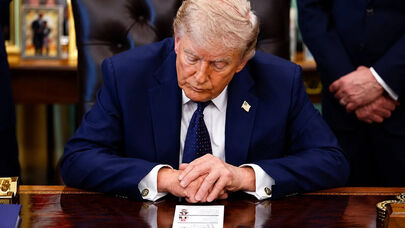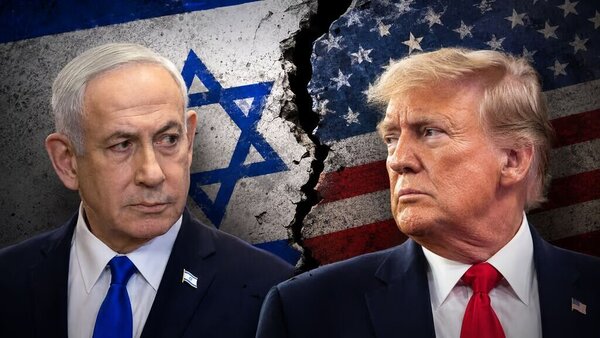
As congressional midterm elections were held, Trump claimed that US financial assistance to the Zionist regime would end at the close of the calendar year, although the regime would still be able to purchase the weapons it needs from Washington. “We were giving Israel $4 billion, and we still are giving it, but that ends at the end of the year. They don't need it. We agreed on this with Bibi Netanyahu,” he said.
The remarks, made after the elections in the Zionist regime, appeared on the surface to be an attempt to save Netanyahu and reduce the political cost of supporting Tel Aviv. However, the heavy Republican defeat and the Democrats’ control of both chambers of Congress reveal other dimensions of the statement. The victory of political forces critical of Zionism points to a shift in the US political climate, the waning influence of the Zionist lobby and the global expansion of the Resistance Front. These developments also expose the failure of the US-Zionist project for the Middle East.
Trump’s Last Attempt to Save Netanyahu
Netanyahu had also claimed, during the Knesset elections, that the tens of billions of dollars in US assistance for the regime’s defense budget would not continue in the future because the United States had changed. He presented himself as the only person capable of securing this assistance and laying the foundations for the regime’s self-sufficiency.
As the prospect of an anti-Netanyahu coalition grew stronger, Trump, who had previously warned that the regime would be left alone in the face of Iran, resorted to fearmongering in an effort to pressure Zionists into supporting Netanyahu. However, the response from his opponents, who stressed the need to remove Netanyahu from office, exposed the failure of this campaign.
Republican Defeat and a Shift in Washington’s Political Balance
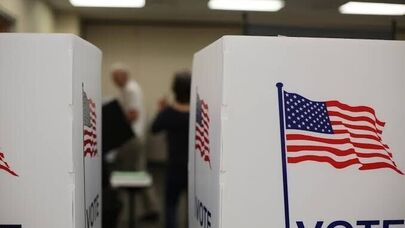
The midterm election results dealt Republicans a heavy defeat, with Democrats taking control of both the House of Representatives and the Senate. This is not merely a redistribution of seats; it points to the growing political cost of the Trump administration’s record. Economic concerns, the rising cost of living and the consequences of the war against Iran have all contributed to voter discontent.
Meanwhile, Abdul El-Sayed, a Democratic candidate from Michigan, won a Senate seat, becoming the first Muslim elected to the chamber. His opposition to US military assistance to the Zionist regime gives added significance to his victory. The success of figures such as Rashida Tlaib and Ilhan Omar in the House of Representatives could also strengthen the voices of those critical of support for Tel Aviv.
Democratic control of both chambers will change the conditions facing the Trump administration during the final two years of his presidency, increasing Congress’s ability to scrutinize and put pressure on its decisions. From this perspective, Trump’s claim that the aid will end can be seen as an attempt to get ahead of political developments and take credit for ending the previous financial commitment, while downplaying the role of pro-Palestinian forces in shifting the US political balance.
What Trump Is Concealing About the Aid
The United States’ annual $4 billion commitment to the Zionist regime stems from an agreement reached during the Obama administration. It was set for a 10-year period beginning in 2016 and expires at the end of 2026. The commitment therefore ends on schedule; this is not a new initiative by Trump. Reports have also pointed to efforts by Washington and Tel Aviv to replace annual aid with joint production arrangements. Such a mechanism could allow US support to continue in another form while expanding the regime’s influence in the country’s military and technology industries.
Meanwhile, military and intelligence reports indicate that a substantial portion of US weapons stockpiles was depleted during the war against Iran. Replenishing those stocks will take years. The end of aid therefore cannot be viewed simply as a voluntary decision. The costs of confronting Iran’s military power have also influenced Washington’s changing approach, bringing Trump’s claims of victory up against realities on the ground.
West’s Image Laundering Amid the Zionist Crisis
Criticism of the Zionist regime by some European leaders and proposals to sanction settlement construction, alongside the positions taken by Trump and Vance, are responses to public demands for support for Palestine. Western leaders, facing the disgrace of complicity in apartheid and genocide, are seeking to portray themselves as distancing themselves from Tel Aviv, project a human rights-oriented image and conceal their responsibility for the crimes.
At the same time, the regime’s internal crisis and reverse migration have continued since Operation Al-Aqsa Flood. The West may once again seek to encourage Jews around the world to immigrate to the occupied territories by conflating anti-Zionism with antisemitism and resorting to security-related fearmongering. Yet the regime’s global isolation and security, political and economic crises expose such migration to serious risks.
Reality on the Ground Will Not Change
Regardless of Trump’s claims and the state of relations between Washington and Tel Aviv, the reality of developments in West Asia will not change. The peoples and governments of the region regard the United States and the Zionist regime as major obstacles to peace, an issue that was also emphasized at the Tehran Quadrilateral Meeting.
Today, the military capabilities of the Resistance determine the region’s future, and any threat will be met with a response, regardless of geographical boundaries. The global isolation of the Zionist regime and the West’s attempts to distance itself from it cannot conceal complicity in its crimes. The United States and Western countries must pay the price for their support and conduct.