Developments in the short period between the announcement of the US election results and the present suggest that Hillary Clinton’s earlier assessment of Trump’s initial reaction to a Republican defeat has proved partly accurate: shifting responsibility for the loss onto others, refusing to accept personal responsibility for the outcome, and insisting that his previous decisions were right. For Trump, defeat at the ballot box does not mark the end of a political contest; it opens a dangerous new phase.
The Republicans’ heavy defeat in the US midterm elections and their loss of majorities in both chambers of Congress have confronted Donald Trump with one of the most serious political challenges of his second presidency. The election was not simply a defeat for Republican candidates. Across a significant part of the country, American voters also expressed their disapproval of the incumbent administration’s policies, performance and overall direction.
But the more important question is what Trump will do in response to this defeat. Will he regard it as an opportunity to reconsider his domestic and foreign policies, or will he react defensively and resort to more costly and risky measures to restore his damaged authority? This is precisely the question Hillary Clinton, former US secretary of state and Trump’s opponent in the 2016 presidential election, raised before the latest elections. In light of Trump’s initial reactions, her warning has now taken on greater significance.
Will Defeat Make Trump More Dangerous?
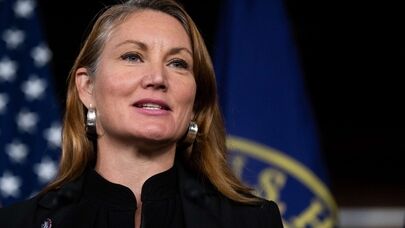
In an interview with Kara Swisher in the final days of October, Clinton predicted that if Republicans suffered a heavy defeat in the election, Trump would not only refuse to accept responsibility but might also adopt a more aggressive and riskier approach. Referring to a concept in behavioral psychology, she explained that people who feel they have suffered a loss sometimes respond not by reducing their risks but by taking even greater risks in an attempt to recover what they have lost. Clinton specifically raised the possibility of an increase in US military attacks against Iran, warning that such action could put the lives of American military personnel and civilians, as well as people in other countries, at even greater risk.
The significance of her remarks lies in the fact that Clinton was not merely discussing Trump’s verbal reaction or political anger. She was warning that the political pressure resulting from electoral defeat could translate into costly foreign policy decisions. Developments since the election suggest that this concern was not unfounded.
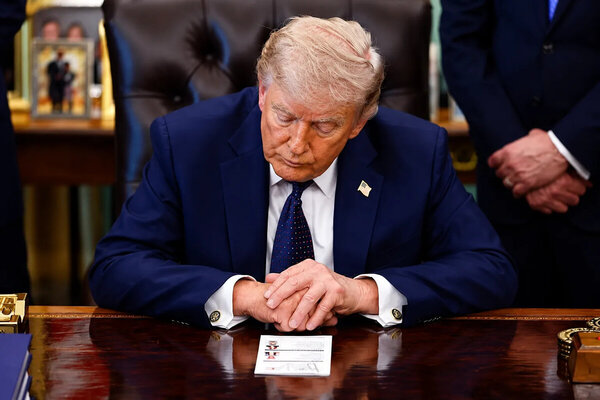
Trump’s first remarks after the scale of the Republican defeat became clear contained several notable signs. In media interviews, he expressed surprise at the election results but placed primary responsibility for the defeat on the performance of Republican candidates. On his own social media platform, he also insisted that Republicans would have won decisively if he himself had been on the ballot. This response should be viewed within the context of a broader political pattern: distancing himself from responsibility for defeat and shifting the blame onto surrounding factors.
The more significant point, however, emerged in his position on Iran. Trump acknowledged that the war with Iran had been one of the factors behind the Republican defeat. Nevertheless, he made clear that he did not regret the decision to attack and would do the same thing again if given the chance to go back in time. These remarks are strategically significant because they show that, at least in his initial response, electoral defeat has not prompted him to reconsider one of the most controversial decisions of his foreign policy. In other words, Trump appears to acknowledge the war’s political consequences while continuing to defend the soundness of his strategy. That is no small distinction.
To analyze Trump’s behavior, it is better to focus on documented patterns throughout his political career rather than attribute psychological traits or personality diagnoses to him. Several recurring features can be observed in his political record.
First, he rarely accepts political defeats as his personal responsibility. In many cases, he places external factors, the media, political opponents and even his own allies in the position of having to answer for the outcome.
Second, when confronted with opposition, he has repeatedly resorted to confrontational language and political pressure. In such an environment, retreat can carry a reputational cost, particularly when he has previously presented a decision as a demonstration of authority and strength.
Third, Trump's foreign policy has at times been marked by rapid shifts in position, public threats and the use of maximum pressure. This makes his future decisions difficult to predict with precision.
Fourth, he places considerable importance on projecting strength and presenting major achievements to the public. From this perspective, external crises can become instruments for demonstrating authority, but they can also impose heavy political and economic costs on his administration. Taken together, these patterns warrant taking the possibility of confrontational responses seriously, but they do not justify treating any particular military decision as inevitable.
War Scenario as a Means of Compensating for Political Defeat
From the outset, the war with Iran has been more than a purely military issue for the Trump administration. It has acquired extensive economic, regional, international and domestic dimensions, and has now become one of the factors behind dissatisfaction among American voters. The rising cost of living and fuel prices, concerns about the safety of US forces, the absence of a clear prospect for ending the war, and doubts about the ultimate objectives of the military operation have all become major issues in electoral competition.
Under these circumstances, Trump faces a strategic contradiction. On the one hand, continuing the war and escalating tensions could impose further political costs on his administration. On the other, accepting defeat in foreign policy or retreating without securing any tangible achievement to present as a victory could be incompatible with the image of strength he has built. Amid these competing pressures, one troubling possibility is an attempt to reshape the domestic political climate by escalating an external crisis.
History offers numerous examples of governments attempting to use external crises to change the domestic political agenda. However, this historical record alone is not enough to conclude that Trump will necessarily make such a calculation. The more important point is that if the US administration, under political pressure, concludes that a display of military power could restore its initiative, the risk of miscalculation will increase. Clinton’s concern about an increase in attacks against Iran should therefore be taken seriously, not as confirmation of a definite decision in Washington, but as a warning about one of the dangerous scenarios that may lie ahead.
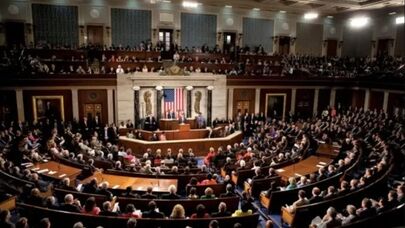
One important difference between the current situation and previous years is the shift in the balance of power in Congress. Democrats now hold majorities in both chambers, a situation that could impose greater political and oversight constraints on the Trump administration. Congress can use oversight powers, hearings, budget reviews and legal inquiries to demand accountability from the administration. Lawmakers and senators concerned about the costs of the war will also have greater opportunities to voice criticism and exert political pressure.
It would be wrong, however, to assume that a change in the congressional majority means Congress has full control over the president’s foreign and military policy. The president’s constitutional authority as commander in chief of the armed forces remains significant, and Congress’s practical and legal limitations must also be taken into account. Nevertheless, a critical Congress can increase the political and institutional costs of unilateral decisions.
Another important factor is American public opinion. If voters regard the war as one of the main causes of the country’s economic problems and insecurity, continuing it could place additional pressure on the administration. Trump is therefore not facing only his political opponents. He must also contend with the political consequences of decisions that are now being judged by the public.
Three different paths can be considered when assessing what may happen next.
First: Reconsideration and adjustment of policies. Trump may interpret the electoral defeat as a sign that he needs to change course, reduce the intensity of military confrontation, seek an end to the war and pursue agreements with Democrats on domestic policy. Such an approach could help reduce the administration’s political and economic costs, although it would require accepting certain constraints and revising previous positions.
Second: Maintaining the status quo while periodically escalating tensions. Under this scenario, Trump would refuse to acknowledge a strategic defeat but would also avoid entering a wider war. Economic pressure, military threats, limited operations and intermittent negotiations could continue. This would risk prolonging regional uncertainty and increasing the likelihood of unintended clashes.
Third: Escalating military confrontation to restore political authority. This is the scenario Clinton warned about. Under these circumstances, the pressure resulting from political defeat and the administration’s reduced power could lead to a decision to intensify military attacks or expand the scope of the conflict. Such a move might be viewed as an attempt to reshape public opinion and regain the initiative through a display of force. Its consequences, however, could extend far beyond the initial calculations. A wider confrontation with Iran could affect regional security, energy markets, US military forces and the stability of the global economy.
None of these three scenarios can be regarded as inevitable. What matters is identifying the factors that could steer US decision-making toward one of them. Perhaps the most important lesson of the latest US elections is that defeat at the ballot box does not always lead to an immediate change in the behavior of those in power. Sometimes, precisely when political power is constrained, the incentive to project strength increases. Hillary Clinton warned of this possibility before the election.
Trump’s initial reactions, particularly his insistence that the decision to attack Iran was right despite acknowledging the electoral costs of the war, suggest that this concern should be taken seriously in the region’s political and security calculations.
Nevertheless, it should not be forgotten that Trump faces a range of constraints: a Congress controlled by the opposition, a public dissatisfied with the war, economic pressures, military costs and the international consequences of any escalation. These factors could act as restraints on his decision-making.
Perhaps the most important question for Iran and the region today is this: Will Washington heed the message sent by its own voters, or will it once again transfer the costs of a political defeat to the already turbulent Middle East?