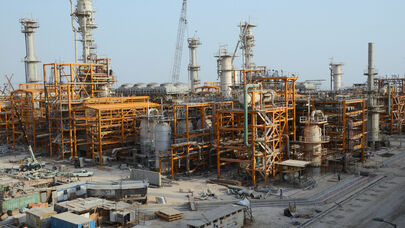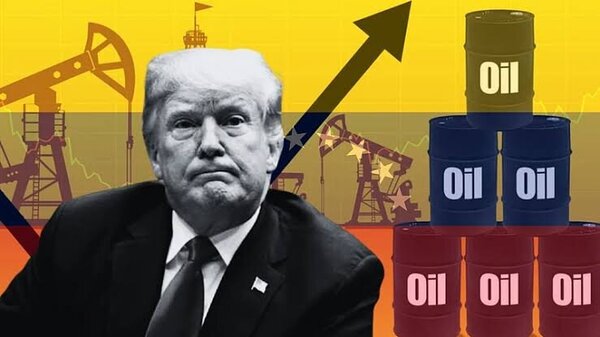
On October 22, US President Donald Trump declared oil production, refining and related activities essential to national defense, paving the way for federal government support for oil projects. The US Department of Energy also announced plans to allocate up to $150 million to strengthen oil production, storage, logistics and refining capacity. The decision comes as rising energy costs, particularly for gasoline and diesel, have emerged as a major economic concern for the administration ahead of the November 3 midterm elections.
The significance of the move is underscored by Trump's claim that oil flows from the Persian Gulf have increased. If regional oil exports have returned to prewar levels or exceeded them, why is Washington still resorting to an extraordinary measure such as the Defense Production Act? The question highlights the gap between claims of improving supply conditions and the US government's practical concerns about the future of energy markets.
Oil at $115: More Supply Does Not Mean Lasting Security
The answer lies in the distinction between supply volumes, the long-term security of transportation routes and energy prices. Higher exports do not necessarily restore market confidence, as the threat of renewed attacks, insurance and shipping costs, vulnerabilities in regional infrastructure, and constraints on alternative routes continue to affect prices. Recent reports also indicate that despite increased oil flows from the region, fears of another escalation continue to weigh on markets.
From this perspective, Brent crude breaking above $115 a barrel is a warning sign for the US administration, even without the more extreme scenarios of prices reaching $180 to $200 a barrel materializing. The issue is not limited to crude oil prices. Higher costs for refined products such as diesel can feed through to transportation, supply chains, industrial production and household living expenses. As a result, even without an absolute shortage of oil, persistent war-related risks can generate significant economic and political pressure.
The Prospect of Renewed War: A Test for Domestic Production Policy
The more consequential variable is the possibility of renewed war. In recent days, reports have emerged of attacks on oil tankers in the Strait of Hormuz, escalating regional tensions and the possibility of new US and Israeli strikes. Some reports have also suggested that military options for the period following the midterm elections are under consideration, although no definitive decision to launch a new round of attacks has been confirmed.
In this environment, boosting domestic production and refining can be seen not only as an economic policy but also as a measure to reduce US vulnerability to a potential escalation of the war. If hostilities resume and new attacks disrupt the Strait of Hormuz or regional export infrastructure, increased domestic supply could help limit pressure on the US market. However, financial support for energy projects does not automatically create new capacity. Its impact will depend on implementation timelines and the actual increase in production.
The Midterm Elections: Fuel Prices and Political Credibility
Trump's electoral calculations are also important to this equation. The November 3 elections are approaching at a time when energy costs could influence voters' assessments of the administration's economic performance. The White House therefore has an incentive to demonstrate that it has a plan to contain prices and can manage energy markets even under wartime conditions.
In this context, lower oil and fuel prices could become not just an economic objective but also a political selling point. If prices fall before the elections, Trump could present the decline as evidence of decisive leadership, stronger domestic production and effective management of the war's consequences, even if the price movements are driven by a combination of global factors. Nevertheless, the available evidence alone does not establish that electoral considerations were the primary motivation behind the invocation of the Defense Production Act.
This is where a potential contradiction in Washington's policy becomes apparent. The administration wants to contain prices by strengthening production and refining, but an escalation of military pressure that leads to a wider conflict and further supply disruptions could make that objective considerably harder to achieve. Under such circumstances, rising energy costs could also undermine Trump's claims of having successfully managed the crisis.
Ultimately, the Defense Production Act sits at the intersection of three objectives: strengthening energy security, preparing for continued regional instability, and turning price control into a demonstration of political strength. Increased oil flows from the Persian Gulf do not, by themselves, prove that the crisis is over, just as expanding domestic capacity does not guarantee an immediate decline in prices.
The central question for Trump is whether he can project an image of control over the crisis before the elections while the risk of renewed war continues to cast a shadow over energy markets. The answer will depend on the actual trajectory of oil and refined-product prices, the security of transportation routes, and military developments in the weeks ahead.