Three developments reported within a short period of time offer a different picture of the costs of a prolonged war: China has halted exports of refined petroleum products outside Hong Kong and Macao, while PetroChina has canceled some gasoline and jet-fuel shipments; the yield on 30-year British government bonds has risen above 6%, reaching its highest level since the late 1990s; and at the same time, the U.S. electricity market is facing upward price pressures, with rapidly growing demand from data centers and artificial intelligence among the key drivers.
These are not three unrelated developments. Taken together, they point to a clear trajectory: the costs of war are moving beyond the oil market and into different parts of the global economy.
China Is No Longer Just an Exporter
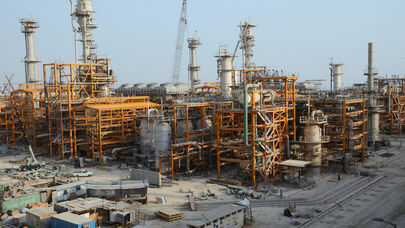
China's move is particularly significant in this context. At a time when global markets are facing supply disruptions, Beijing has restricted exports of refined petroleum products in an effort to preserve domestic inventories. According to Reuters, China's diesel inventories are around 20 million barrels and gasoline inventories around 9 million barrels below pre-war benchmarks. PetroChina has also canceled several October shipments of gasoline and jet fuel.
The development carries an important message: amid a prolonged energy crisis, countries may not necessarily draw on their domestic reserves to help stabilize global markets. Their first priority is domestic supply security.
The result could be a reduction in globally tradable supplies and greater pressure on refined-product prices—pressure that could eventually feed into transportation, production and the cost of living.
This is where the concept of the “cost of time in war” becomes important.
In the early days of a war, markets tend to focus on attacks, oil tankers and crude prices. But if disruptions persist, the equation changes. The war gradually enters the calculations of companies and governments: fuel costs, transportation costs, production costs, inflation, interest rates and financing costs.
Bond Markets Are Pricing the Cost
The rise in the yield on 30-year British government bonds above 6% should also be viewed in this context. The yield has reached its highest level since January 1998, at a time when global markets are simultaneously facing inflationary pressures stemming from energy costs and rising U.S. Treasury yields.
Bond markets are, in effect, one of the places where the cost of time becomes visible.
If energy prices remain high, inflationary pressures are unlikely to ease. If inflation remains elevated, central banks will have less room to cut interest rates quickly. Higher interest rates, in turn, raise borrowing costs for governments and companies.
At this point, war is no longer merely a geopolitical issue; it has become an issue for debt markets as well.
But the more important link for the United States is where energy meets electricity.
Electricity: The Link to AI
The United States is experiencing significant growth in electricity demand, with the expansion of data centers and artificial intelligence among the main drivers. The Federal Reserve Bank of Dallas has estimated that existing data centers have already added several percentage points, on average, to wholesale electricity prices in the United States, while further expansion of data-center capacity could put additional pressure on the power market.
Of course, rising electricity prices cannot be attributed solely to the war. Growing data-center demand, the cost of grid expansion, natural-gas prices and the massive investment required for power generation and transmission are also contributing to the trend.
The issue becomes more serious, however, when rising energy prices coincide with growing electricity demand from AI.
The AI business model requires vast amounts of electricity—from training models and processing requests to cooling servers and operating massive data centers. Cheap energy is therefore an important prerequisite for making this infrastructure economically viable.
This is where a new chain of effects emerges:
Higher energy costs can lead to more expensive electricity and higher data-center operating costs, which in turn can raise the cost of AI computing. Such a trend could directly put pressure on the profit margins of companies operating in the AI sector.
The relationship is not one-to-one, but one point cannot be ignored: the more expensive energy becomes, the greater the cost of delivering on the AI industry's ambitious growth promises.
The Issue Is Not Just AI Companies' Profits
The significance of this issue becomes clearer when considering that major technology and AI companies have played an important role in the growth of major U.S. stock-market indexes in recent years.
Rising energy costs, therefore, are not merely an operating expense for data centers. If the trend persists, they could also affect investors' calculations regarding the future earnings growth of these companies.
Markets can tolerate high valuations as long as investors expect revenue and profit growth to justify those valuations. If electricity and infrastructure costs rise at the same time that AI requires massive investment, the gap between the cost of delivering that growth and the profits expected from it could become increasingly important.
This represents a new risk for a market that derives a significant part of its optimism from the AI growth story.
War Becomes More Dangerous When Its Costs Multiply
Perhaps the most important change in the current equation is this.
At first, the question was who had greater military capabilities. Then the focus shifted to oil exports and the passage of ships through the Strait of Hormuz. But as the crisis drags on, the central question changes:
Who can afford to bear the cost of this situation for longer?
China is restricting refined-product exports to preserve domestic supply security. Bond markets are pricing in the costs of inflation and financing. The U.S. electricity market is under pressure from rising data-center demand, while the AI industry, on the other hand, needs increasingly more energy to sustain its growth.
As a result, the impact of the war is no longer concentrated in one place; it is spreading throughout the economy.
This is the real meaning of an “economic war of attrition”: not necessarily one massive and sudden shock, but a chain of costs—large and small—that, over time, are transmitted from one market to another.
If oil remains expensive, the issue is not merely the price of gasoline. If electricity becomes more expensive, the issue is not merely household utility bills. And if the cost of powering data centers rises, the issue is not merely the technology companies' electricity bills.
The question U.S. policymakers pushing for war must now answer is:
Can the U.S. economy simultaneously bear the costs of a prolonged and expensive war in the Persian Gulf, rising energy and debt costs, and the enormous energy demands of the AI revolution for an extended period of time?