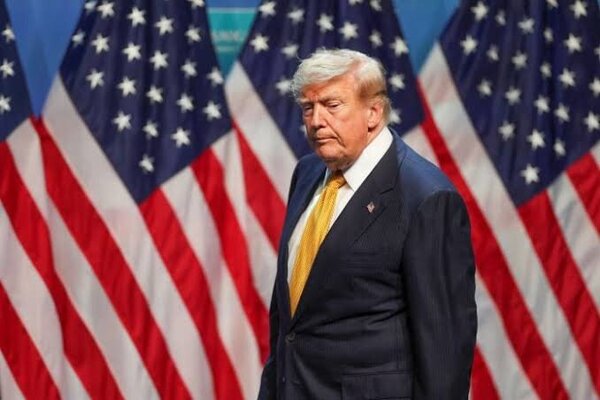
The latest data on Americans’ approval of their presidents in midterm election years point to an unfavorable position for Donald Trump ahead of the November 2026 elections. According to the figures, Trump’s job approval rating stands at 34%, placing him among the lowest-rated US presidents during the period under review.
According to information published by The New York Times, the only lower figure in this comparison was recorded by Harry Truman in the 1946 midterm elections, when his job approval rating stood at 33%. Trump is therefore in second place from the bottom of this dataset, just one percentage point above the lowest figure.
Another important point is the gap between Trump and many of his predecessors at the same stage of the electoral cycle. George W. Bush recorded 37% approval in 2006, Harry Truman 39% in 1950, and Joe Biden 41% in 2022, placing them next on the list. Trump’s approval rating was 42% during the 2018 midterm elections, matching the figures recorded by Barack Obama in 2014 and Ronald Reagan in 1982.
These figures show that Trump’s job approval rating at the current electoral juncture has fallen by eight percentage points compared with the midterm elections during his first presidency. Such a gap could be significant in assessing the Republican Party’s political position and the outlook for the upcoming electoral contests.
Further down the comparison, Lyndon Johnson recorded 44% approval in 1966, while Barack Obama in 2010 and Bill Clinton in 1994 each had 46%. Jimmy Carter stood at 49% in 1978. Gerald Ford reached 54% in 1974, while Dwight Eisenhower recorded 57% in 1958. George H. W. Bush in 1990 and Richard Nixon in 1970 both had approval ratings of 58%.
At the higher end of the list, John F. Kennedy in 1962 and Dwight Eisenhower in 1954 each recorded 61% approval. George W. Bush reached 62% in 2002, Ronald Reagan 63% in 1986, and Bill Clinton 66% in 1998. Clinton recorded the highest approval rating in this dataset.
The data are based on Gallup polls for the years 1946 to 1998, averages of New York Times polls for 2002 to 2022, and a joint New York Times/Siena University poll conducted in October 2026.
Overall, Trump’s position as the second-lowest-rated president in this comparison points to a difficult political situation ahead of the midterm elections, which could affect the balance of power in Congress and the administration’s ability to advance its agenda.