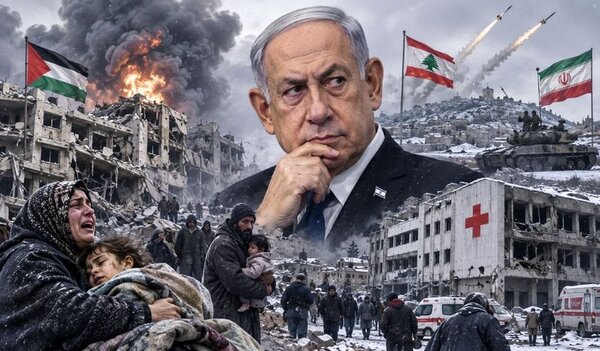
In yet another crime against humanity, the Israeli regime bombed Nasser Hospital in Khan Younis, leaving dozens of people martyred and wounded. The timing of this crime, coinciding with widespread bombardment of Lebanon and threatening rhetoric against Iran, sheds further light on Netanyahu’s desperate efforts to cling to power. However, what makes these developments particularly significant is the continued restrictions on the delivery of humanitarian aid to Gaza as winter approaches and temperatures drop, amid the silence of Western countries and the gradual fading of this humanitarian catastrophe from the priorities of mainstream media. This situation demonstrates that the genocide in Gaza continues despite changing circumstances and methods of violence, making it imperative to bring the Palestinian cause and the situation in Gaza back to the forefront of global attention.
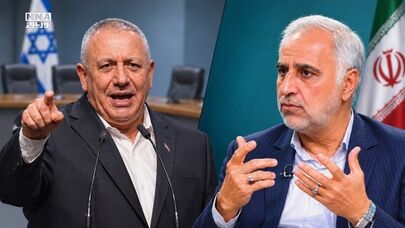
Developments within the Israeli regime also indicate that the introduction of Eisenkot as a candidate to form a new government has done little to curb Netanyahu’s efforts to maintain his political position. By creating divisions among political factions and fueling security crises, he is seeking to remain in power. At a time when the army and opposition forces are unwilling to support Netanyahu in what he describes as action against Iran, attacks on Gaza, strikes on hospitals and medical facilities, and the bombardment of Lebanon have become tools for advancing his security and political objectives. As the Israeli regime’s chief of staff had previously warned, Netanyahu is resorting to warmongering and killing not to ensure the regime’s security, but to achieve his personal objectives.
These developments come as the Second Committee of the United Nations General Assembly adopted a resolution reaffirming the permanent sovereignty of the Palestinian people and the Syrian population of the occupied Golan Heights over their natural resources, with 151 votes in favor. The resolution, proposed by the Group of 77 and China, was adopted with 11 abstentions and seven votes against, including those of the United States and the Israeli regime. Undoubtedly, attempts to overshadow this political and international setback could be among the motives behind the escalation of attacks on Gaza and Lebanon.
Gaza’s Winter: Turning Cold and Blockade into Instruments of Genocide
Although the political structure of the Israeli regime appears to be undergoing changes, one common thread is evident among its various political factions: the continuation of the policy of genocide against Palestinians, a policy encompassing killings, arrests, displacement, and settlement expansion. Developments in Gaza on the eve of winter reveal another stage of this organized crime. On the one hand, the Zionists are preventing humanitarian aid from entering the territory; on the other, rain and flooding are destroying displaced people's tents, while the food crisis, particularly affecting children, has compounded the lack of shelter.
At the same time, terrorist groups backed by the Israeli military are looting the already limited humanitarian aid that manages to enter Gaza. Meanwhile, the bombing and destruction of hospitals and medical facilities are depriving patients suffering from cold exposure and malnutrition of access to treatment. In this way, cold weather, flooding, food deprivation, and the destruction of healthcare infrastructure have collectively become new instruments of genocide, placing the lives of hundreds of thousands of people at risk. What is happening in Gaza, therefore, is not merely a consequence of war and destruction; it is the continuation of crimes through the deliberate deprivation of people of the most basic necessities for survival.
Silence from Arab and Western Countries: Another Test of Sincerity
Another dimension of this catastrophe is the conduct of Arab countries. These countries are currently participating in killings and atrocities in Yemen under the pretext of protecting Saudi Arabia’s security, while also basing their foreign policy priorities on contradictory and double standards in their approach toward Iran. They speak of engagement, convergence, and the need to reopen the Strait of Hormuz. Yet Trump, citing these very countries, has claimed that they favor maintaining the status quo: neither war nor an end to Iran’s economic blockade. These contradictions emerge at a time when the region’s and the world’s foremost priority should be ending the Israeli regime’s crimes and urgently addressing the situation in Gaza. Such an approach raises serious questions about the sincerity of Arab countries’ claims regarding sustainable and regionally driven security.
Meanwhile, the United States and Europe have once again failed the test of sincerity and human rights. The results of the U.S. elections and developments in Europe point to growing public demands for distancing themselves from the Israeli regime and paying greater attention to the Palestinian cause. Even Trump has acknowledged this demand, speaking of reducing military aid to the regime and the need for Netanyahu to return to the Peace Council agreement. Europeans, too, have spoken of sanctions against settlement activities, but their actual conduct remains far removed from these statements. The G7 meeting is being held without addressing the catastrophe in Gaza and alongside allegations against Iran. The European Union has failed to adopt a position commensurate with the scale of this humanitarian crisis, while Western media have focused more on the Israeli regime’s domestic political developments than on the suffering of Gaza’s population. This conduct once again demonstrates that Western claims to uphold human rights have credibility only as long as they do not conflict with their hegemonic interests.
From Gaza to Minab: The Need to Punish Perpetrators and End the War
Had the international community not remained silent during three years of killings in Gaza and U.S.-Israeli warmongering across the region, including their crimes at the Minab school, the world might not be facing the situation it confronts today. The unwillingness of international institutions to hold U.S. and Israeli leaders accountable for their crimes has paved the way for these atrocities to continue. Fulfilling international obligations, punishing those responsible, and delivering on promises of reconstruction and humanitarian assistance to Gaza could have prevented the escalation of such tragedies. Reducing accountability for Netanyahu and Trump to the possibility of their defeat in elections is itself a major diversion from the international community’s responsibilities. The blood of tens of thousands of children, from Gaza to Minab, cannot be made up for by changes of government or election results. The world must take decisive action to ensure that these perpetrators are publicly and unequivocally held accountable.
Finally, the current situation in Gaza once again underscores the validity of Iran’s demand for an end to the war on all fronts. The Israeli regime’s insistence on committing crimes and pursuing genocide, coupled with Western support for this course, demonstrates that reopening the Strait of Hormuz without meeting Iran’s seven conditions would not only threaten Iran’s security but also perpetuate the status quo and allow the Israeli regime and its Western backers to continue their crimes. Tehran’s insistence on its negotiating conditions and the continued closure of the Strait of Hormuz are measures aimed at ensuring regional security. Regional countries, too, can play an effective role in establishing indigenous security by standing on the right side of history and aligning themselves with Iran. This was also underscored by participants at the four-way Tehran meeting, who stressed that the Israeli regime is a common enemy and pointed out that lasting peace and security cannot be expected as long as the United States maintains a presence in the region.