Iran’s attack on a US system in Bahrain carries a clear and significant message, regardless of the differences between Tehran’s and Washington’s accounts of the operation’s success and the damage inflicted: the era in which threats of retaliation were treated as merely part of the rhetoric of war is over.
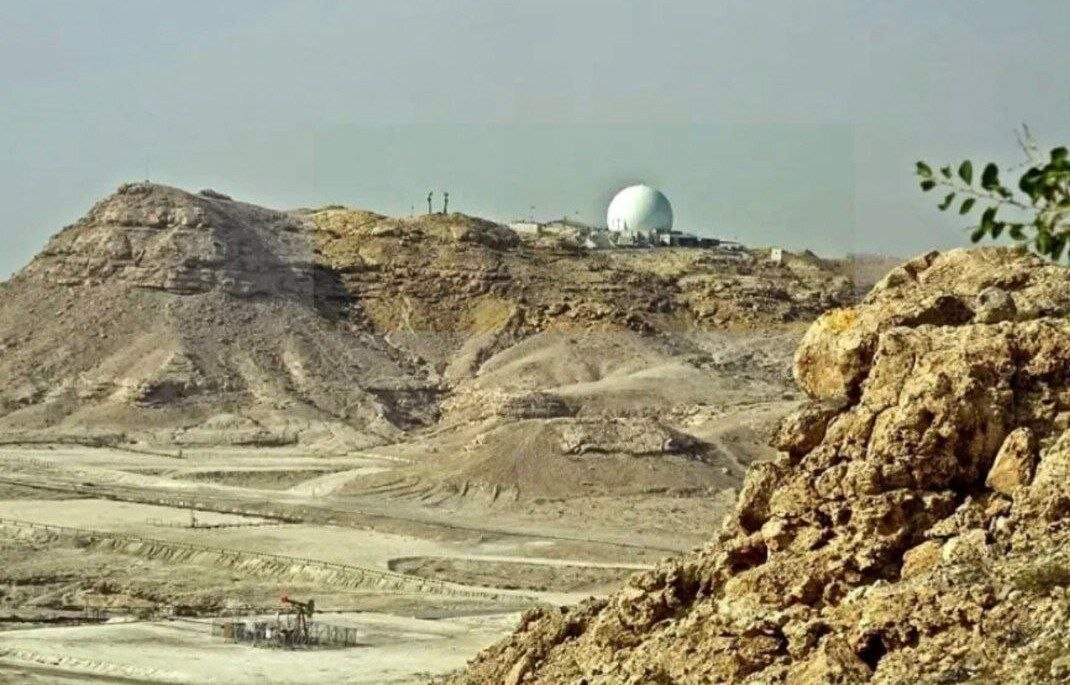
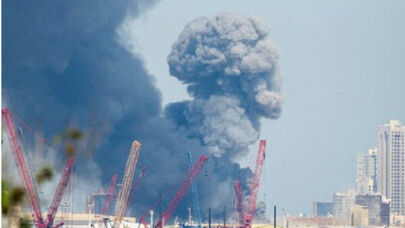
The Islamic Revolutionary Guard Corps (IRGC) Public Relations Office announced that, in response to the US attack on the Sirik area in southern Iran, an early-warning radar belonging to US forces in Bahrain had been targeted. The US Central Command, meanwhile, claimed that it had intercepted two attacking drones and that no damage had been inflicted on American facilities. The discrepancy between the two accounts is, however, a secondary issue. What is already clear is that the nature of Iran’s response has changed.
Several months after such operations had largely subsided or been suspended, Iran has once again taken direct action against an American target. This time, however, the choice of target is itself part of the message. In many previous instances, enemy aircraft and other aerial platforms were at the center of threats and retaliatory operations. Now, however, the focus is on targeting a radar and early-warning system—that is, one of the components of the US military network’s eyes and ears in the region.
This is no minor distinction.
In modern warfare, radar is far more than a piece of military equipment. It is part of the chain of detection, warning, command, and defense. An attack on such a target, even if the two sides disagree over the extent of the damage and whether the system was successfully hit, sends the message that Iran’s response can extend beyond confronting mobile military assets to include the adversary’s military and intelligence infrastructure in its calculations.
The second significance of the operation lies in its timing. The attack came as the region, following months of confrontation, had entered a period of fragile calm. This situation may have led some US policymakers to believe that the cost of limited attacks on targets inside Iran had declined and that Tehran would refrain from direct retaliation to prevent further escalation.
Iran’s response to the attack on Sirik, at least in terms of its political and military message, challenges precisely that assumption.
The message is clear: a temporary halt in retaliation does not mean an inability to respond.
Perhaps this is the most important aspect of the latest operation. Deterrence is not merely a matter of accumulating weapons and military equipment; a significant part of it rests on the adversary’s belief in a country’s willingness to use its capabilities.
A country that repeatedly declares that aggression against its territory and interests will not go unanswered gradually loses its deterrence credibility if it cannot establish a link between threats and action when the moment comes. The latest operation, in this context, represents an effort to preserve that link.
Over the past several months, Tehran has repeatedly warned that continued attacks and aggression against Iranian targets would broaden the scope of its response. The selection of a US military target in Bahrain now demonstrates that these warnings should not be dismissed as mere psychological warfare.
This development does not necessarily mean a move toward an endless and uncontrollable war. On the contrary, it could be an attempt to establish precisely what its absence makes war more dangerous: the ability to anticipate and calculate the costs of aggression.
The United States must understand that a limited attack on Iran will not necessarily be met with a limited and predictable response. The region’s geography, the extensive US military presence, and the diversity of Iran’s retaliatory capabilities give Tehran a wider range of potential targets. Consequently, every new action against Iran must be accompanied by the question of where, how, and against which part of the US military network a retaliatory response might be carried out.
There is, of course, another important consideration. Deterrence is more effective when accompanied by strategic rationality. The purpose of retaliation is not merely to demonstrate military capabilities; it is to change the adversary’s calculations and prevent further aggression. The more precisely this message is conveyed, and the more firmly responses are grounded in a clear defensive rationale, the lower the risk of miscalculation and the region being drawn into an uncontrollable cycle of escalation.
Nevertheless, one reality cannot be ignored: Iran has once again demonstrated that the gap some assumed existed between a warning and action is not necessarily real.
Washington may offer a different account of the operation’s outcome, while Tehran may insist on its success. But at the strategic level, the significance of the incident goes beyond this war of narratives.
Targeting a US military system following the attack on Sirik establishes a clear rule: aggression comes at a cost, and that cost may not be paid at the location where the aggressor expects it to be.
This is the message that must be taken seriously—not as saber-rattling, but as part of the new reality on the ground. At a time when any miscalculation could widen the scope of the crisis, perhaps the most important contribution to regional peace and stability would be for all parties to take one another’s threats more seriously than ever before.
In this sense, Bahrain is more than just a point on the map. It is a reminder that deterrence only has meaning when a threat can be translated into action at the decisive moment.