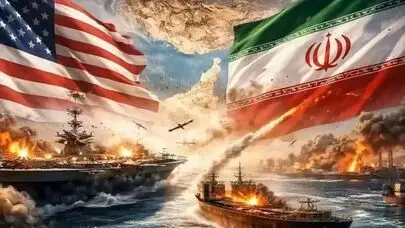
In a new report, The Washington Post has highlighted the uncertain future of the US naval base in Bahrain following Iranian attacks, noting that most military personnel, their families and civilian contractors stationed there have left. The base, which hosted more than 8,000 military personnel and associated staff before the war, is now home to only a small fraction of its former population. Everyday American activities in surrounding neighborhoods have also almost come to a halt. More importantly, the Pentagon has yet to make a clear decision on whether to rebuild the base, reduce its military presence or relocate its missions elsewhere.
The significance of this report should not be viewed solely in terms of personnel evacuations or damage to US military facilities. Bahrain hosts the headquarters of the US Fifth Fleet and is one of the most important links in CENTCOM's regional command and support network. However, the problem extends far beyond Bahrain. During the 40-day war, Iran targeted a pre-planned list of military sites, striking a significant part of the US military and logistical infrastructure across the region, including in Qatar, the UAE, Kuwait, Saudi Arabia and Jordan.
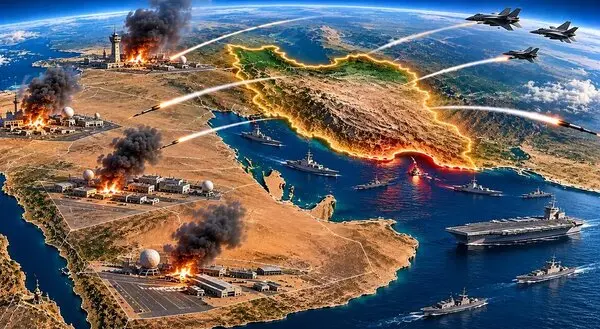
An Associated Press analysis based on satellite imagery shows that Iranian attacks damaged more than 26 US military bases and facilities across the region. At least 115 drone and missile strikes reportedly destroyed or damaged military facilities and equipment. One important aspect of the report is the pattern of target selection: the attacks initially focused on early-warning systems, radars, and defensive and communications infrastructure before expanding to aircraft hangars, warehouses, troop deployment sites and logistical support facilities.
In Kuwait, Ali Al Salem Air Base and Camp Buehring sustained extensive damage to hangars, warehouses and other facilities. In Qatar, parts of an early-warning radar system were damaged, while satellite communications facilities at Al Udeid Air Base were also targeted. In the UAE, infrastructure at Al Dhafra Air Base, radar systems and reconnaissance drones were damaged. In Saudi Arabia, Prince Sultan Air Base, along with aerial refueling and reconnaissance aircraft, came under attack. In Jordan, radar systems associated with the THAAD missile defense system, as well as US military repair and logistical centers, reportedly sustained serious damage. Bahrain also suffered heavy damage to Fifth Fleet facilities and communications infrastructure.
Taken together, these targets indicate that Iran's strategy was not limited to damaging combat equipment. It also focused on parts of the US military's communications architecture, radar networks, early-warning systems, electronic warfare capabilities and operational support infrastructure. In other words, attacks on hangars, warehouses, communications centers, radar systems and maintenance facilities damaged a significant part of the network on which US air and naval power depends.
The significance of this lies in the fact that US bases are not merely locations for stationing troops and military equipment. They are interconnected links in a broader logistical chain. Fuel and ammunition supplies, equipment maintenance, troop movements, intelligence and communications support, and the needs of naval and air units operating across the Persian Gulf, the Gulf of Oman, the Indian Ocean and the Red Sea all depend on the functioning of this network. Simultaneous damage to several key nodes therefore goes beyond localized destruction, increasing the cost and complexity of sustaining CENTCOM's military operations.
A September 2026 report by the US Congressional Research Service also confirms that the destruction of much of the US naval support infrastructure in Bahrain has forced the US Navy to shift its supply routes to Diego Garcia in the Indian Ocean, more than 2,000 miles away from the operational theater. US military reports have also pointed to mounting pressure on naval logistics, longer deployments for warships and growing difficulties in meeting the day-to-day needs of forces stationed at sea.
Under these circumstances, replacing damaged infrastructure by relocating missions to other bases, either within the region or farther afield, is neither a simple nor an immediate solution. Establishing new capabilities requires infrastructure, agreements with host countries, the transfer of equipment and personnel, and substantial financial resources.
Carrying out such a plan in the middle of a war would be even more difficult and costly, particularly as Iran continues to monitor US military movements and alternative facilities could also come under attack.
Budgetary constraints add another layer of difficulty. Rebuilding damaged bases, relocating equipment and establishing alternative facilities would impose additional costs on Washington beyond its direct military spending. At a time when political divisions in Congress over continuing military operations against Iran are intensifying, and Democrats are calling for limits on President Trump's war powers, securing the funding needed for a major military redeployment cannot be taken for granted.
The most significant contradiction, however, concerns Trump's claim that Iran's naval, air and missile capabilities have been completely destroyed. If Iran's military power has been entirely eliminated, how can the current operational challenges facing CENTCOM, the US military command confronting Iran, be explained? Why does Washington still need to relocate forces, change supply routes, reconsider the deployment of its bases and spend heavily on protecting its military infrastructure? Even if a significant part of Iran's military capabilities has been damaged, these continuing measures suggest a considerable gap between claims that Iran has lost its ability to resist and the complex realities on the ground.
From this perspective, the issue of a US naval blockade of Iran takes on even greater significance. Enforcing an effective, long-term blockade requires much more than warships. It depends on sustained logistical support, refueling, ammunition supplies, ship maintenance, air and intelligence coverage, and the regular rotation of military units. Disruptions to the US logistical network across the region increase the cost of maintaining such an operation and raise serious questions about its long-term sustainability.
This situation could create a strategic opportunity for Iran: an opportunity to carefully assess the United States' ability to maintain the blockade and turn Washington's operational and logistical constraints into leverage to influence the political and security equation. Seizing this opportunity does not necessarily mean escalating military action. It could also involve maintaining the initiative, managing the Strait of Hormuz strategically and strengthening diplomatic efforts.
What makes developments in Bahrain and other US bases across the region a strategic issue is not simply the extent of the damage inflicted, but the disruption of a network on which the continuation of US military power depends. Perhaps the main question now is no longer just how much military power the United States has to attack Iran, but how long it can sustain its military presence around Iran, at what cost, and for how long it can continue the blockade.