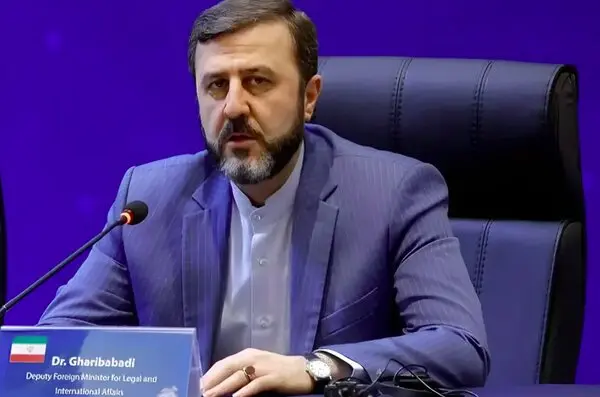
The deputy foreign minister stressed that Iran did not start the war and does not welcome war, saying that genuine peace cannot be achieved through threats or the surrender of nations. Ghaibabadialso called for accountability for those responsible for and those supplying chemical weapons, and for investigations into attacks on Iran's chemical facilities.
Kazem Ghaibabadi, Deputy Foreign Minister for Legal and International Affairs, said in his address to the Chemical Weapons Convention conference in the Netherlands on Monday, November 23, 2026, that the Islamic Republic of Iran, as one of the largest and last victims of the widespread use of chemical weapons in contemporary history, faces a bitter and enduring reality whose consequences remain evident in the lives of thousands of Iranian citizens decades later.
The full text of Ghaibabadi’s speech is as follows:
The US Sought to Maximize Casualties in the Minab School Attack
Mr. President,
Mr. Director-General,
Ladies and Gentlemen,
At the outset, I congratulate you on your election as President of the 31st Conference of States Parties to the Chemical Weapons Convention and wish you every success in guiding this meeting. I also congratulate the newly appointed Director-General of the Organization, Ms. Sabrina Dalfior Mater, and wish her success in carrying out her responsibilities. I would also like to express the support of the delegation of the Islamic Republic of Iran for the statement delivered by Bangladesh on behalf of the Asian Group.
The Islamic Republic of Iran, as one of the largest and last victims of the widespread use of chemical weapons in contemporary history, faces a bitter and enduring reality whose consequences remain evident in the lives of thousands of Iranian citizens decades later. Many of these victims continue to suffer from the physical and psychological effects of exposure to these inhumane weapons and require life-saving medication, continuous care and specialized treatment to sustain their lives.
Despite this painful experience, the Islamic Republic of Iran never resorted to the retaliatory logic of using chemical weapons. Despite its capabilities and the possibility of retaliation during the Imposed War against Saddam's regime, Iran never chose to produce or use these weapons, because it believed that responding to a crime should not lead to the repetition of that same crime. This decision stemmed from a sense of responsibility, adherence to humanitarian principles and the moral superiority of a nation that had itself been victimized by these weapons.
This historical experience makes Iran's principled position clear: chemical weapons are inhumane and unacceptable, regardless of who uses them or against whom, and their use is unjustifiable under any circumstances.
In this context, the Islamic Republic of Iran is addressing this conference at a time when it has faced large-scale military attacks by the Zionist regime and the United States during two wars of aggression, in June 2025 and February 2026. These attacks constitute clear violations of the fundamental principles of the UN Charter, international law and the peremptory norms of international humanitarian law. During these acts of aggression, vital infrastructure, scientific and industrial facilities, medical centers and residential areas were targeted, and large numbers of innocent civilians, including women and children, lost their lives.
The attack on the Minab elementary school and the martyrdom of 168 students and members of its educational staff were a shocking example of the human consequences of these wars and disregard for the fundamental principles of civilian protection. The US struck this elementary school in the small southern Iranian town of Minab twice, several hours apart, to ensure that casualties were maximized.
During the early hours of the 40-day war, a sports stadium packed with teenage female athletes in the small town of Lamerd was also deliberately struck with the most precise modern missiles and new American weapons. There was no need to deploy such a volume of modern weaponry and precision missiles to kill teenage girls. Those who planned, ordered and carried out these crimes will bear the burden of this historical brutality until the last day of their painful lives.
I would also like to remember the 104 martyrs of the Dena naval vessel, 20 of whose bodies were never recovered. The vessel was attacked off the coast of Sri Lanka while returning from a military exercise, despite posing no threat.
Today, I pay tribute to all Iranian soldiers and commanders, and especially to the martyred Supreme Leader, Ayatollah Seyyed Ali Khamenei, who sacrificed their lives to preserve Iran's independence and territorial integrity in the face of the brutal attacks of modern-day terrorists. The US defeat in this war of aggression was made possible by the extraordinary courage of these great men and women.
Right of Veto Must Not Mean Immunity From Accountability
We need the United Nations, but the UN also needs reform. The Security Council must not become an instrument for preserving the privileges of major powers. The right of veto must not mean the right to immunity from accountability.
The US and the Zionist regime carried out 23,800 attacks against Iran during the 40-day war alone, resulting in damage to 150,000 civilian units. These criminals also carried out 18 waves of large-scale attacks against the Islamic Republic of Iran's peaceful nuclear facilities under safeguards.
These attacks were carried out by the US, the only country in the world to have used nuclear weapons, which is now modernizing these terrifying weapons and even planning for their use.
The US's partner in aggression against Iran is also a regime inherently founded on terror, aggression, occupation, apartheid and genocide, which possesses nuclear weapons, threatens to use them and is not bound by any of the treaties or mechanisms related to weapons of mass destruction.
Their claims about the proliferation risks posed by Iran's nuclear activities were, and remain, patently false and merely an excuse to justify their aggression. The most extensive and stringent inspections by the International Atomic Energy Agency have been conducted at the Islamic Republic of Iran's facilities. Over approximately 25 years of inspections, not a single report has indicated that even "one gram" of nuclear material in the Islamic Republic of Iran was diverted toward prohibited purposes.
The failure to condemn these attacks, particularly by the Security Council, has set a dangerous precedent and demonstrates the serious erosion of the global non-proliferation regime. If nuclear weapons are genuinely the concern, why do Western countries and those accusing Iran continue to remain silent about the Zionist regime's nuclear arsenal?
Iran Is Not a Warmonger, but It Will Not Surrender to Threats
We did not welcome war. We did not start the war. But when our territory, people and national interests were attacked, the Iranian nation exercised its inherent right to self-defense.
Iran is a peace-loving nation, but peace that emerges from surrender is not peace. Peace based on threats is not peace. We declare from this platform that Iran is not a warmonger, but it will not welcome a peace that sacrifices the independence of the Iranian nation.
Iran's history carries a clear message: the Iranian nation cannot be brought to its knees through threats.
Undoubtedly, today the Israeli regime and the US are the greatest threats to the UN Charter. The international legal order derived from the Charter is facing an unprecedented threat as a result of the crimes committed by these two aggressors.
Here, I would like to address a point beyond the legal condemnation of these attacks, one that concerns the credibility of humanitarian principles and the universality of international law. We all remember that in previous years, a number of delegations attending this conference displayed Ukrainian flags on their desks to express solidarity with and support for the people of that country.
What was their response to the extensive and illegal attacks by the US and the Israeli regime against Iran? This double standard is entirely unacceptable.
Concerns over the recent attacks are not limited to the destruction of infrastructure and civilian facilities. Attacks on chemical and petrochemical facilities, particularly those subject to verification under the Chemical Weapons Convention, carry specific implications and consequences for the implementation of the Convention and the realization of its objectives.
According to available information, approximately 60 petrochemical complexes, 44 pharmaceutical factories and seven facilities related to pharmaceutical production were targeted during these attacks. Damage to these facilities has not only disrupted their safe and sustained operations but has also affected the production, supply and export of chemicals and related products.
In this regard, the remarks made by the former Director-General of the Organization for the Prohibition of Chemical Weapons at the 67th session of the Executive Council on July 1, 2025, concerning the consequences of targeting chemical facilities, whether declared or undeclared, are significant.
The view that such actions may conflict with accepted norms of international law and, under certain circumstances, may even constitute the use of chemical weapons deserves serious attention and consideration by States Parties.
Israel's Weapons of Mass Destruction Arsenal Must Be Subject to International Verification
Chemical weapons are fundamentally weapons against human beings. The historical experience of the Iranian nation has demonstrated how cruel and inhumane the use of these weapons can be.
In this regard, reports of the Zionist regime's use of chemical agents, toxic herbicides and incendiary munitions, including white phosphorus, in civilian and agricultural areas along the borders of Palestine and Lebanon have had alarming consequences for civilians, the environment, soil, water resources, food security and people's livelihoods.
In this context, the Islamic Republic of Iran supports Palestine's request for a technical assistance visit in response to reports of the use of chemicals against Palestinians. It calls on the Director-General, within the framework of his authority and responsibilities under the Convention, to facilitate the technical examination of this request and ensure that the relevant findings are documented transparently and made available to the appropriate bodies of the Organization.
The Israeli regime's possession of a weapons of mass destruction arsenal and its exclusion from international verification frameworks constitute a serious threat to regional and international peace and security. Achieving universality of the Convention requires the Israeli regime to accede to it and place all its relevant facilities and activities under the Organization's verification regime.
These images show some of the victims of chemical weapons who attended this very conference in previous years but are no longer among us today, having succumbed to their injuries and the lasting effects of exposure to these weapons. May their names and memories be honored.
Governments and Companies That Supplied Saddam With Chemical Weapons Must Be Held Accountable
Here, I deem it necessary to once again return to Iran's historical experience and the international responsibility toward victims of chemical weapons.
Many Iranian victims during the Imposed War were exposed to weapons and substances supplied to Saddam's regime by certain governments that claim to uphold these principles, particularly Western countries and the US, or that played a role in developing that regime's chemical weapons program. These weapons were used against the Iranian people, leaving tens of thousands dead, wounded and suffering from lifelong complications.
Responsibility for these crimes must not be limited solely to those who directly used chemical weapons. Governments, individuals and companies that played a role in supplying the materials, equipment, technology or infrastructure required for Saddam's regime's chemical weapons program must also be held accountable for their actions.
Documents and published evidence concerning the role of certain foreign governments and companies reveal important dimensions of this historical responsibility. We believe this issue must be pursued through a documented, transparent and accountability-based approach.
The passage of time must not lead to the forgetting of these responsibilities or grant immunity to those who committed or supported such crimes. Human suffering cannot be measured by political affiliation. Victims of chemical weapons must not be subjected to political discrimination and double standards after already enduring the suffering caused by these weapons.
Victims of Chemical Weapons Must Not Be Victimized Again by Sanctions
Another painful dimension of this issue is the impact of unilateral sanctions and financial and trade restrictions on the lives of chemical weapons victims. US unilateral coercive measures and the obstacles resulting from them have seriously impeded the import of essential medicines, medical equipment, raw materials and pharmaceutical compounds required for the production and supply of medicines.
These restrictions have particularly severe consequences for patients who require continuous treatment, life-saving medication and specialized care. Victims who have already survived a chemical attack must not be deprived of access to essential treatment a second time, this time as a result of political decisions and economic restrictions.
The Islamic Republic of Iran also raises serious concerns regarding certain aspects of the US's implementation of its obligations under the Convention.
In 2003, the US and its coalition partners abruptly notified the Organization for the Prohibition of Chemical Weapons that chemical weapons discovered in Iraq had been transferred and destroyed. Given the importance of transparency, timely notification and effective oversight by the Organization, this issue raises significant questions about the implementation of obligations and the need for accountability.
Furthermore, information and evidence concerning activities involving chemicals that affect the central nervous system, as well as programs involving so-called non-lethal or incapacitating chemical agents, raise serious concerns regarding full compliance with the objectives and obligations of the Convention.
The Islamic Republic of Iran previously raised concerns in 2004 and 2008, invoking Article IX of the Convention, regarding instances of US non-compliance, including its role in the Israeli regime's chemical weapons program and activities related to the development of non-lethal and incapacitating chemical agents
We expect these concerns to be addressed through substantive, transparent and verifiable responses. The credibility of the Convention can be preserved only if all States Parties, without exception, are held accountable for questions concerning their implementation of obligations.
We believe the credibility and effectiveness of the Chemical Weapons Convention depend on preserving the Organization's technical, specialized and non-political nature. The Organization was established to achieve a common objective: the complete elimination of chemical weapons and preventing their return to the international arena.
Turning the Organization into an arena for political competition, applying selective pressure or instrumentalizing its mechanisms not only fails to contribute to better implementation of the Convention, but also undermines trust among States Parties and weakens the Organization's ability to fulfill its primary mission.
We believe consensus-based decision-making, particularly on sensitive and contentious issues, carries greater legitimacy and operational capacity. Returning to a culture of consensus, constructive dialogue and mutual respect must be a priority in the Organization's work.