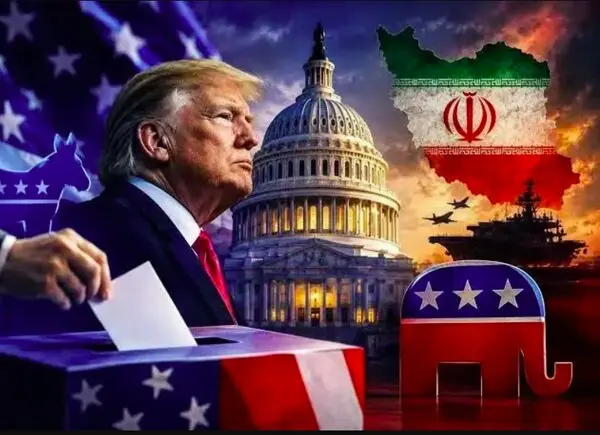
The November 3, 2026, US midterm elections went beyond the traditional contest between the Republican and Democratic parties, exposing deep political, social and religious divisions within American society. NBC's exit poll results show that Democrats secured broad support across different voter groups despite Donald Trump's support for Israel in the Iran war, and took control of both chambers of Congress from Republicans.
Religious Divide: From Jewish and Muslim Support to Christian Alignment
One of the poll's most significant findings was the marked difference in voting preferences among religious groups. Among Jewish voters, 67% voted for Democrats and 32% for Republicans. Democratic support among Muslim voters reached 85%. The unaffiliated, at 77%, and followers of other religions, at 64%, were also among the groups that backed Democrats.
Republicans, by contrast, received their strongest religious support from Mormons, with 69% voting for the party. Additionally, 60% of Protestants and 60% of followers of other Christian denominations voted Republican. The race among Catholic voters was nearly evenly split, with 50% choosing Republicans and 48% Democrats. This pattern points to clear differences in voting behavior among religious groups, although it does not, on its own, establish the reasons behind those differences.
Racial and Gender Divides: Different Electoral Bases for the Two Parties
Among white voters, 51% voted Republican, while 89% of Black voters, 62% of Latino voters and 70% of Asian voters supported Democrats. Democrats also received 53% of the vote among voters from other racial groups. The gender breakdown showed that only white men constituted a majority leaning towards Republicans.
Republicans nevertheless retained strong support among certain demographic groups: 51% of voters aged 65 and older, 54% of high school graduates, 58% of white women without a college degree and 64% of white men without a college degree voted for the party. Republicans also received support from 57% of veterans and 12% of gay voters.
Iran War: A Decisive Factor in Changing Voting Behavior
The most consequential part of the poll concerned voters' assessment of the Trump administration's military actions in the Iran war. Only 37% of voters considered the US decision to take military action against Iran the right one, while 63% viewed it as wrong. Among those who supported military action, 91% voted Republican. However, among those opposed to the war, the Republican share fell to just 16%.
Among voters aged 18 to 29, only 19% considered US military action against Iran the right decision, while 81% opposed it. Among those opposed to the war, just 13% voted Republican. These figures point to a considerable gap between younger voters and the Trump administration's military policy.
The war's importance in Americans' voting decisions was also significant, with 74% of voters saying the Iran war was an important or decisive factor in their choice of congressional representatives. Among this group, 63% voted Democratic and 35% Republican. By contrast, among the 26% who considered the war a less important factor or had no impact on their vote, 70% chose Republicans and 28% Democrats.
Israel: Majority Dissatisfied with the Level of Washington's Support
Voters' views on US support for Israel were another significant finding of the poll. Half of respondents, or 50%, considered Washington's support for Israel excessive. By contrast, 13% believed the support was insufficient, while 37% considered its current level appropriate.
The voting patterns among these three groups were also significant. Among those who considered US support for Israel excessive, only 20% voted Republican. This figure rose to 59% among those who wanted greater US support and 72% among those satisfied with the current level. Opposition to excessive support for Israel was therefore associated with a marked decline in the Republican share of the vote.
Political Consequences: Domestic Cost of Trump's Foreign Policy
Taken together, these findings indicate that the Iran war was not merely a foreign policy issue but had become one of the factors influencing American voters' behavior. The combination of 63% opposition to military action, 74% of voters considering the war important to their electoral decisions, and half of the population dissatisfied with what they viewed as excessive support for Israel presents a picture of the political cost of the Trump administration's decisions.
Alongside these factors, religious, racial, gender and generational differences also contributed to reshaping the social bases of the two parties. The Democrats' victory and their recapture of control of both chambers of Congress demonstrated that supporting foreign allies and entering a war do not necessarily translate into domestic political support. Such decisions, alongside economic and social issues, can become decisive factors in a government's electoral fortunes.