Recent remarks by US Secretary of State Marco Rubio, in which he invoked the famous phrase, “Do not speak to men who hold the sword of the law,” are more than a historical reference or a verbal slip. They reflect a particular view of politics and international relations in which military power is regarded not merely as a tool for ensuring security and advancing policy, but as the standard by which the legitimacy of law—and even the distinction between right and wrong, good and evil—is determined. The central issue is not that a US official has spoken of the sword; it is whether power is now expected to consider itself free from all legal and moral constraints.
Rubio used the phrase while criticizing the International Criminal Court (ICC) and defending Washington’s position on the court’s jurisdiction. Referring to a historical account, he attributed the words to Pompey, the Roman general, who reportedly responded this way when people sought to invoke the laws of their cities against his advancing forces. The US secretary of state’s choice of this particular phrase, especially at a time when Washington’s legal and political disputes with international institutions are intensifying, carries implications far beyond a literary metaphor.
It is true that the United States is not a party to the Rome Statute and disputes the ICC’s jurisdiction over its nationals. However, a country’s non-membership does not automatically grant its nationals absolute immunity from the court’s jurisdiction. More importantly, disagreements over the jurisdiction of a judicial institution cannot serve as a pretext for rejecting the principle of accountability for crimes. This is precisely where legal criticism ends and the logic of domination begins.
A country may challenge the conduct of an international institution, call for its reform, or refuse to accept its decisions. But when the response to a legal dispute is a display of military power and a threat to disregard judicial mechanisms, we are no longer dealing with an ordinary disagreement. Power is seeking to place itself beyond the reach of oversight. It is also difficult to ignore the possibility that Rubio had the US dispute with Iran in mind and intended to send a message to Tehran: Washington holds the sword and sees no need to heed the law—or, for that matter, the truth.
From American Exceptionalism to the Erosion of the World Order
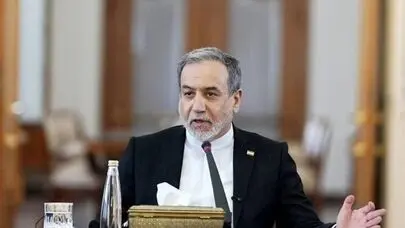
The response by Iranian Foreign Minister Abbas Araghchi focused on a contradiction at the heart of Rubio’s remarks. Recalling Pompey’s fate, Araghchi pointed to the Roman general’s eventual defeat and death, countering Rubio’s historical reference with a quotation from American philosopher George Santayana: “Those who cannot remember the past are condemned to repeat it.”
The response was diplomatically astute. While Rubio drew on history to justify the supremacy of the sword over the law, Araghchi invoked that same history to highlight the limits of power. Nevertheless, the significance of this episode should not be reduced to a war of words or a propaganda victory. The credibility of a country's defense of international law stems not from the nationality of the person making the argument, but from that country's practical commitment to the principles it claims to uphold.
Rubio’s remarks should be understood within the broader context of the foreign policy pursued by Donald Trump’s administration—a policy in which multilateral institutions and international commitments are viewed with suspicion or opposed whenever they constrain Washington’s freedom of action. Under this approach, international law is sometimes portrayed not as a common framework for regulating state behavior, but as an obstacle to the exercise of national power.
International institutions are, of course, far from perfect. The structure of the UN Security Council, the veto power held by major powers, and the selective enforcement of certain rules are all legitimate subjects of serious criticism. But the answer to the shortcomings of a legal order is not to dismantle the very principle of the rule of law. If law is enforced unjustly or selectively, the solution is to work toward reforming it and making it universally applicable—not to abandon accountability altogether.
The main danger of this approach lies in normalizing a form of exceptionalism in which every powerful state claims the right to disregard common international rules. The result would be a world in which countries determine one another’s rights not according to law, but according to their military and economic strength. Put more plainly, the normalization of such an approach would mark the end of universally binding moral principles and usher in an era in which those principles are invoked selectively and at will, both in relations between individuals and in international affairs.
Security and Moral Implications
This approach has at least four major consequences.
First, it undermines the deterrent force of international law. International law is not intended to replace military power, but to place limits on its use and raise the cost of aggression. If governments come to believe that military strength can shield them from accountability, their incentive to comply with common rules will diminish.
Second, it intensifies the arms race and strategic mistrust. When major powers speak of the sword taking precedence over the law, other countries may also begin to seek security not through common rules, but solely by expanding their military capabilities. This cycle ultimately undermines collective security.
Third, it weakens diplomacy. Diplomacy rests on the premise that even serious rivals can manage their differences through dialogue and agreements. But when the language of threats becomes the dominant language of foreign policy, negotiations are reduced from instruments for resolving disputes to little more than pauses between successive rounds of confrontation.
Fourth, it erodes the moral credibility of major powers. Enduring power is not measured solely by the number of missiles, warships, or the size of an economy. Building trust, ensuring predictability, and accepting common constraints are also essential components of national power. A country that demands compliance with the law from others while reserving the right to disregard it for itself may secure temporary obedience, but it will struggle to build lasting trust.
The difference between responsible power and domination lies in how power is exercised. The former uses strength to protect security and prevent aggression; the latter treats strength as a license to bypass constraints.
Rubio’s remarks should be viewed as far more than a verbal dispute. The United States has repeatedly demonstrated, through its actions, that it operates according to this very principle, applying the logic of power in its dealings with other countries, particularly Iran. The two most recent wars provide clear and telling examples of Washington’s established approach toward other nations. Evidence suggests that US conduct in the future will continue to be shaped by the same outlook. Rubio’s remarks amount to an explicit acknowledgment of this reality.
The central question now is whether the future of the world will be shaped by common rules and the accountability of all states, including the most powerful, or whether we are returning to an era in which whoever wields the longest sword claims the greatest right to define justice.
History has shown that unchecked power, even when victorious in the short term, ultimately breeds instability and erodes its own legitimacy. The sword may conquer the battlefield, but it cannot, by itself, establish legitimacy. The art of politics lies not in silencing the voice of law with the sound of weapons, but in persuading even the most powerful actors to accept common constraints. That is the dividing line between political civilization and the logic of empire.