Recent remarks by US President Donald Trump about requests from several Arab countries in the region to refrain from launching new military strikes against Iran have once again raised an important question about the future of regional dynamics: Are Arab countries seeking a genuine end to the war and a return to stability, or do they prefer to maintain pressure on Iran without bearing the costs of a wider conflict?
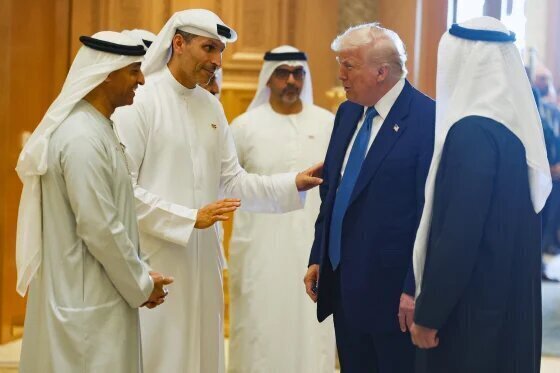
In an interview with Stephen A. Smith, Trump said Saudi Arabia had asked him to “leave things as they are for a while,” adding that Qatar, Kuwait, the UAE and Bahrain also wanted a period of restraint. He claimed these requests had influenced his decision to refrain from launching broader attacks. However, Trump’s remarks alone are not sufficient to establish that all these countries have adopted an official, coordinated position. They should instead be understood as the US president’s account of his consultations with regional actors.
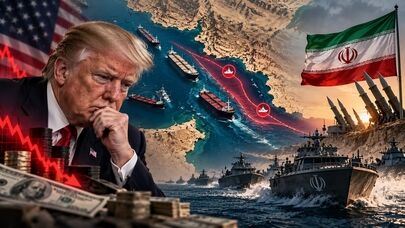
Nevertheless, the substance of these remarks is consistent with Washington’s previous positions on maintaining the status quo: a situation in which, on the one hand, large-scale military attacks are halted or restricted, while, on the other, the naval blockade and economic pressure against Iran remain in place. Trump had previously stressed that he had no intention of lifting the naval blockade while also speaking of US forces’ readiness to resume military operations.
An End to the War Without an End to Pressure?
For Arab countries in the region, a renewed escalation of the war could carry heavy costs. The vulnerability of energy infrastructure, ports, airports, critical facilities and shipping routes, coupled with concerns over rising insurance and transportation costs and instability in energy markets, provides a strong incentive to prevent another round of conflict.
However, a preference for preventing war does not necessarily mean opposing continued pressure on Iran. Some regional actors may consider a situation in which the military threat is scaled back from large-scale attacks, while economic instruments and trade restrictions against Tehran remain in force, to be less costly. In other words, a halt to military strikes could go hand in hand with maintaining the blockade. If this combination becomes a lasting arrangement, its consequences for Iran’s economy and regional standing could be no less severe than those of direct military confrontation.
Oil Exports: A Key Factor in Preserving the Status Quo
One of the most important dimensions of this equation is the continuation of oil exports across the region. If other regional oil exporters can continue shipping their crude without significant disruption while Iran faces severe restrictions on oil sales and access to global markets, the economic burden will be distributed unevenly. Such a situation could not only help consolidate the blockade against Iran but also allow its competitors to benefit from the resulting vacuum in energy markets and export routes.
This issue is not limited to the Strait of Hormuz. Alternative oil export routes, including Saudi Arabia’s East-West Pipeline to the Red Sea port of Yanbu and the UAE pipeline to Fujairah on the Gulf of Oman, provide some capacity to bypass the Strait of Hormuz. Therefore, even if shipping through Hormuz is restricted, part of the region’s oil exports could continue through alternative routes. This is a factor that Tehran must take into account in its economic and security calculations.
From this perspective, one of Iran’s central messages in regional diplomacy should be based on the principle of reciprocity in energy security: Iran’s oil sales cannot be restricted while other countries are expected to continue exporting their oil unaffected by the crisis. If Iran is deprived of the ability to sell its oil, other regional exporters cannot expect to benefit from the conditions imposed on Tehran without bearing any costs themselves.
This message should be conveyed to regional and extra-regional actors as part of Iran’s diplomatic position and, if necessary, its military and security deterrence. The objective is to prevent the emergence of a one-sided order in energy exports, in which Iran bears the cost of the blockade while others benefit from uninterrupted exports and an increased market share.
Iran and the Need to Prevent the Normalization of the Blockade
Under these circumstances, Tehran’s main concern is not merely to prevent another round of war, but also to stop a halt in hostilities from becoming a pretext for entrenching economic and maritime pressure. If military attacks cease while the blockade continues, restrictions on oil sales remain in place and pressure on foreign trade persists, it cannot be described as the end of the crisis. Such a situation would amount to a change in the form of confrontation, not its termination.
Iran needs a combination of credible deterrence, stronger economic resilience, protection of critical infrastructure and active regional diplomacy to address these circumstances. On the diplomatic front, it must also make clear that energy and maritime security in the Persian Gulf and the Gulf of Oman are inseparable issues. The security of some countries’ exports cannot be guaranteed while Iran’s economic security and right to export are disregarded.
At the same time, keeping diplomatic channels open and pursuing mediation while pressure continues and time passes without any tangible results can only be seen as an attempt to wear down Iran’s resilience, rather than a viable path toward resolving the crisis. Any agreement to end the war must include reciprocal and verifiable steps, including a clear resolution of the blockade, export restrictions and other instruments of pressure. Otherwise, a halt to military attacks could simply provide an opportunity to rebuild pressure capabilities and impose new conditions on Iran.
The Arab countries’ preference for avoiding a new war, as described by Trump, could create an opportunity to ease regional tensions. But this preference can lead to genuine stability only if it is accompanied by an end to the logic of unilateral pressure. Iran must not allow “no new war, no end to pressure” to become a permanent regional formula, particularly if the continuation of other countries’ oil exports alongside restrictions on Iran’s exports becomes part of the mechanism for maintaining this arrangement.
An end to the war will be meaningful only if it also entails lifting the blockade and guaranteeing mutual security and interests, rather than simply shifting the instruments of confrontation from the military arena to the economic and energy fronts.