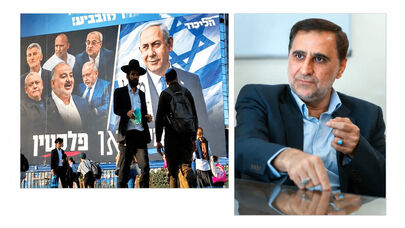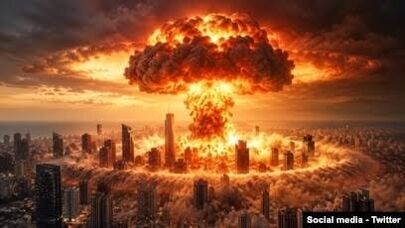
The events of October 7 dealt a profound shock to Israel’s security establishment, undermining the very foundations of the security structure the regime had built. Netanyahu sought to repair the damage through unrestrained violence and atrocities. The genocide in Gaza, attacks on Lebanon and Syria, and the war against Iran were all part of his effort to overcome that major security failure. Tuesday’s election was a litmus test of how successful he had been in this endeavor.
Ultimately, his coalition failed to secure an outright majority. Although his rivals also failed to win a combined 61 seats, the outcome appears to have left the fate of the government largely in the hands of Arab parties, whose decisions could prove decisive.
But the question that concerns public opinion in our country is: How different is Netanyahu from his rivals?
Netanyahu’s rivals are hardly less racist, expansionist, or hostile toward Iran than he is. They, too, have demonstrated considerable reluctance to form alliances with Arab parties, reflecting their own deeply entrenched racist attitudes. They reject any two-state solution or recognition of an independent Palestinian state, regard the expansion of settlements in Palestinian territories as non-negotiable, and identify the destruction of Hamas as their primary objective.
On Iran, while maintaining their hostility and continuing to advocate military strikes, they consider Netanyahu’s ambition of regime change in Iran unrealistic and an exhausting undertaking.
What has prompted some Zionist parties to seek Netanyahu’s removal at any cost, however, goes beyond the irreparable security damage inflicted by October 7, the serious questions surrounding whether Netanyahu had prior knowledge of the operation and failed to prevent it, or whether he was unable to contain the crisis in its initial hours. Their deeper concern is the damage Israel has suffered in global public opinion over the past three years.
Even in the United States, distancing from Israel has grown significantly among Republican supporters, who have traditionally been largely sympathetic to Israeli policies.
During the US midterm election campaigns, Republican candidates insisted that AIPAC’s name not be publicly mentioned, despite the organization’s financial contributions to their campaigns.
Netanyahu’s relentless atrocities over the past three years, coupled with the failure of the US-Israeli coalition in the war against Iran and the global repercussions of that failure for the world economy, have fueled an extraordinary surge in anti-Israel sentiment worldwide. Governments have increasingly sought to distance themselves from Israel, whether by choice or necessity, while support for Zionism has declined.
This situation has prompted political forces within the occupied territories to take action to end Netanyahu’s tenure and prevent further erosion—and ultimately the complete collapse—of Israel’s soft power and international standing.
Although Netanyahu’s rival coming to power might, in the short term, somewhat slow Israel’s war machine, the underlying objective would be to curb the growing tide of anti-Israel sentiment and activism around the world.
After all, the collapse of Israel in the court of global public opinion is a necessary precursor to its collapse on the battlefield.