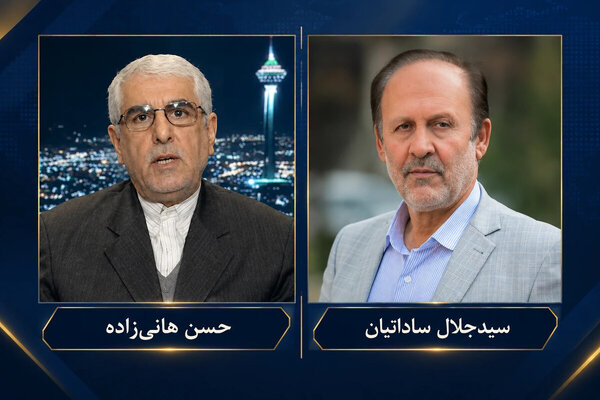
Seyyed Jalal Sadatian and Hassan Hani-Zadeh, two international affairs analysts, discussed the significance of this development in interviews with Nournews.
The visit to Tehran by senior officials from Saudi Arabia, Türkiye, and Pakistan on October 26, 2026, took place amid the risk of escalating military tensions and concerns over the widening of regional conflicts. The three countries’ senior security and military representatives were Saudi Defense Minister Khalid bin Salman, Pakistan’s army chief, Asim Munir, and Türkiye’s intelligence chief, Ibrahim Kalin.
According to media reports, the main focus of the meetings was regional security, de-escalation among the parties involved, and diplomatic solutions to prevent the war from spreading. Developments involving Iran, the United States, and Israel, the situation in the Strait of Hormuz, and mutual security threats between Yemen and Saudi Arabia were also among the key issues discussed. Some analysts view the meeting as part of mediation efforts by Pakistan and Qatar, as well as security cooperation among the three countries involved in the Mecca Defense Agreement.
The significance of the visit lies in the fact that regional countries, despite their political and security differences, are seeking ways to manage the crisis through negotiations. However, the meeting alone does not amount to a final agreement or mark the end of hostilities. Its success will depend on the outcome of the negotiations and the parties’ commitment to any potential agreements.
No Regional Security Equation Can Be Resolved Without Iran
Seyyed Jalal Sadatian, Iran’s former ambassador to the United Kingdom, stressed the importance of Iran’s role in regional security equations following the visit to Tehran by three senior military and security officials from the region.
“No political or security equation in the region can produce the desired outcome without taking Iran’s role into account,” he said.
Referring to efforts by Pakistan and Türkiye to help ensure Saudi Arabia’s security, the international affairs analyst said regional developments had shown that, contrary to the views of the United States and Israel, tensions could not be managed through military means alone. Diplomatic solutions and the potential for dialogue among regional countries must also be taken into consideration, he added.
Highlighting the importance of the Tehran meeting, Sadatian said it could provide an opportunity to reassess security approaches and move toward regional understandings. With regional tensions persisting, reciprocal agreements among the parties involved could help reduce hostilities and prevent the crisis from spreading.
He said that if an arrangement could be reached under which Saudi Arabia halted attacks on targets in Yemen in exchange for a cessation of attacks on Saudi facilities, it could represent a step toward de-escalation and greater regional stability.
The former Iranian diplomat stressed the need for regional countries to participate in security arrangements, adding that one of the key messages of the Tehran meeting could be that establishing a sustainable security framework in West Asia would be difficult without Iran’s participation and active role. Experience over recent years has also shown that resolving regional disputes requires the use of diplomatic and political engagement alongside military considerations.
Sadatian also described the emergence of new proposals involving regional countries and Pakistan as a notable development in the diplomatic process. In his view, stronger political and security ties among regional states could pave the way for understandings aimed at managing existing crises.
However, reaching such agreements would depend on the parties’ willingness to address one another’s security concerns and translate political understandings into practical measures.
In another part of the interview, Sadatian discussed the possibility of expanded diplomatic engagement between Iran and European countries. He said European expressions of willingness to engage with Iran could influence international political equations if they developed into serious, substantive negotiations.
According to Sadatian, such a process could make differences between Europe and the United States over certain Iran-related issues more apparent. If opportunities for energy cooperation between Iran and European countries also emerged, issues such as facilitating financial transactions and enabling the transfer of funds would become important.
The realization of these opportunities, however, would depend on political conditions, existing restrictions, and the willingness of the negotiating parties to reach practical agreements.
The former Iranian ambassador to the United Kingdom also pointed to the possibility of Israeli opposition to meaningful agreements involving Iran. He noted that some analysts had raised the prospect of new military actions following elections, with US support. However, he cautioned that no definitive assessment could be made regarding whether such actions would occur, when they might take place, or what scale they might reach.
Under these circumstances, Sadatian said, Iran’s active engagement in diplomacy and the presentation of practical proposals to reduce tensions could influence international public opinion and raise the political costs of any potential military action against Iran.
In his view, the more Iran’s diplomatic initiatives are accompanied by specific and implementable proposals, the greater the potential to secure international support for political solutions and strengthen the country’s diplomatic standing.
He also referred to proposals put forward by Qatar as part of diplomatic efforts to manage the crisis, noting that their success would ultimately depend on progress in negotiations, the continuation of dialogue, and the willingness of the various parties to pursue political solutions.
Sadatian concluded that the Tehran meeting could offer an opportunity to strengthen Iran’s regional position, reduce tensions, and open new avenues for diplomatic engagement. Achieving these goals, however, would depend on the positions of the participating countries, their adherence to any potential agreements, and developments on the ground.
Diplomacy Can Prevent Further Escalation
Hassan Hani-Zadeh, another international affairs analyst, also discussed the visit by representatives of Saudi Arabia, Türkiye, and Pakistan to Tehran in an interview with Nournews.
He said the Tehran meeting, involving Iran, Saudi Arabia, Pakistan, and Türkiye, should be viewed in the context of evolving security dynamics in the Middle East and efforts to prevent further escalation.
With concerns growing over the possibility of an attack on Iran by the United States and Israel, regional countries are also confronting the question of how to prevent a new conflict and mitigate its consequences, he said.
According to Hani-Zadeh, one of the major concerns for Saudi Arabia, Pakistan, and Türkiye is the potential security, political, and social fallout from a wider regional war. Pakistan and Türkiye, alongside their defense ties with Saudi Arabia, have their own domestic and regional considerations that could influence how they respond to any potential conflict. Strengthening diplomatic channels and pursuing de-escalation could therefore be important priorities for these countries.
The conservative analyst added that Saudi Arabia continues to face the Yemen issue and the security consequences of the ongoing conflict there. Under these circumstances, dialogue with Iran and the use of Tehran’s diplomatic leverage could be among the issues discussed in bilateral relations.
A lasting solution to the Yemen crisis, however, would require consideration of the interests and demands of the Yemeni parties and a political agreement supported by the key stakeholders, he said.
One important issue in this context is the role of regional countries in ensuring their own security. The crises of recent years have raised the question of whether exclusive reliance on extra-regional powers can provide lasting security for Middle Eastern countries, or whether joint mechanisms among regional governments are also necessary.
In this regard, Iran could reaffirm its readiness to engage in dialogue with neighboring countries and participate in regional security arrangements. Such an approach could be based on principles including mutual respect, non-interference in the internal affairs of states, avoidance of military threats, and consideration of shared interests.
Hani-Zadeh added that the possibility of Iran joining the defense and security cooperation framework among Saudi Arabia, Pakistan, and Türkiye could also be discussed if there were sufficient political will and agreement on common principles. Realizing such cooperation, however, would depend on clarifying members’ commitments, defining the alliance’s objectives, and resolving political and security differences among the parties.
Asked what message Iran could convey to the three countries, Hani-Zadeh said Tehran’s main message to Riyadh, Islamabad, and Ankara could be that Iran wants to prevent a new regional crisis and is prepared to contribute to collective security and expanded political, economic, and security cooperation.
Within this framework, Iran could emphasize the need to reduce the military presence of foreign powers, build trust among regional countries, and establish regular mechanisms for dialogue. The success of this approach, however, would depend on whether the other parties were also willing to acknowledge one another’s security concerns and refrain from actions that heighten tensions.
A lasting political solution in Yemen, he added, would also require respect for the will of the Yemeni people and the participation of influential Yemeni factions in the political process. Progress on this front could help ease one of the major sources of tension between Iran and Saudi Arabia.
Hani-Zadeh said the Tehran meeting could provide an opportunity to exchange messages, examine security concerns, and strengthen mediation efforts among the parties involved. However, holding a meeting alone cannot guarantee that war will be prevented. Its impact would depend on tangible negotiating outcomes, the continuation of diplomatic contacts, and the parties’ willingness to translate political understandings into concrete action.
He explained that mediation efforts by countries such as Pakistan, Qatar, and Oman could also help reduce tensions between Iran and the United States. Nevertheless, the possibility of military action remains uncertain, and future developments will depend on the political and security decisions of the various actors involved.
Hani-Zadeh concluded that Iran could pursue two tracks simultaneously: continuing diplomatic efforts to prevent conflict while maintaining defensive preparedness to address potential threats.
These two approaches are not necessarily contradictory, he said. Diplomacy can serve to reduce the likelihood of war, while defensive preparedness remains part of the country’s security calculations.