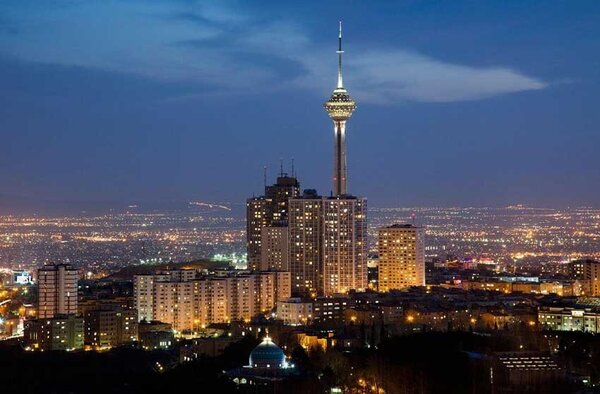
In the latest Global Cities Index published by Oxford Economics, Tehran ranked 459th among 1,000 cities worldwide, leaving Iran’s capital outside even the upper half of the ranking. Tehran fell 31 places from its position of 428 last year. But the ranking itself may not be the most significant part of the report. More striking is the combination of scores that produced it: 51 out of 100 for economics, 58.9 for human capital, 48.5 for quality of life, 40.8 for the environment and just 10 for governance.
These figures offer a thought-provoking picture of Iran’s capital: a city that still possesses considerable human capital and economic weight but struggles to translate these assets into quality of life, a desirable environment and effective governance. From this perspective, Tehran’s problems cannot be explained simply by a lack of resources or capacity. The more important question is how to make use of the potential the city already has.
Tehran: Potential and Challenges
Tehran is more than just a large city for Iran. The capital is the country’s main center of politics, the economy, higher education, media, culture, specialized services and a significant share of its human capital. This is precisely where the significance of the Oxford report begins.
Oxford Economics did not design its Global Cities Index merely to produce a ranking. Instead, it assesses five areas—economics, human capital, quality of life, the environment and governance—to provide a picture of cities’ strengths, weaknesses and development trajectories. Tehran’s fall from 428th to 459th should therefore be viewed less as a simple shift in a ranking and more as a warning about the direction in which the capital is heading.
Perhaps the most telling part of this picture is the gap between two figures: 58.9 for human capital and 10 for governance. Tehran remains a university city with a high concentration of educated and skilled people. Universities, research centers, knowledge-based companies, specialists, doctors, engineers and a broad range of professionals are concentrated there. But human capital becomes an urban advantage only when it can be translated into better policymaking, innovation, economic growth, improved public services and a better quality of life. If this potential cannot influence how the city is run, part of its human capital is effectively left out of decision-making and development.
Of course, the governance score of 10 cannot be attributed solely to Tehran Municipality. Oxford Economics does not assess only the performance of municipal authorities in this category; its evaluation also includes factors such as institutional stability, regulatory quality, government effectiveness and the business environment. Part of the score therefore reflects national-level conditions beyond the direct control of city authorities.
But this makes the issue even more significant. If the capital of a country with such substantial human and economic capital cannot turn these assets into effective governance and a suitable quality of life, the problem is no longer merely an administrative issue or one associated with a particular municipal administration. It concerns the relationship between decision-making institutions, policymaking, professional expertise and the mechanisms through which the city is governed.
In fact, Tehran’s performance in the Oxford index points to a gap between potential and performance. The city scores 51 for economics and 58.9 for human capital, yet its quality-of-life score stands at 48.5 and its environmental score at 40.8. In other words, a city that continues to possess considerable economic and human resources is struggling to provide suitable living conditions for its residents and protect its environment.
This gap is also evident in residents’ daily lives. Traffic congestion, air pollution, housing costs, pressure on public transportation networks, a shortage of desirable public spaces, deteriorating infrastructure in some areas, water stress and land subsidence are not separate problems. They are components of a larger issue: Tehran’s livability.
Today, Tehran faces an accumulation of problems more than a shortage of projects. A project can be devised to address each urban challenge, but a megacity cannot be managed through a collection of isolated projects. Traffic is linked to urban development patterns, housing and public transportation. Air pollution is connected to transportation, fuel, industry and energy policy. The water crisis is tied to urban expansion, consumption patterns and resource management, while land subsidence is the result of years of pressure on underground water resources. Tehran therefore needs more integrated policymaking rather than simply more projects.
Changing Urban Policy: What Tehran Is Missing
This change essentially requires a shift in the philosophy of urban policy. Tehran’s management should not be judged solely by the number of completed projects, the volume of construction or the scale of infrastructure work. Instead, the questions should be: Have residents’ travel times decreased? Has the share of public transportation increased? Has housing become more affordable for middle- and low-income households? Has air quality improved? Has water consumption been brought under control? Have more desirable public and cultural spaces been made available to residents? Has the city managed to retain its human capital? And, most importantly, do residents feel that their voices are heard and their concerns considered in decisions that affect their lives?
Oxford Economics emphasizes precisely this connection among the various components in its report. Successful cities are not simply those with large economies; they have managed to create a mutually reinforcing cycle linking economics, human capital, quality of life, the environment and governance.
A stronger economy helps attract skilled workers, skilled workers drive innovation and economic growth, and a good quality of life and effective governance help retain human capital while attracting investment and businesses. Problems arise when this cycle stops reinforcing itself and instead becomes a self-perpetuating cycle of decline.
From this perspective, Tehran’s urban policy must shift from day-to-day administration toward “governing for the future.” The city needs a long-term vision that extends beyond the four-year term of a municipal administration and assesses how today’s decisions will affect Tehran 10 or 20 years from now. Water, energy, transportation, housing, the environment, population, technology, the urban economy and climate resilience must all be considered as part of a single, integrated picture.
Tehran can still change course, but this will not happen by adding a few more projects to the list of infrastructure works. The central issue is a change in priorities and the criteria used to measure success. If the capital is to remain Iran’s largest metropolis and a symbol of the country’s national potential, it must evolve from a city that is merely large into one that is well governed, offers a good quality of life and is prepared for the future.