The increase in water inflows to the country’s dams at the beginning of the current water year points to a relative improvement in water resources compared with last year. However, an examination of reservoir filling rates and the distribution of reserves among different dams presents a more complex picture than the initially encouraging figures suggest. According to the latest statistics published through November 1, only about 43% of the country’s dam reservoir capacity is filled, leaving more than 57% empty. These figures show that increased water inflows do not yet mean the country has overcome water stress.
One statistical distinction is particularly important: the 72% increase refers to water inflows into dams compared with the same period last year, not to an increase in the volume of water stored in reservoirs. The volume of water held in dams has increased by about 30% over the same period. Distinguishing between these two indicators is essential for an accurate assessment of conditions. Inflows measure the fresh water entering a reservoir, whereas the volume stored reflects the balance between inflows and outflows, as well as the reservoir’s initial level.
Rainfall: Higher Dam Inflows Despite Precipitation Below the Long-Term Average
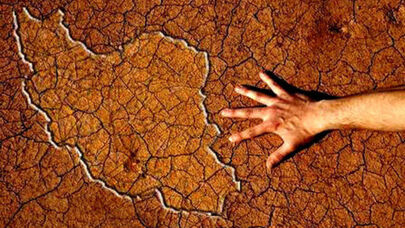
Despite the increase in water inflows to the country’s dams compared with last year, reservoir levels of around 43% and precipitation below the long-term average indicate that the water crisis persists. This highlights the need to reassess the management of surface runoff, watershed management and water storage.
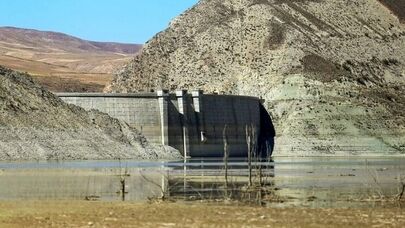
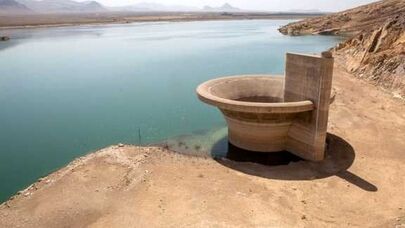
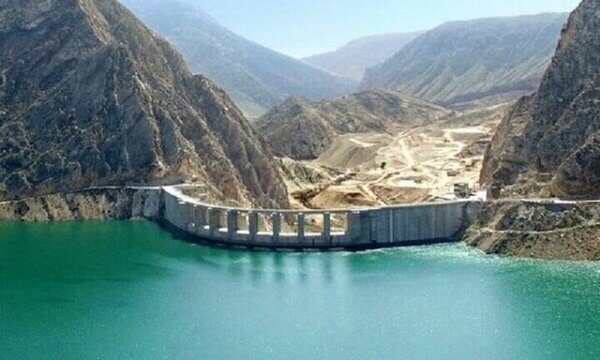
The average filling rate of the country’s dam reservoirs has reached approximately 43%. Together with the increase in water inflows compared with last year, this figure presents a mixed picture of Iran’s water resources. On the one hand, the volume of water stored in reservoirs has increased; on the other, more than half of the country’s dam capacity remains empty, and a number of major dams are still grappling with low reserves. This situation shows that a temporary increase in inflows alone is not enough to declare an end to concerns over water resources.
According to statistics released by the Iran Water Resources Management Company, the volume of water held in the country’s dam reservoirs had reached approximately 22.58 billion cubic meters as of November 1 in the 2026-27 water year, representing a 30% increase compared with the same period last year. Water inflows into dams from the beginning of the water year through that date reached 1.91 billion cubic meters, compared with 1.11 billion cubic meters during the corresponding period last year. This represents a 72% increase in inflows.
It is important, however, to distinguish between the two indicators: the 72% increase relates to water inflows into dams, not to the volume of water stored in reservoirs. The volume of stored water has been reported to be 30% higher than last year. Moreover, a comparison with the 10-year average shows that current reserves are only about 5% above the long-term average. Therefore, the increase compared with last year should not be taken as evidence of a sustained and widespread improvement in the country’s water resources.
Rainfall data also point to the need for caution when assessing the water situation. According to data released by the Meteorological Organization through November 5, precipitation across the country since the beginning of the current water year has reached approximately 11.4 millimeters, while the long-term average for this period is around 14 millimeters. In other words, rainfall has been about 2.7 millimeters, or nearly 19%, below the long-term average.
Rainfall distribution across the provinces has also been uneven. During the period under review, nine provinces — East Azerbaijan, Ardabil, Alborz, Ilam, North Khorasan, Zanjan, Kerman, Golestan and Hormozgan — recorded rainfall above their long-term averages, while 22 other provinces saw declines. Yazd is among the provinces experiencing the sharpest drops, with rainfall down 89.5%. In Tehran Province, precipitation was reported to be 28.3% below the long-term average.
These figures show that increased inflows into reservoirs do not necessarily result from an increase in nationwide rainfall. Other factors, including the timing, intensity and geographical distribution of precipitation, the condition of river basins and flows entering rivers, also influence this trend.
Meanwhile, intense but short-lived rainfall in some areas can generate considerable surface runoff. However, without infrastructure and plans to control and channel it, much of the potential of this rainfall to replenish water supplies and groundwater resources will go unused.
Half-Empty Dams and the Need to Move Beyond Infrastructure-Based Water Management
A closer look at the country’s major dams shows that the average filling rate of 43% does not reflect conditions across all reservoirs equally. According to figures released for key dams, Amir Kabir is about 67% full, Karun 62%, Marun 46% and Karkheh 40%. By contrast, the filling rates of Dez, Taleghan, Latian, Mamloo and Lar dams have been reported at 38%, 37%, 27%, 11% and just 2%, respectively. These differences demonstrate the importance of taking into account the conditions of individual river basins and the water needs of different regions.
Dam inflow and outflow figures are also important in assessing the situation. The volume of water released from the country’s reservoirs from the beginning of the water year through November 1 reached 2.65 billion cubic meters, 6% higher than during the same period last year. During this period, recorded outflows exceeded inflows. This shows that an assessment of water reserves cannot be based solely on rainfall or water inflows; consumption, releases from reservoirs and the needs of downstream areas must also be taken into account.
In this context, controlling and managing surface water is particularly important. Not all rainfall that turns into surface runoff becomes water that can be stored in dams. Some must continue along the natural course of rivers, some seeps into the ground, and some may become unavailable through evaporation or sediment transport. Nevertheless, in river basins where runoff can be controlled and put to use, the absence of suitable watershed-management structures, small check dams and flood-spreading facilities can limit opportunities to store water and replenish aquifers.
Watershed management and aquifer management, alongside the development and maintenance of dams, are among the tools available for managing water resources. Measures tailored to the characteristics of each basin, including protecting vegetation cover, controlling soil erosion, building small structures to slow runoff and directing some floodwater towards suitable groundwater recharge areas, can help reduce flood damage and keep water in the natural environment for longer. These measures, however, are not substitutes for managing consumption or securing drinking and agricultural water supplies; rather, they complement such efforts.
The available statistics point to a relative increase in dam reserves compared with last year. However, rainfall below the long-term average, more than half of reservoir capacity remaining empty and significant differences in the condition of individual dams show that this limited improvement cannot be relied upon. The central issue is not simply the amount of rainfall or the number of dams, but how water is managed from the moment it falls to its storage, infiltration into underground aquifers and eventual consumption. Without completing the chain of river-basin management and establishing sound systems for controlling surface runoff, even a period of favorable rainfall may offer only a brief respite for the country’s water resources.