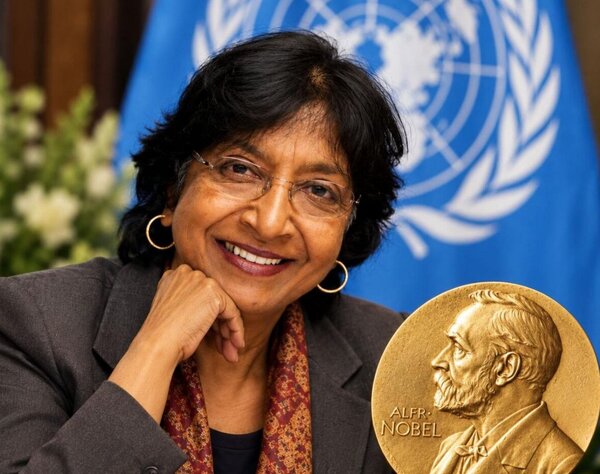
Nournews: The decision to award the 2026 Nobel Peace Prize to Navi Pillay, the prominent South African jurist and judge, is one whose significance cannot be reduced to the identity of the laureate or a single political case. The Nobel Committee selected Pillay in recognition of her efforts to advance peace, defend international law and strengthen accountability for international crimes. Under current circumstances, the decision carries a meaning that goes beyond honoring a legal figure.
Pillay has spent decades working in international law and human rights, from her experience fighting apartheid in South Africa to serving as a judge at the International Criminal Court and chairing the UN Commission of Inquiry on the Occupied Palestinian Territory. The case concerning Israel’s alleged crimes in Gaza has therefore undoubtedly played an important role in bringing Pillay’s name back into the spotlight and shaping the contemporary significance of this choice. As chair of the UN commission, she has emphasized the need to ensure accountability for violations of international law in examining developments in the Palestinian territories.
The issue takes on greater significance when we consider that the commission’s reports on Israel’s conduct in Gaza have prompted fierce reactions from Israeli and pro-Israel circles. UN reports have raised allegations including war crimes and crimes against humanity, while the commission’s September 2025 report discussed the presence of elements of “genocidal intent” in certain Israeli actions in Gaza. Israel has rejected these allegations. The key point, therefore, is not that a rapporteur or commission has issued a final judicial ruling, but that an international process of legal scrutiny and documentation concerning the conduct of the parties to the conflict is taking shape. Such a process naturally raises questions about the responsibility of all actors under international law.
From this perspective, this year’s award can be seen as differing from some of the choices made in previous years. The Nobel Peace Prize has never been entirely detached from politics, and the selection of its laureates has sometimes carried explicit political and geopolitical messages. In its official explanation, however, the choice of Pillay focuses more on human rights, the rule of law, the independence of judicial institutions and accountability for international crimes. This distinction matters: rather than appearing to endorse a particular political project or movement, the Nobel Committee has emphasized a legal principle—that lasting peace is impossible without the rule of law and accountability for violations.
Gaza: A Significant Part of a Human Rights Record
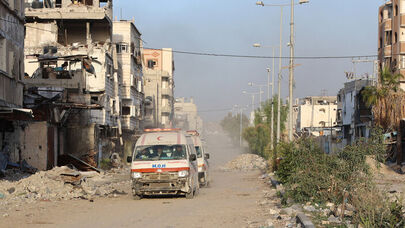
Pillay has taken a clear position on Gaza. The role of Gaza in the background to her selection should not be overlooked. The war in Gaza has become one of the most serious tests in recent years for international human rights and judicial institutions. From the International Court of Justice and the International Criminal Court to UN commissions of inquiry, a range of legal mechanisms have become involved in examining different dimensions of the crisis. At the same time, political pressure on some of these institutions has intensified. Recent US sanctions against the International Criminal Court, imposed just hours after the Nobel award to Pillay was announced, underscored the continuing centrality of the independence of international judicial mechanisms to a major international dispute.
Such pressure, of course, is not limited to one country or one period. International institutions have long faced the question of how to strike a balance between legal independence and the considerations of political power. The issue is particularly sensitive in relation to Palestine, as Israel has rejected reports and allegations raised by UN bodies, describing them as politically motivated and disingenuous. On the other side, human rights organizations and a number of governments have stressed the need for investigations to continue and for accountability to be ensured. In this context, Pillay’s award above all draws global attention back to a fundamental dispute: should international law be applied equally to everyone, or can political power determine and restrict the scope of its enforcement?
Perhaps this is also the most important message of this year’s selection. The 2026 Nobel Peace Prize can be seen as a defense of the principle of accountability—a principle for which Gaza is one of the most important tests in the world today. The significance of choosing Pillay lies precisely here: she is a figure who has devoted much of her professional life to the idea that crimes, regardless of who commits them, must not go unanswered because of political power or geopolitical considerations.
From this standpoint, Israel’s negative reactions to Pillay’s selection are also noteworthy. Israeli officials have described the choice as a political and hostile act, while the Office of the UN High Commissioner for Human Rights has regarded it as an expression of support for human rights and international justice. The contrast between these two narratives shows that this year’s Nobel Prize stands at a particularly sensitive intersection: between power politics and the claim that the law is universal.
The key message of this year’s Nobel Peace Prize is that, in a world where wars are becoming more protracted, civilians are paying a heavier price and international institutions are facing greater pressure than ever from major powers, the defense of human rights and the independence of accountability mechanisms have once again come to the fore.
Gaza, meanwhile, is not a peripheral case; it is one of the most important tests of this claim. If peace is defined merely as a temporary halt to fighting, without justice and accountability, it will remain fragile. But if peace is linked to the rule of law, the protection of civilians and accountability for those responsible for human rights violations, then the selection of Navi Pillay could carry a meaning that extends far beyond an annual award: it would reaffirm that peace without law is less a genuine peace than a pause between two crises.