President Masoud Pezeshkian’s nomination of Mehrdad Akhlaghi to head the Ministry of Defense and Armed Forces Logistics was met, within a short period, with extensive coverage by Persian-language media outlets based abroad and a number of regional media organizations. A review of these reactions shows that what has drawn the greatest attention from foreign media is Akhlaghi’s background in Iran’s defense and missile industries and the timing of his nomination in the aftermath of the recent war. Some outlets, however, have attempted to draw conclusions from this background that go beyond the official information available.
In a report titled “Pezeshkian’s Choice for Defense Minister: Who Is Mehrdad Akhlaghi?”, Euronews focused on his background at the Shahid Bagheri Industrial Group and the Aerospace Industries Organization, while also highlighting his sanctions history. Radio Farda and Deutsche Welle Persian likewise focused mainly on Akhlaghi’s sanctions history and his responsibilities within the defense-industrial structure. In the accounts presented by these outlets, his managerial background in the aerospace and missile industries is the most significant part of his résumé and the main reason his nomination has become a noteworthy story.
Regional media have likewise placed greater emphasis than other issues on the same two factors: his background in the defense and missile industries and his sanctions history. Some Arab and Pakistani media outlets have highlighted Akhlaghi’s nomination at a time when Iran’s Ministry of Defense, following the martyrdom of the previous minister, is undergoing reconstruction and reorganization during one of the country’s most sensitive security periods.
Among these reactions, Iran International has promoted a different narrative, using a program titled “New Defense Minister or Minister of Intercontinental Missiles?” to try to draw conclusions about the future direction of Iran’s defense program from Akhlaghi’s background in the missile industry. This interpretation, however, is less a reflection of an official position than a media interpretation of the proposed minister’s managerial background.
Even from a logical standpoint, if the Islamic Republic of Iran intended to move toward such a project, previous years would have offered more suitable opportunities and conditions to initiate or reveal it, particularly during periods when the country was not engaged in direct war and its defense program was not facing the restrictions and pressures it faces today. If such a shift were now on the agenda, one would likewise expect to see specific practical indications and an official announcement to that effect. Therefore, simply linking the background of a missile-industry manager to such a conclusion goes beyond the available data.
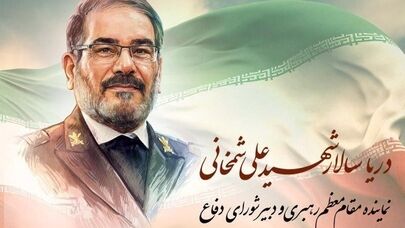
Foreign media attention to Akhlaghi’s missile-related background is, of course, not without reason. Akhlaghi is among the managers who spent a significant part of their professional development and advancement during the eight-year tenure of the late Rear Admiral Ali Shamkhani as defense minister, a period in which the Aerospace Industries Organization took shape and a more integrated structure was established for the development of the country’s missile and aerospace industries.
During this period, the Fateh-110 solid-fuel missile was designed, produced and tested, while the technical and managerial infrastructure needed to develop subsequent generations of the family was established. This trajectory later led to the development of various generations of solid-fuel and precision-guided missiles, which today constitute a significant part of the Islamic Republic of Iran’s missile capabilities.
Akhlaghi, continuing along this managerial trajectory, subsequently held various positions within the aerospace-industrial structure and eventually became head of the Aerospace Industries Organization. From this perspective, his selection can be viewed as an indication of an emphasis on expertise, accumulated experience and managerial continuity in the defense and missile industries, rather than necessarily marking the beginning of a new and different course in the country’s defense doctrine.
The significance of this issue has increased following the recent war. During the war, Iran’s missile capabilities were effectively among the country’s principal offensive and defensive capacities for responding to aggression and establishing deterrence. From this perspective, if Akhlaghi’s selection carries a strategic message, it can be understood as greater attention to strengthening, rebuilding and developing capabilities that played an important role in Iran’s defense equation on the battlefield.
This, in fact, may offer a simpler explanation for the foreign reaction to the nomination. The selection of an individual with a direct background in the aerospace and missile industries, particularly after a war that made the importance of Iran’s missile capabilities in the country’s security equation more apparent than ever, would naturally be seen by foreign media as carrying a message. But that message does not necessarily imply a change in doctrine. Rather, it could indicate the continuation and strengthening of a capability that has taken shape within Iran’s defense structure over several decades.
From this perspective, a distinction must be made between “strengthening missile capabilities” and attributing a new and different project to Iran. Developing the range, accuracy, survivability, mobility, strike capability and response capacity of missile systems is consistent with the defensive and deterrent policy Iran has pursued in recent years. But attributing every managerial development in this field to a fundamental change in defense doctrine requires evidence beyond the background of a single manager.
Akhlaghi’s selection in the post-war period could convey a clearer message: Iran is seeking to repair and strengthen capabilities that played a decisive role in defense and reciprocal response on the battlefield. This does not necessarily mean a change in the nature of these capabilities. Rather, it could mean greater investment in a capability that Iran has made part of its deterrence mechanism over several decades.
Parliament is now scheduled to review Akhlaghi’s qualifications and plans for the post of defense minister and vote on them on October 18. From this perspective, what will matter more in the coming weeks is not the narratives constructed by foreign media, but the program the nominee presents on rebuilding defense capabilities, enhancing deterrence, strengthening the defense industries and responding to the experience of the recent war.
Overall, the foreign reaction to Akhlaghi’s selection can be attributed to the simultaneous presence of three factors: his background in the missile and aerospace structure, the new security circumstances following the war, and the growing importance of Iran’s missile capabilities in the deterrence equation. A significant part of this coverage is an attempt to assess the future direction of the Ministry of Defense based on the proposed minister’s managerial background. But in judging the future course, a distinction must be made between what can be inferred from his record and the existing realities and what is merely the product of media narrative-building.