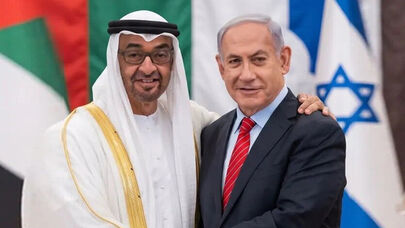
Former Israeli Prime Minister Ehud Barak issued a warning ahead of the October 27 election, saying Benjamin Netanyahu was “laying the groundwork for war” in a way that could enable him to postpone the election. Barak said Netanyahu was preparing the infrastructure needed for war and should be removed from power on October 27. The remarks come as the upcoming election will be Israel’s first nationwide vote since October 7, 2023 and the wars that followed, with security, war and the government’s handling of external threats emerging as central issues in the political contest.
The significance of Barak’s remarks lies not only in his accusation against Netanyahu, but also in the question now emerging in Israel’s political discourse: Is Netanyahu, who has particular experience in designing and executing scenarios to navigate political and security crises, seeking to create an artificial situation that could delay the election? More importantly, does he need an actual war to create such a situation, or would it be enough to push the political environment toward a state of “security emergency”?
The two scenarios are significantly different. If Netanyahu directly launches a war and then postpones the election, his opponents could directly link the move to the electoral process and challenge it through political and legal channels. But if society is gradually pushed toward an emergency environment through warnings of an imminent attack, heightened threat levels, security meetings and the highlighting of suspicious incidents, the electoral landscape would also change. Instead of evaluating the government’s performance, the economy and domestic affairs, the election could become a referendum on “who can keep Israel safer.”
This concern has not been raised by Barak alone. Reuters has reported that Netanyahu has once again relied on the image of himself as “Israel’s protector” against regional threats in his election campaign, while his opponents are seeking to make his government’s security record and the security failures of recent years a central electoral issue.
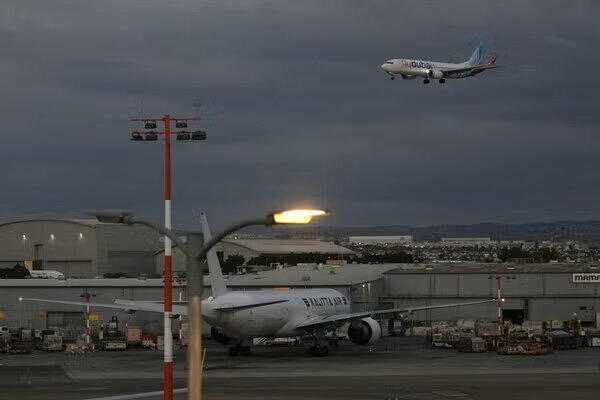
It is in this context that the Flydubai flight incident takes on particular significance. Serious questions remain about various aspects of the incident. Flight FZ1073 eventually landed in a Saudi city after declaring an emergency and making a significant descent. Initial reports differed over how individuals entered the cockpit, how the co-pilot was restrained and exactly who took control of the aircraft during the critical moments. Serious questions about various aspects of the incident remain unanswered.
Against this backdrop, the rapid emergence of narratives suggesting an “attempt to bring down the aircraft” and comparisons with the September 11 attacks could shape public perceptions of the incident before all the technical details are established. The important question now is why a case that is still under investigation was so quickly incorporated into security and political discourse.
The issue becomes even more significant because Iran’s name entered the narrative almost immediately. Netanyahu said the investigation should determine whether the person behind the incident had been directed by another party and warned that anyone responsible would pay a heavy price. Donald Trump then said that if Iran’s involvement in the incident were established, Tehran would face a tough US response. At the same time, published reports have made clear that Iran’s involvement in the incident has not been established.
At the same time, another case emerged in Britain surrounding an incident near RAF Fairford, which was also quickly framed as an “Iran threat.” British officials spoke of indications that Iran may have been involved, while Netanyahu claimed that Israel had warned Britain before the incident about an Iranian-backed attack. Tehran has rejected the allegation, and the British investigation is still underway.
Taken together, these incidents, which have unfolded alongside coordinated media messaging, form a pattern worthy of political scrutiny: first, Netanyahu’s warning about the possibility of an attack before the election; then the Flydubai incident; followed by the introduction of Iran’s name into the narrative surrounding the incident; and, at the same time, the emergence of a case in Britain that was also attributed to Iran. All of this has occurred as the October 27 election approaches and Netanyahu’s opponents warn against the political use of security issues.
The central question, therefore, may not be whether Netanyahu intends to personally launch a war in order to cancel the election. The more important question is whether he can use the highlighting of external threats and the transformation of ambiguous incidents into security cases to move the election away from normal political competition.
If the answer is yes, an actual war may not be necessary. It may be enough for Israeli society to believe that the country is facing a major threat, making a change of government or the conduct of a normal political contest appear too risky under the circumstances.
This is where Barak’s remarks become significant. He did not warn of a specific military operation; he warned of a process that could push the political environment toward a point where the election becomes dominated by the security situation. From this perspective, the Flydubai incident and the RAF Fairford case can be viewed as components of a broader scenario, while the narrative built around them, their timing and the speed with which the “Iran threat” entered both cases warrant attention as possible elements of a security-electoral strategy.
The October 27 election is not simply a contest between Israeli political parties. It could also become a test of the relationship between “security” and “politics” in Israel. The central question is whether the catastrophic material and human costs imposed over the past two years through the creation and expansion of multiple wars, and the killing of tens of thousands of women, men and children across the region in the name of providing security, have ultimately produced greater security and peace, or instead intensified a cycle of tension, instability and insecurity.
The answer cannot be found in statements by politicians such as Netanyahu. It must be assessed through objective evidence derived from the conduct, decisions and interests of regional actors and from the actual outcomes of their security policies. If the result of “security-building” over these years has been the expansion of war, increased threats and the reproduction of conflict, then a more serious question arises: Was security truly the ultimate objective, or has it become a tool for maintaining power and redefining the political landscape?
From this perspective, Ehud Barak’s warning that Netanyahu is laying the groundwork for war and a possible postponement of the election, together with the way recent incidents have been framed, including the Flydubai case and the rapid allegations involving an Iranian threat, warrants close examination. The issue may not simply be the launch of another war. It may be the creation of an environment in which “threat” overrides “political competition” and security is transformed from a national necessity into a political tool.