The Salalah meeting was scheduled to take place on Monday, September 14, 2026 (September 23, 1405) in the Omani city of Salalah at the foreign-minister level. The initial lineup included Iran, Iraq and the six members of the Gulf Cooperation Council, namely Oman, Saudi Arabia, the UAE, Qatar, Kuwait and Bahrain. Bahrain announced before the meeting that it would not participate, reducing the expected lineup to Iran, Iraq and five Arab Gulf states.
Contrary to some interpretations, the announced agenda was not a general meeting on all regional issues. The main focus and, according to Abbas Araghchi, foreign minister of the Islamic Republic of Iran, the “only” item on the agenda was consideration of a new maritime route through the Strait of Hormuz. Iran and Oman had previously reached an understanding on this route and had prepared maps and a joint statement to be presented to the countries of the region and subsequently submitted to the International Maritime Organization for registration. Abbas Araghchi, foreign minister of the Islamic Republic of Iran, had stressed that the understanding did not mean “reopening Hormuz,” but rather established a framework for the entry and exit routes of vessels if conditions allowed.
But why was the Salalah meeting, which was supposed to address the future of passage and maritime security in the Strait of Hormuz, postponed only a few hours before it was due to begin? This may be the most important unanswered question surrounding a meeting that could have marked one of the most significant diplomatic developments since the war.
Hours before the meeting was due to take place, Oman’s foreign minister announced that the session had been postponed to create suitable conditions for constructive dialogue and reaching consensus. Tehran also stressed that the decision had been taken at the request of some regional countries and by mutual agreement between Iran and Oman. But these explanations, at least on their own, do not answer what happened in the final hours that changed the course of the meeting.
To find the answer, one must look beyond the visible disagreements among regional countries and return to the course of developments over the past several months and the efforts made to prevent the emergence of a new mechanism around Hormuz.
A key point in this chain of events was the confidential meeting held in Manama on June 17. Previous reports had been published based on information from informed Bahraini sources about the meeting. According to those reports, Mohammed bin Zayed, CENTCOM Commander Admiral Brad Cooper and one of the senior advisers to the Mossad were present, while Marco Rubio participated remotely. According to informed sources, the discussions focused on ways to contain the understanding between Tehran and Washington and prevent its consequences from becoming consolidated, particularly in the Strait of Hormuz.
The same report said that Mohammed bin Zayed had issued a warning that is particularly important for understanding subsequent developments: “Be careful not to create another Oman in the region.” The meaning of this statement was not simply concern about a mediator; it reflected concern over the emergence of a channel that could turn Oman into an independent conduit between Tehran and Western parties.
The significance of this account becomes clearer when subsequent developments are considered alongside it. Iran and Oman continued negotiations on arrangements for passage through Hormuz, and Tehran explicitly stated that the future management of passage through the waterway should be pursued in coordination between the two coastal states and with reference to Article 5 of the Islamabad memorandum of understanding.
In fact, what had taken shape in Islamabad was not merely an understanding on ending the conflict. Its Article 5 made Hormuz part of the post-war arrangements. This issue subsequently became one of the main points of contention.
The report published on the confidential Manama meeting also focused precisely on this point: concern that implementation of Article 5 of the understanding would consolidate Iran’s position in the security arrangements for Hormuz. According to informed sources, the meeting even raised the option of activating the “southern route” and putting pressure on Oman as part of efforts to counter this process.
Several days later, a Wall Street Journal report also reflected the same central concern among US officials: Washington was worried that the Iran-Oman agreement could lead to the consolidation of Iran’s role and control over Hormuz.
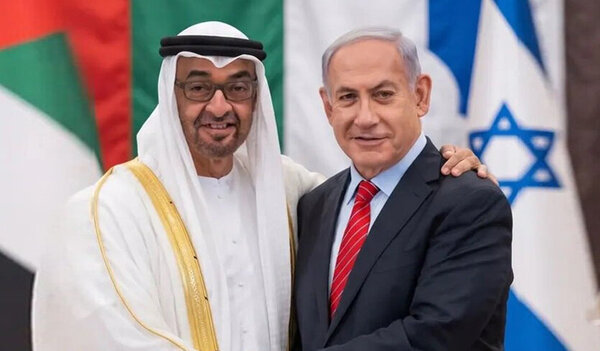
It is against this backdrop that the account of one of Al Jazeera’s senior television journalists becomes significant. He said Israel directly intervened to prevent the Salalah understanding from taking shape and pursued the matter in coordination with Mohammed bin Zayed and Marco Rubio. According to this account, pressure on Oman intensified in the final hours to prevent an agreement that could have established new arrangements for Hormuz.
Although the Al Jazeera journalist’s report does not provide further details about the mechanisms of coordination among Tel Aviv, Abu Dhabi and Washington to pressure Muscat into cancelling the Salalah meeting, the information provided, when considered alongside previously published information about the Manama meeting, presents a notable and documented pattern: preventing the formation of any bilateral or multilateral understanding among Iran, the US and regional countries that could lead to stable regional arrangements.
This approach has been pursued by Israel for years as a central strategy, and Tel Aviv has so far deployed a range of its capabilities to advance it. In this context, the role of the UAE and the Israeli lobby within the US ruling establishment in supporting this strategy is particularly significant. Abu Dhabi maintains close strategic relations with both Washington and Tel Aviv and has also been in direct contact with US officials in recent months regarding the future of Hormuz. According to an official US report, the meeting between Mohammed bin Zayed and Rubio in Abu Dhabi also covered issues including efforts to ensure safe passage through Hormuz and the US-Iran understanding.
Pressure on Oman is not merely a political assumption. Donald Trump had previously threatened Muscat over its role in Iran-Oman negotiations on Hormuz, saying that if Oman stood in the way of US actions, it could potentially be targeted with bombing. This threat further underscores the significance of pressure on Muscat during the Hormuz negotiations.
From this perspective, the postponement of the Salalah meeting should not be viewed merely as the result of disagreements among regional countries. Bahrain had officially announced that it would not participate in joint meetings with Iran until diplomatic relations with Tehran were restored, and intensive consultations among regional countries were also taking place in the days leading up to the meeting. But these disagreements may have been part of the same regional environment that made the emergence of a broader agreement more difficult.
The main issue at the Salalah meeting, however, was not the number of ships passing through Hormuz; it was the rules governing passage.
Had the Salalah meeting taken place and Iran, Oman and the coastal states reached a joint mechanism on security and passage through Hormuz, the playing field would have changed. The issue would no longer have been simply how many vessels pass through the strait each day or who can keep the route open. The fundamental question would have become who sets the rules governing passage, security and coordination of maritime traffic.
This was precisely the point at which Iran’s military achievement in Hormuz could have been transformed into a political and diplomatic achievement: transferring Iran’s weight from the battlefield to the regional negotiating table and turning the geographic and security position of Hormuz into a political mechanism involving the coastal states.
Under such circumstances, the success of Salalah could have reduced the role of the US from the “decisive rule-setter in Hormuz” to that of an external actor, while Iran and Oman, as the two coastal states, would have occupied the centre of the new arrangements.
Therefore, the central question surrounding the postponement of the Salalah meeting should not be reduced, simplistically, to opposition from just a few Arab countries. The more important question is which forces behind the scenes sought to prevent the meeting from evolving from a regional dialogue on Hormuz into a practical and lasting agreement.
The confidential Manama meeting, subsequent reports about the Israeli regime’s concern over the consolidation of Iran’s regional position, US pressure on Muscat, and the senior Al Jazeera journalist’s account of coordination between Netanyahu, Mohammed bin Zayed and Rubio together constitute a set of indications that make an examination of the role of Israel and the UAE in halting this process necessary.
Within this framework, Salalah is not simply a postponed meeting. It is one of the key points in the struggle over the post-war security architecture of the region, particularly in the area of Hormuz. It is a struggle in which one of the central questions is shifting from “How many ships pass through Hormuz?” to “Who will be the principal actor in setting the region’s security rules?”