Recent developments indicate that the US-Iran war has entered a complicated phase involving military confrontation, economic pressure and diplomatic competition. While Washington continues to issue military threats, regional efforts to consolidate the ceasefire are ongoing, and differences over the possibility of resuming the war are becoming increasingly apparent.
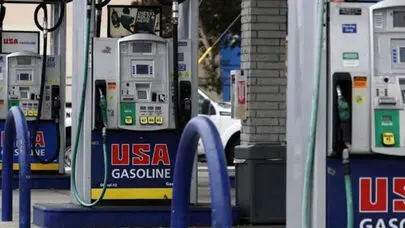
Oil at $96 a barrel: Energy markets remain under the shadow of war
Brent crude has reached $96 a barrel, an increase that, alongside concerns over continued military tensions and energy restrictions, has once again highlighted the significance of developments in the war between Iran and the US for global energy markets.
Pakistan and Qatar work to revive ceasefire as consultations continue
Pakistan's defense minister said Islamabad and Doha were continuing their efforts to revive the ceasefire between Iran and the US, stressing that Pakistan had played a constructive role in mediating between Tehran and Washington.
Trump and Eisenkot: Iran file on the agenda of White House consultations
Al Hadath reported that the White House is holding consultations to arrange a meeting between Donald Trump and Gadi Eisenkot following the formation of Eisenkot's government. According to the report, coordinating positions on the Iran file is among the issues Eisenkot intends to raise.
Divisions among supporters of the war: White House doubts Netanyahu's claims
Patrick Wintour, The Guardian's diplomatic editor, says Israel has sought, both before and after the election, to convince Trump that the war must be resumed. However, he notes that serious doubts have emerged within the White House about Netanyahu's recent statements concerning the urgency of military action.
Tehran: Allegations concerning Kuwait are part of a scenario to reignite the war
In phone calls with the foreign ministers of Kuwait and Italy, Iranian Foreign Minister Abbas Araghchi categorically rejected allegations of Iran's involvement in the drone attack in Kuwait. Expressing condolences over the deaths of Italian nationals, he described the incident as suspicious and part of a scenario aimed at reigniting the war. He also declared Iran's readiness to cooperate in clarifying the circumstances surrounding the incident.
Trump: From claims of victory to direct threats against Iran
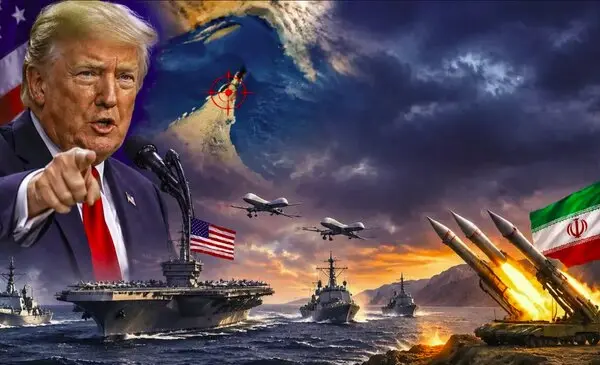
In a series of remarks, Trump claimed that the US had won the war, that Iran's enrichment capabilities had been destroyed in Operation Midnight Hammer, and that Iran had failed to obtain a nuclear weapon. He described the naval blockade as a historic action, defended Operation Epic Fury, claimed that Iran's missiles had been destroyed, and threatened the Kuh-e Kalang facility, while speaking of giving Tehran another chance.
He also claimed that the US was exporting more oil through the Strait of Hormuz than ever before, that it had no need for the region's oil, and that its presence in the region was intended to protect Israel. Trump further claimed that Xi Jinping and Vladimir Putin had also called for an agreement during trilateral discussions on Iran.
Warning about Trump's physical condition: Claims by former US television host
Joy Reid, a former MSNBC host, criticized what she described as the silence of US media about Trump's physical condition. She claimed that the US president appeared old and frail and was on the verge of death.
Kazemi Qomi: The US has been driven to desperation in its confrontation with Iran
Kazemi Qomi, Iran's former ambassador to Iraq, referring to regional countries' concerns about a possible escalation of the war, said Washington had until January to make a decision on an intensified war, in light of developments expected in Congress and the Senate. He said Iran had changed US calculations by postponing the outbreak of war.
Egypt and Qatar step up efforts to contain regional tensions
Abdel Fattah el-Sisi and the Emir of Qatar, during a meeting in Cairo, stressed the need to intensify diplomatic efforts to reduce tensions, strengthen security in the Persian Gulf and consolidate the ceasefire in Gaza. Alongside mediation efforts by Pakistan and Qatar, the meeting points to an increase in regional diplomatic consultations.
Energy crisis reaches the UK economy: Warning of mounting pressure on household budgets
The Bank of England warned that rising energy costs and interest rates in the wake of the economic consequences of the war against Iran could increase mortgage payments for millions of households, while further intensifying pressure from the cost of living and household debt.
Hemmati: US economic war has entered a critical phase
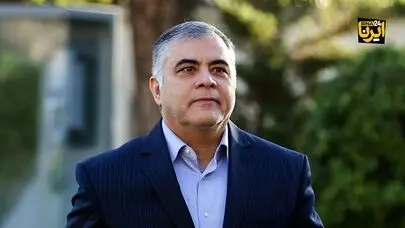
Abdolnaser Hemmati, governor of the Central Bank, responding to the sharp rise in the exchange rate, spoke of intensifying sanctions-related and psychological pressure on the market. He stressed that the Central Bank would continue targeted interventions to maintain stability in the foreign exchange market.
Tehran and Islamabad consult on regional developments
The foreign ministers of Iran and Pakistan held a phone conversation to discuss the latest regional developments. The call came as part of ongoing diplomatic consultations between the two countries and Pakistan's efforts to mediate between Tehran and Washington.
Baghdad closes Pashteh border crossing; Shoushmi faces possible closure
A local source reported that Baghdad had ordered the closure of the Pashteh border crossing between Iran and Iraq, in Iraq's Halabja province. The possible closure of the Shoushmi crossing has also been raised, although the reason for the decision and how long it will remain in effect have not yet been determined.
Minab case takes international stage: Belongings of martyred students displayed in Germany
The personal belongings of students martyred in the attack on the Shajareh Tayyebeh School in Minab, including their notebooks, pencil cases and backpacks, were displayed at an exhibition held at the Iranian Embassy in Germany. The event was attended by foreign diplomats, German citizens and Iranians living in the country.
Tomahawk missile and the dimensions of the attack on the Minab school
The head of the Judiciary's Center for Lawyers said the Tomahawk missile that struck the Shajareh Tayyebeh School in Minab belonged to a newer generation of the missile and was capable of changing course up to 15 times. The statement draws attention to the technical dimensions of the attack on the school.
Rear Admiral Sayyari: US will see the impact of Iran's new air defense systems
The Army's deputy chief for coordination, referring to lessons learned from recent wars and the strengthening of the country's air defense capabilities, stressed that the US would see the impact of Iran's new air defense systems on the battlefield.
Biden's son: US is now a full-fledged oligarchy
Joe Biden's son criticized the US political system, saying that dirty money had undermined the country's politics. He said he believed the United States had now become a fully-fledged oligarchic system.