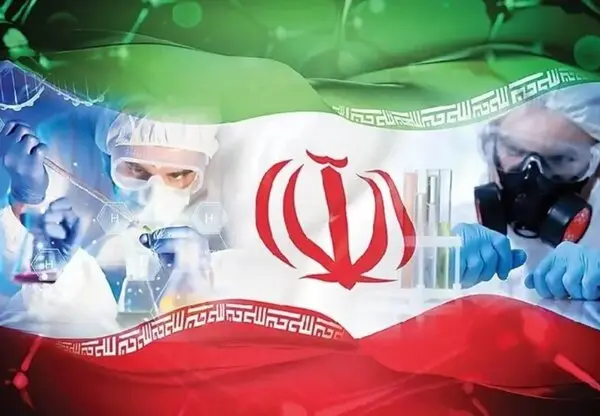
In recent years, nanotechnology has moved beyond research and laboratory-scale production to become one of the growing sectors of Iran’s knowledge-based economy. The latest data released by the Vice Presidency’s Nano and Micro Technologies Development Headquarters indicate that the expansion of industrial products, increased production capacity among manufacturers, and broader export markets have been the three main drivers of progress in this industry.
According to the ninth survey of the Iranian nanotechnology products market, announced in Aban 1404 (October–November 2025), exports of these products totaled $183 million in 1403 (2024–2025), reaching 63 countries worldwide. This figure accounted for more than 10 percent of Iran’s nanotechnology product market, valued at 973 trillion rials.
Iraq and Turkey: Iran’s Leading Export Markets
According to figures released by the secretary of the Nano Technology Development Headquarters, Iraq, Turkey, India, Venezuela, Pakistan, and Russia were the six leading destinations for Iranian nanotechnology products in 1403 (2024–2025). More than 70 percent of total exports went to these six countries.
A breakdown of export values shows that Iraq ranked first, purchasing $34.9 million worth of products. Turkey was the second-largest buyer at $32.6 million, followed by India at $21 million.
Venezuela ranked next with $18.1 million, followed by Pakistan with $17 million, Russia with $11.5 million, and Afghanistan with $11.4 million. Syria followed at $10.1 million, Armenia at $3 million, the United Arab Emirates at $2.5 million, and Indonesia at $2.4 million.
This distribution highlights the continued importance of regional markets, while the presence of countries such as Venezuela, Russia, and India points to the expanding geographical reach of Iran’s nanotechnology exports.
Different Export Destinations Across Industrial Sectors
A sector-by-sector breakdown of export destinations also reveals the diversity of target markets.
In nanomaterials, India, Pakistan, and Turkey are among the buyers of Iranian products. In civil engineering and construction, Iraq, Afghanistan, and Turkey feature among the export destinations. This distribution underscores the importance of neighboring countries as markets for nanotechnology products used in the construction industry.
In the oil and petrochemical sectors, Turkey and Russia are among the major markets for Iranian products. The significance of this segment is further underscored by the development of nanocatalyst production. According to the secretary of the Nano Technology Development Headquarters, Iran exported more than $24 million worth of nanocatalysts to Russia, Turkey, Iraq, and Uzbekistan in 1403 (2024–2025). This was nearly three times the export value recorded in 1402 (2023–2024).
In textiles, the United Kingdom, Armenia, and the United Arab Emirates are among the reported destinations. Meanwhile, Germany, Russia, the United Kingdom, China, South Korea, and the Netherlands are among the buyers of nanotechnology equipment. Their presence points to the potential for specialized Iranian products to enter industrial markets in Europe and East Asia.
Production Growth: Foundation for Export Expansion in 1404 (2025–2026)
Data released in Khordad 1405 (May–June 2026) provides a more recent picture of the industry’s production capacity. According to Emad Ahmadvand, Secretary of Iran’s Headquarters for the Development of Nanotechnology and Microtechnology, by the end of 1404 (March 2026), the number of nanotechnology products certified for industrial-scale production had reached 1,965, manufactured by 438 companies.
During the same year, 230 new products were added to the country’s nanotechnology portfolio, bringing the headquarters’ performance in product development to approximately 120 percent of its initial target. Most of the new products also had industrial applications, primarily in industrial supplies and services, energy and oil, chemicals, and pharmaceuticals and healthcare.
Another major development in 1404 (2025–2026) was the signing of approximately $17 million in contracts in the oil industry for the production and supply of nanotechnology-based catalysts. Production of graphene-enhanced lead-acid batteries also reached the industrial stage.
Global Markets: Continued Potential for Expansion
Taken together, these figures indicate that nanotechnology in Iran has moved beyond limited, laboratory-scale production and become part of the country’s industrial and export activities. Exports worth $183 million to 63 countries, substantial nanocatalyst sales, and growth in the number of products and manufacturing companies demonstrate the sector’s potential.
However, an accurate assessment of export performance in 1404 and 1405 (2025–2027) requires the publication of separate statistics on export values, each country's share, and product composition. Production figures and the number of companies alone cannot serve as substitutes for export data.
What has been documented so far is the continued expansion of production capacity and the development of Iran’s nanotechnology commercialization infrastructure.