As the consequences of the failure of US President Donald Trump’s war of aggression against Iran become increasingly apparent, and new dimensions of the Republicans’ defeat in the US congressional midterm elections emerge, a new report by the Federation of American Scientists (FAS) on the Israeli regime’s nuclear arsenal has once again exposed deep contradictions in the nuclear policies of the United States and international institutions.
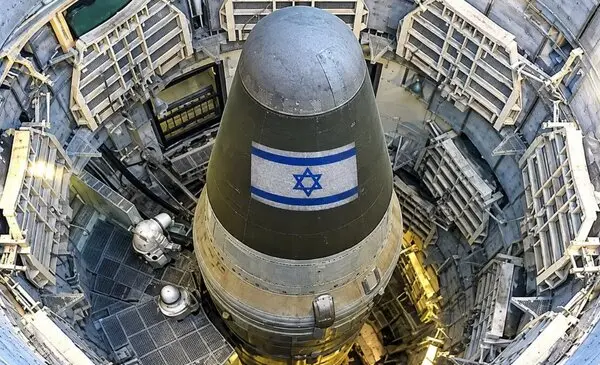
In its latest assessment, the federation’s researchers estimate that the Israeli regime possesses approximately 90 nuclear warheads and report an expansion of the infrastructure at the Dimona nuclear facility. The report also cites an early 2025 assessment by the International Panel on Fissile Materials (IPFM), which estimates that the Israeli regime has likely accumulated between 800 and 1,000 kilograms of plutonium.
The significance of this report lies not merely in the figures and information it provides about the Israeli regime’s nuclear capabilities. Its release at this particular juncture once again brings the double standards of the United States and the International Atomic Energy Agency (IAEA), as well as the role of IAEA Director General Rafael Mariano Grossi, into focus.
On the one hand, the report provides further evidence of the Western powers’ discriminatory approach to nuclear weapons. On the other, the timing of its publication may be viewed within the framework of scenarios designed to stoke fears about the Israeli regime’s capabilities and potential actions against Iran and other countries in the region. Nevertheless, such efforts to shape perceptions will neither alter Iran’s resolve nor weaken Tehran’s determination to avenge the perpetrators of crimes against the Iranian people, break the blockade, and establish lasting deterrence. These principles will remain unwavering in the face of external threats and pressure.
US Nuclear Double Standards: A Threat to Global Security
The United States has allocated hundreds of billions of dollars to modernize and strengthen its nuclear arsenal, while its double standards and discriminatory policies have effectively made it one of the principal factors undermining global nuclear security. On the one hand, under the pretext of countering a nuclear threat, Washington launched a military attack on Iran’s nuclear facilities and bombed them in violation of the principles of the Treaty on the Non-Proliferation of Nuclear Weapons (NPT), the UN Charter, and international law. This criminal act could have caused severe environmental and humanitarian consequences had the safety of these facilities been compromised.
This conduct is reminiscent of the United States’ historical record. During World War II, the country unleashed a humanitarian catastrophe and mass killing through its atomic bombings of Japan. Today, under the pretext of taking preemptive action to prevent Iran from potentially acquiring nuclear weapons, it has once again attacked our country’s nuclear facilities. Iran’s initiatives and preventive measures, however, prevented the attack from escalating into a far greater catastrophe.
On the other hand, the same United States not only remains silent about the Israeli regime’s possession of nuclear weapons but also effectively enables the continuation and expansion of its nuclear capabilities through its support for the regime. The very nature and political existence of this regime are intertwined with state terrorism, occupation, crimes, and genocide.
In this way, Washington has exposed global nuclear security to two simultaneous threats: first, its unlawful military aggression against Iran’s nuclear facilities; and second, its disregard for the Israeli regime’s nuclear arsenal and its support for the expansion of the infrastructure underpinning that arsenal. Such an approach not only undermines the credibility of international law but also erodes the foundations of global confidence in mechanisms designed to prevent the proliferation of nuclear weapons.
Washington and Tel Aviv: Driving Forces Behind a Shift in Global Nuclear Doctrines
The dangerous consequences of US conduct are not limited to military aggression and support for the Israeli regime’s nuclear arsenal. These policies could reshape global security calculations and prompt many countries to reconsider their defense and nuclear doctrines.
When a country such as Iran, despite the peaceful nature of its nuclear activities and its repeated emphasis on international commitments, becomes the target of military aggression, while a regime possessing nuclear weapons outside the NPT framework remains immune from accountability and meaningful pressure, the message conveyed to other countries is clear: traditional security doctrines may no longer be sufficient to counter the excessive demands of hegemonic powers.
Under such circumstances, the likelihood of countries withdrawing from the International Atomic Energy Agency and even reconsidering their commitments under the Treaty on the Non-Proliferation of Nuclear Weapons increases. The conduct of the United States and the Israeli regime reinforces the perception that acquiring new deterrent capabilities, including reconsidering nuclear doctrines, may become a necessity for countering threats.
In other words, a policy ostensibly intended to prevent the spread of nuclear weapons could, if these double standards persist, produce precisely the opposite outcome, pushing the world toward an arms race and a fundamental redefinition of deterrence.
International Atomic Energy Agency: Silence on Israel, Pressure on Iran
The report estimating that the Israeli regime possesses approximately 90 nuclear warheads comes at a time when the International Atomic Energy Agency and its Director General, Rafael Mariano Grossi, have not only failed to take any effective or deterrent action in response to the US and Israeli regime’s military aggression against Iran’s nuclear facilities but have also refrained from explicitly condemning it. Instead, they continue to insist on inspections of facilities that have been subjected to military attacks, even though such demands face serious legal constraints and considerations in light of Iran’s legal position concerning UN Security Council Resolution 2231.
The contradiction is even more glaring given that the same agency has effectively remained silent about the Israeli regime’s nuclear arsenal and the expansion of its capabilities. The regime’s non-membership in the Treaty on the Non-Proliferation of Nuclear Weapons cannot be interpreted as granting it immunity from responsibilities related to international nuclear security. The threats arising from its possession of nuclear weapons go far beyond whether it is a party to a particular treaty and require accountability and effective action by the international community to prevent the proliferation of these dangers.
From this perspective, international institutions are expected to adopt a responsible approach rather than exert unilateral pressure on Iran’s peaceful nuclear activities. They should place the Israeli regime’s nuclear arsenal on their agenda and establish the conditions for holding it accountable through legal, sanctions-related, and international mechanisms.
The continuation of such politicization and irresponsible conduct will not only destroy global confidence in the IAEA but also send a dangerous message to countries: membership in treaties and cooperation with international institutions provide no effective guarantee of national security when those institutions lack the will and capacity to respond to overt aggression and threats. This situation could establish a dangerous precedent for countries withdrawing from the NPT and further weaken the international arms-control regime.
Recognition of Israel’s Nuclear Capabilities Will Not Change Iran’s Resolve
The Federation of American Scientists’ report, titled Israeli Nuclear Weapons, 2026, examines not only the Israeli regime’s nuclear arsenal but also its military capabilities in areas such as fighter aircraft, ballistic missiles, and submarines. The publication of this assessment at the present juncture is particularly significant, especially as several US and Israeli think tanks, media outlets, and public figures have acknowledged that a substantial part of their strategic capabilities has been damaged in the face of Iran’s military strength, while continuing to employ threatening rhetoric and raise the possibility of renewed aggression against Iran.
In this environment, the publication of the report, beyond its informational value, could be viewed as part of a media campaign intended to conceal the military weaknesses of the United States and the Israeli regime and create an atmosphere of fear over the possibility that the regime might resort to nuclear weapons against Iran. Such a scenario may be aimed at influencing Iranian officials’ calculations, undermining national resolve, and pressuring Tehran into backing down in the face of US demands.
Nevertheless, such efforts to shape perceptions will not change Iran’s strategy. Tehran remains committed to avenging the blood of the Iranian people’s martyrs, from the martyred Leader to the schoolchildren of Minab and the other victims of the enemy’s crimes. This demand is definitive and non-negotiable. Breaking the blockade through practical and operational initiatives, backed by the capabilities and readiness of the Armed Forces, also remains firmly on the agenda and will not be removed from Iran’s strategic calculations.
Within this framework, Iran’s response to any threat or act of aggression will be proportionate to its nature and will draw on the country’s military, missile, and drone capabilities. Such a response will not be confined to any particular geographical area and could produce consequences extending far beyond the initial calculations of those planning any aggression.
The fundamental point is that, despite possessing nuclear weapons, the Israeli regime continues to suffer from fundamental geopolitical weaknesses and geographical limitations. It cannot secure lasting security for itself through nuclear threats or break the resolve of the Iranian people. Given Iran’s missile and drone capabilities, any miscalculation by Tel Aviv could expose the entirety of the occupied territories to devastating strikes. The regime’s strategic facilities, including the Dimona nuclear facility, will likewise remain within Iran’s defense calculations in the exercise of its inherent right to self-defense and in response to aggression.
Ultimately, the Federation of American Scientists’ latest report is more than a reflection of the estimated number of nuclear warheads possessed by the Israeli regime. It constitutes further evidence of the credibility crisis facing the international non-proliferation regime and the dangerous double standards of Western powers. By continuing these policies, the United States and the Israeli regime are not only threatening regional and global security but also creating the conditions for changes in deterrence doctrines and heightened nuclear instability worldwide.
Nevertheless, neither nuclear threats nor psychological and media operations will weaken Iran’s resolve to defend its national security and interests, pursue the rights of its people, and establish lasting deterrence.