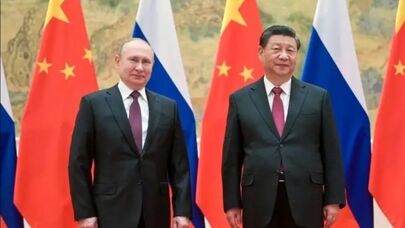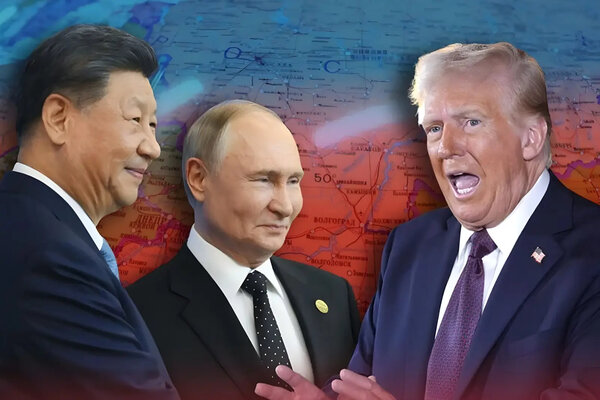
The Republicans’ heavy defeat in the midterm congressional elections continues to cast a shadow over Donald Trump. Nevertheless, the White House has announced plans for the first trilateral meeting between Trump, Vladimir Putin and Xi Jinping on Thursday, November 19, on the sidelines of the APEC summit in Shenzhen, China. Nuclear arms reduction and the war against Iran are among the announced topics. However, Trump’s erosion of global trust, Moscow and Beijing’s independent approach to the emerging world order, their emphasis on Iran’s right to self-defense against aggression by the US and the Zionist regime, and Tehran’s insistence on its seven conditions give the meeting a significance that goes beyond its stated agenda. The gathering is not a display of Washington’s strength, but a sign of the failure of Trump’s policies to restore American dominance.
Domestic Crisis and Foreign Policy Haste
The Republicans’ defeat in the midterm elections has exposed Trump to growing public criticism. He has failed to contain inflation and bring down energy prices, while his approval rating has fallen below 30 percent. Pressuring Netanyahu to secure peace in Gaza, pursuing a Ukraine-Russia agreement in Abu Dhabi, accepting Moscow’s demands, claiming to negotiate with Iran through a carrot-and-stick approach, and meeting the leaders of China and Russia are all attempts to use foreign policy to mask the domestic crisis. But the energy crisis and public discontent show no signs of easing.
From Promises to Contain Global Powers to Accepting Reality
At the beginning of his presidency, Trump promised to cripple China through tariffs and restore America’s position at the top by containing Russia. Through the Monroe Doctrine, he also sought to pursue intervention in Latin America. Yet Washington has now accepted the lifting of sanctions and imports of Russian diesel, while asking Ukraine and Europe to accept Moscow’s demands. Following his visit to China and his hosting of Xi Jinping, Trump has praised Beijing’s achievements. Putin and Xi, however, have not changed their policies.
The meeting is not the result of Trump’s power to force others into submission, but a sign of his inability to overcome the resistance of other powers. Russia and China’s reliance on domestic capabilities, strengthening of their military capacities, and use of both the battlefield and diplomacy have shifted the balance in favor of a new world order and accelerated the decline of US unilateralism.
Nuclear Treaty Talks Amid Distrust
The revival of the START treaty to reduce nuclear weapons is being raised in an atmosphere of deep distrust. US unilateralism, nuclear threats and the attack on Iran’s facilities have eroded the credibility of Washington’s commitments and undermined the value of Trump’s signature. The aggression against Iran’s facilities has brought nuclear deterrence back to the center of countries’ security calculations. Given the doctrines of the three powers on modernizing their arsenals, a genuine agreement to reduce nuclear weapons appears unlikely, and any potential deal is more likely to be merely rhetorical.
Iran: Mediation, Yes; Retreat, No
The US war against Iran will be among the topics of discussion. Trump had claimed that he would eliminate Iran within days, dismantle its nuclear program, and destroy its missile and drone capabilities. But he failed. The Iranian people’s national resilience, from their public presence to their strength on the battlefield and in diplomacy, inflicted a major defeat on the US, the Zionist regime and their allies. Iran’s management of the Strait of Hormuz brought the consequences of the war into the United States, creating a crisis over fuel supplies and energy costs. It is in this context that requests for mediation from China and Russia should be understood.
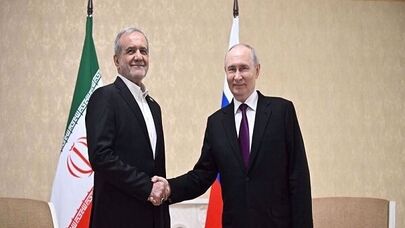
Moscow and Beijing have condemned the aggression by the US and the Zionist regime and stressed Iran’s right to self-defense, including its sovereignty over the Strait of Hormuz. Iran’s participation in BRICS, the Shanghai Cooperation Organization and meetings of the Commonwealth of Independent States, as well as meetings among their leaders, demonstrate the depth of their cooperation. Russia and China emphasize the localization of security, greater integration among neighboring countries, the improvement of relations between Arab countries and Iran, and a move away from dependence on extra-regional powers for security. They recognize that they, too, could become targets of pressure from Washington.
Iran welcomes mediation aimed at ending the war and securing its legitimate rights, including the withdrawal of the US from the region and joint action against the Zionist regime. But it will not retreat from its seven conditions or its sovereign rights over the Strait of Hormuz. Tehran is prepared to consider proposals, but it will not give up its rights or forgo avenging the blood of those martyred in the imposed wars. The Strait of Hormuz will not return to the conditions that prevailed before the war. This is a principle the world must accept. The punishment of the US and the Zionist regime is non-negotiable, and mediators can play a role only on the basis of these principles.