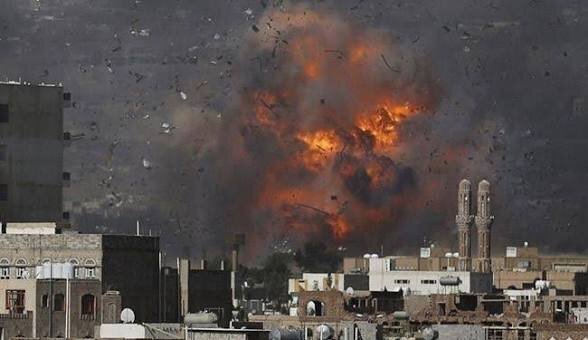
Within the framework of the right to self-defense, Yemenis have liberated cities from occupation by foreign mercenaries and, in response to Saudi aggression, carried out missile and drone attacks. Under the strategy of “an eye for an eye, a siege for a siege,” they have targeted airports and strategic facilities, including Aramco and Saudi oil and petrochemical installations. Yemen’s resistance has not only become a model for independent and freedom-seeking countries, but has once again put the sincerity of human rights advocates and international institutions to the test.
US President Donald Trump has called the attack on Riyadh International Airport “unacceptable” and announced that a decision would be made on the matter. US Secretary of State Marco Rubio also described the attacks in a post on X as evidence of disregard for civilian lives and called for them to stop immediately. European officials have likewise condemned the Yemeni attacks. European Commission President Ursula von der Leyen expressed solidarity with the people of Saudi Arabia and European partners in the Persian Gulf region, describing attacks on civilian infrastructure as “completely unacceptable.” UN Secretary-General Antonio Guterres also strongly condemned the attack on King Khalid International Airport in Riyadh, stressing that attacks on civilians and civilian infrastructure violate international law.
Human Rights Through the Lens of Self-Interest: Silence in the Face of Crimes
These reactions once again expose the double standards of the West and the United Nations. While invoking human rights and the protection of civilians to condemn Yemeni attacks, they ignore Saudi Arabia’s aggression against the Yemeni people and Yemen’s right to self-defense. Such an approach effectively whitewashes the crimes of aggressors and turns legal principles into instruments of political pressure against independent nations.
The contradiction is stark: these same governments and institutions describe attacks on Saudi airports and infrastructure as violations of international law, yet remain silent over the massacre of 73,000 civilians in Gaza, the destruction of 90% of its buildings and the displacement of two million Palestinians. They have also remained silent about the repetition of crimes in Lebanon and Syria and the aggression by the US and the Israeli regime against Iran. The massacre of schoolchildren in Minab and Lamerd, along with the destruction of Iran’s infrastructure, are further examples of crimes that have not prompted a commensurate response from those who claim to defend human rights.
The question is straightforward: If attacks on Saudi infrastructure violate international law, why do US and Israeli regime attacks on civilians and infrastructure in other countries not face comparable condemnation? The West’s real standard is driven more by political and economic interests than by humanitarian principles. Amid an energy crisis and the need for Saudi resources, protecting infrastructure becomes a priority. But when Western allies commit crimes, the same sensitivity gives way to silence or political and military support.
Saudi Arabia’s Security Umbrella: Verbal Support, Practical Hesitation
Yemenis continue to rely on their own capabilities to confront Saudi aggression, while those claiming to provide Saudi Arabia with a security umbrella remain cautious about directly entering the war. The Mecca Coalition, comprising Turkey and Pakistan, has reaffirmed its support for Saudi Arabia in various meetings and statements but has refrained from direct involvement in the war. The US and European countries, despite discussing increased arms sales and the protection of Saudi Arabia’s strategic facilities, also appear reluctant to become directly and extensively involved in the conflict.
A Siege for a Siege: From Bab el-Mandeb to Hormuz
Western support for Saudi Arabia and the UN’s double standards toward a decade of blockade, famine and crimes against the Yemeni people continue even as the strategy of “a siege for a siege,” stretching from Bab el-Mandeb to the Strait of Hormuz, has transformed regional calculations. Believing that economic sanctions and a naval and air blockade could force Iran to surrender or plunge it into a domestic crisis, the US has continued to intensify pressure on the country. Saudi Arabia, backed by the West, has likewise pursued a comprehensive blockade of Yemen. That model now faces a serious challenge.
Iran has challenged the US blockade by expanding surveillance across the Persian Gulf, the Gulf of Oman and the Arabian Sea, and establishing new arrangements for ships transiting the Strait of Hormuz. Yemenis, meanwhile, have increased their control over the Bab el-Mandeb Strait and raised the cost of aggression by targeting Saudi airports and oil and petrochemical facilities. Mohammed al-Farah, a member of the political bureau of Yemen’s Ansarullah movement, has said that airports and Aramco facilities were merely a testing ground, adding that more important and sensitive targets remain for future stages.
The balance of power from the Strait of Hormuz to Bab el-Mandeb is now more than ever shaped by the will of the resistance front. These developments demonstrate that lasting security cannot be achieved by relying on promises from foreign powers and international institutions, particularly when international law is applied selectively and turned into a tool for advancing the interests of powerful states. Under such circumstances, localizing security, strengthening defensive capabilities and resisting aggression are undeniable necessities for safeguarding countries’ independence.