The increasingly apparent terrorist and criminal nature of the United States, coupled with the erosion of its military, economic, and political dominance in the face of the Iranian people’s resistance and resilience, has had consequences extending far beyond the battlefield. Moving away from Washington’s illusory security umbrella is gradually emerging as a global trend, including in Europe. Against this backdrop, remarks by Sheikh Hamad bin Jassim bin Jaber Al Thani, Qatar’s former prime minister and foreign minister, on the need to convene a summit of Persian Gulf leaders with Iran and establish a “Persian Gulf NATO” are particularly significant.
In an extensive interview with Rabab al-Mahdi on the YouTube program What Is the Solution?, Hamad bin Jassim called on the member states of the Gulf Cooperation Council (GCC) to retake the initiative and begin direct negotiations with Iran. The proposal could represent a positive step toward regional convergence and the realization of indigenous security, particularly given that Iran has repeatedly put forward strategic and practical initiatives to achieve such a framework. However, foreign dependence and the passive approach adopted by some regional countries have prevented these initiatives from bearing fruit. Genuine regional cooperation, nevertheless, requires independence, sincerity, and acceptance of the region’s new realities—realities centered on confronting the Israeli regime collectively and ending the United States’ hegemonic presence in the region.
The Collapse of the US Security Umbrella: From Claims to Reality
What stands out in Hamad’s remarks, as well as in similar statements by some of Washington’s allies in the region and even in Europe, is an acknowledgment of the ineffectiveness and collapse of the US model of selling security guarantees. The Ramadan War clearly demonstrated that the United States is even incapable of ensuring the security of its own military bases in the region. Intelligence assessments indicate that a considerable number of these bases have become unusable following the intensity of Iran’s missile and drone attacks.
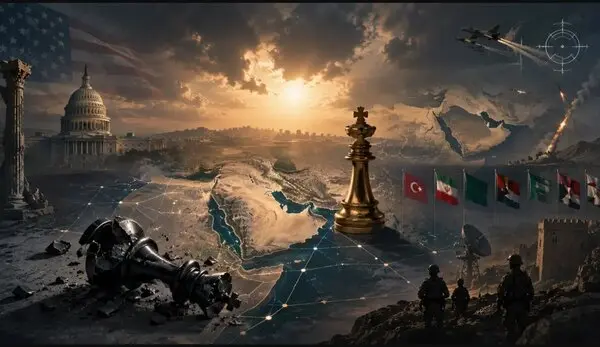
Moreover, the prioritization of the Israeli regime’s interests over those of Arab countries, along with Washington’s warmongering to safeguard the regime, has further exposed the insincerity and treacherous nature of US policies. Today, even in the heart of Europe, calls for greater self-reliance in security and a reduced dependence on the US military umbrella are gaining momentum. The emergence of the Mecca alliance involving Saudi Arabia, Türkiye, and Pakistan, as well as another alliance between Qatar, Indonesia, Türkiye, and Pakistan, should also be viewed in the context of these developments.
The Dream of Normalization: From Promises of Protection to the Nightmare of a Common Threat
Another significant point in Hamad’s remarks, which was also emphasized at the quadrilateral meeting in Tehran attended by Iran, Saudi Arabia, Türkiye, and Pakistan, is the growing threat posed by the Israeli regime to the security of the entire region. Hamad stresses that Israel is not merely seeking military gains from the war; rather, it is attempting to expand its sphere of influence and gain control over resources by reshaping the region’s security architecture.
The warning becomes all the more significant given Hamad’s acknowledgment of the security ties that Arab Persian Gulf states have maintained with the Israeli regime over the years. This admission underscores the need for an official repudiation of such relations, while providing further evidence of the collapse of the dream of achieving security and national interests through normalization. Countries that believed normalizing relations with the Israeli regime would guarantee Western support and protection are now confronting the bitter reality of betrayal and the material and moral costs of such dependence—a reality brought into sharper focus by the Ramadan War. Furthermore, global outrage over the Israeli regime’s crimes has also affected countries that have pursued normalization with it.
A Persian Gulf NATO or an Indigenous Security Architecture?
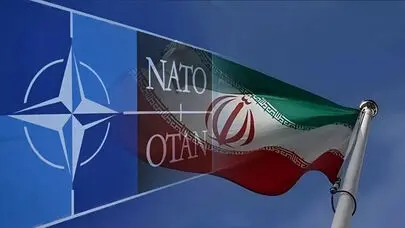
The term “Persian Gulf NATO” has occasionally been raised by some regional officials and media outlets, including Hamad. Although Article 5 of the NATO treaty stipulates that an armed attack against one member is to be considered an attack against all, the alliance’s track record suggests that it has effectively become an instrument of US dominance over other countries. NATO’s conduct has not been geared toward ensuring collective security, but rather toward pursuing wars and expansionist policies in the interests of a limited number of powers—from the killings in the Balkans and atrocities in Afghanistan to the devastation in Libya, the war in Ukraine against Russia, and its involvement in US-Israeli crimes against the Iranian people.
What the region needs is not a repetition of such an ineffective model, but genuine cooperation aimed at building an indigenous security framework. Such a framework must be based on the participation and cooperation of all regional countries across economic, political, social, environmental, and security domains. Achieving this goal will also be impossible without a unified position against the region’s common threat—the Israeli regime—and efforts to pave the way for the withdrawal of US forces from the region. Regional security must be the product of the will and cooperation of the countries in the region, rather than dependence on extra-regional powers.
Tehran’s Initiatives: Independence and Sincerity as Prerequisites for Engagement
Hamad’s proposal to launch dialogue between Iran and the Arab countries of the Persian Gulf comes as Tehran has repeatedly put forward concrete strategic initiatives toward this goal. These include the Hormuz Peace Initiative and the proposal to hold a regional meeting to examine and outline agreements recently reached between Iran and Oman on the management of the Strait of Hormuz. However, foreign dependence and the pursuit of narrow interests by some regional governments have effectively prevented such meetings from taking place.
The fundamental point is that the region will not return to the conditions that prevailed before the Ramadan War. Iran’s management of the Strait of Hormuz, within the framework of international law and as an exercise of its right to legitimate self-defense, remains a right as long as the threats persist. In addition to safeguarding Iran’s rights, this approach serves regional security and counters US coercion and hegemonic ambitions over international waterways. From this perspective, supporting such arrangements could form part of regional cooperation aimed at building an indigenous security framework. Meanwhile, Iran’s nuclear issue is no longer relevant to negotiations, and the central issues in any potential agreement must be an end to the war, the lifting of the blockade, the withdrawal of US forces from the region, and the punishment of the aggressors.
Ultimately, any engagement or negotiations with Tehran must meet one essential prerequisite: genuine independence and sincerity in conduct. It is impossible to speak of dialogue with Iran while simultaneously allowing the country’s airspace and territory to be used by aggressors; continuing to purchase US weapons at the expense of national resources; participating in the naval blockade of Iran; serving as a base for Israeli regime spies and Iron Dome systems; and playing a role in Washington’s economic and currency warfare against Iran.
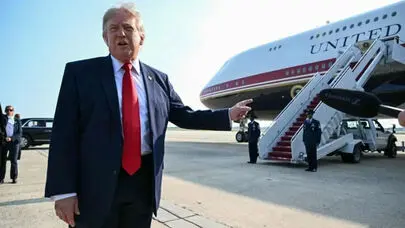
Arab countries must adopt a clear and official position on Trump's remarks, in which he claimed that these countries want to maintain the status quo—namely, avoid a wider war while continuing the blockade and sanctions against Iran. Despite its continued emphasis on regional cooperation and engagement with neighboring countries, Tehran will neither relinquish its legitimate rights nor retreat in the face of threats. Iran’s response to any aggressor, as well as to any country that in any way contributes to the enemy’s military, economic, or security campaign, will be decisive. Such a response will not be confined to the region’s geographical boundaries and could extend as far as the heart of Europe.