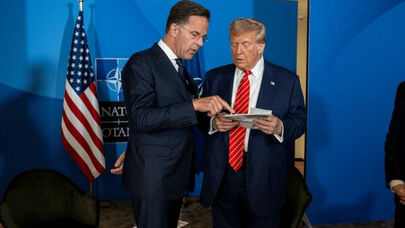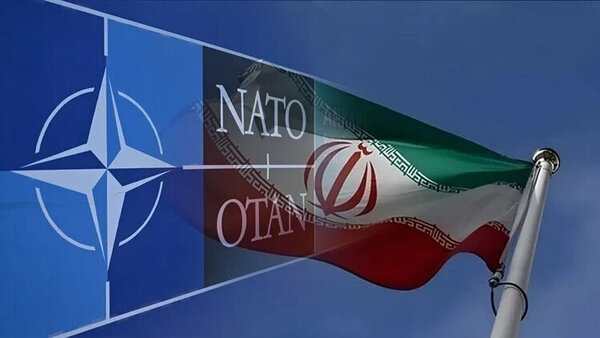
NATO faces an uncertain future amid growing divisions across the Atlantic between Europe and the United States. Yet Mark Rutte, the alliance’s secretary general, has welcomed a statement signed by 29 allied and partner countries, declaring his solidarity with them and condemning what he described as Iran’s involvement in violent acts and threats against member states, including the September 27 incident at the Royal Air Force base at Fairford. He then claimed that NATO would continue to fulfill its role in ensuring the security of the one billion people living in member countries.
These remarks came after claims that a statement condemning Iran’s alleged role in plotting against the US air base at Fairford in Britain had been signed, alongside renewed unfounded allegations by British Prime Minister Burnham that operatives acting under the direction of Iran’s Islamic Revolution Guards Corps (IRGC) may have been involved. The developments come as the Fairford case has, on the one hand, become a symbol of America’s declining security capabilities and, on the other, NATO’s attempts to exploit the incident risk drawing the alliance into another strategic miscalculation—one that could carry deadly consequences for NATO, particularly its European members.
Fairford: Exposing America’s Security Failures
Trump, British officials, and now NATO are seeking to blame Iran in what they see as an effort to use fear of Iran to whitewash US crimes and create an illusion of security by claiming that the base was evacuated. On the eve of elections, such efforts could indirectly benefit Trump and Netanyahu, both of whom are facing mounting crises. Yet one undeniable reality remains: the United States is facing serious questions even over its ability to secure its own military bases. How, then, can it portray itself as the savior of other countries?
These accusations also raise further questions about Trump’s claims that Iran’s military capabilities have been destroyed. If the United States has indeed destroyed Iran’s capabilities, as it claims, why is it mobilizing all its domestic and international resources, including NATO, to portray Iran as a threat? Fairford is not a symbol of Western unity against threats, but rather a sign of the security debacle facing the United States and its allies—a debacle that cannot be erased through political spin.
The West’s Embarrassment: From Appeasing Washington to Economic Crisis
European NATO members continue to bend over backward to accommodate the United States, even as Trump disregards commitments, announces a deal with Putin to obtain Russian diesel, and simultaneously calls for elections in Ukraine—an initiative that could lead to Zelensky’s removal from power. Meanwhile, Europe’s alignment with Washington against Iran carries consequences that could plunge the continent’s economy and political system into a serious crisis.
The UK-based Institute for Fiscal Studies has also warned that a sharp rise in inflation and government spending following the US and Israeli regime’s military aggression against Iran could pose a major challenge to Britain’s public finances.
Another source of embarrassment for Europe is the contradiction between imposing 1,600 new sanctions on Russia and continuing to import Russian energy into the European Union. Alexander Novak, Russia’s deputy prime minister responsible for energy, has put the value of energy exports to EU countries since 2022 at $320.7 billion.
Under these circumstances, accusations against Iran appear less a demonstration of strength than an attempt to whitewash the West’s contradictions and failures—contradictions that cannot be concealed through disinformation.
Rutte: Defender of Security or Accountable for Aggression?
Rutte, who has become so subservient to Trump that he calls him “Daddy,” is now striking a pose as a defender of Western security by accusing Iran. Yet he should be held accountable for NATO’s role in the illegal US-Israeli aggression against Iran. If the alliance is responsible for protecting its members against attacks, how can its involvement in the war against Iran, including through 5,000 sorties, be justified?
Rather than positioning himself as an accuser, Rutte should answer for NATO’s actions before the international community and human rights bodies. NATO’s participation in aggression and violations of international law must be pursued through international forums, with accountability demanded. This is particularly important given that a United Nations fact-finding committee has also acknowledged aspects of crimes against humanity.
Rutte cannot use fabricated allegations to reverse the roles of aggressor and victim, nor can he justify the criminal nature of his own conduct or that of Trump and NATO.
NATO’s Strategic Miscalculation and Iran’s New Equation
The positions taken by Rutte and 28 countries, most of them European allies of the United States, coinciding with Rubio’s remarks in Greece about a civilizational war against Iran’s history and culture, suggest that NATO and Europe have once again entered Washington’s game. From the Balkans and Afghanistan to Ukraine and the Ramadan War, this game has brought the West little beyond economic and human costs.
Europe appears to have joined this campaign through the Fairford case at a time of growing international isolation, both to create opportunities for Trump and Netanyahu to exploit anti-Iran sentiment for electoral gain and to make new hostile measures against Iran, ranging from military action to economic pressure, appear justifiable. Historical experience, however, suggests that such a course leads only to defeat and disgrace.
Nevertheless, whatever objectives the United States, the Israeli regime, Europe, and NATO seek to conceal behind the Fairford case, they cannot redirect the course of global developments—particularly in West Asia—to their advantage. Accusations and military threats will not alter the nature of Iran’s approach to managing the Strait of Hormuz. Drawing on its expanded capabilities, Iran will respond to threats more extensively and rapidly than before.
The Bab el-Mandeb Strait also continues to occupy a decisive position in the equations of the resistance front and remains under the control of Ansarullah. The strategic linkage between these two straits could expose aggressors to severe consequences and fundamentally alter their calculations.
Those who read history in its entirety, rather than selectively, understand all too well that aggression against Iran will ultimately lead to defeat in the face of the Iranian people’s resolve.