The latest developments suggest that the US-Iran conflict has entered a more complicated phase involving military confrontation, economic pressure and diplomatic competition. While Washington continues to issue military threats, regional efforts to consolidate the ceasefire are ongoing, and divisions over the possibility of resuming the war are becoming increasingly apparent.
Oil at $96 a Barrel: Energy Markets Remain Under the Shadow of War
Brent crude prices rose to $96 a barrel, an increase that, alongside concerns over continued military tensions and energy restrictions, has once again highlighted the impact of developments in the Iran-US conflict on global energy markets.
Pakistan and Qatar Continue Efforts to Revive Ceasefire
Pakistan's defense minister said Islamabad and Doha were continuing their efforts to restore the ceasefire between Iran and the United States. He stressed that Pakistan had played a constructive role in mediating between Tehran and Washington.
Trump and Eisenkot: Iran on the Agenda of White House Talks
Al Hadath reported that the White House was discussing arrangements for a meeting between Donald Trump and Gadi Eisenkot following the formation of his government. According to the report, coordinating positions on Iran is among the issues Eisenkot intends to raise.
Divisions Among Supporters of War: White House Questions Netanyahu's Position
Patrick Wintour, The Guardian's diplomatic editor, said Israel had sought, both before and after the election, to persuade Trump that the war should be resumed. However, he noted that serious doubts within the White House remained over Netanyahu's recent statements about the urgency of military action.
Tehran: Accusations Over Kuwait Are Part of a Plan to Escalate the War
In phone calls with the foreign ministers of Kuwait and Italy, Iranian Foreign Minister Abbas Araghchi firmly rejected allegations of Iran's involvement in the drone attack in Kuwait. Expressing condolences over the deaths of Italian nationals, he described the incident as suspicious and part of a scenario aimed at reigniting the war. He also announced Iran's readiness to cooperate in clarifying the circumstances of the incident.
Trump: From Claims of Victory to Direct Threats Against Iran
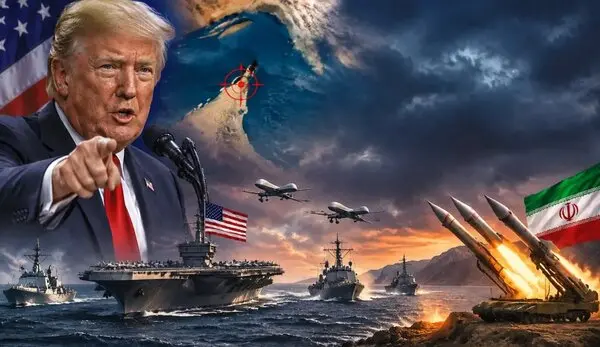
In a series of statements, Trump claimed that the United States had won the war, that Iran's enrichment capabilities had been destroyed in Operation Midnight Hammer, and that Tehran had failed to acquire nuclear weapons.
He described the naval blockade as a historic measure, defended Operation Epic Fury, and claimed that Iran's missiles had been destroyed. He also threatened Iran's Kouh Kalang facility and said Tehran would not be given another opportunity.
Trump further claimed that the United States was exporting more oil through the Strait of Hormuz than ever before and did not need oil from the region. He said the US presence there was intended to protect Israel.
He also claimed that Chinese President Xi Jinping and Russian President Vladimir Putin had called for an agreement on Iran during trilateral discussions.
Concerns Over Trump's Health: Claims by Former US TV Host
Former MSNBC host Joy Reid criticized the silence of US media over Trump's physical condition, claiming that the US president appeared old and frail and was nearing death.
Kazemi Qomi: US Has Been Driven to Desperation in Its Confrontation with Iran
Kazem Qomi, Iran's former ambassador to Iraq, said regional countries were concerned about the possibility of a renewed escalation of the war.
He said Washington had until January to make decisions about a high-intensity war, given upcoming developments in Congress and the Senate. He added that Iran had changed US calculations by delaying the outbreak of renewed hostilities.
Egypt and Qatar Step Up Efforts to Contain Regional Tensions
Egyptian President Abdel Fattah el-Sisi and the Emir of Qatar, during a meeting in Cairo, stressed the need to intensify diplomatic efforts to reduce tensions, strengthen security in the Persian Gulf and consolidate the ceasefire in Gaza.
The meeting, alongside mediation efforts by Pakistan and Qatar, reflects an increase in regional diplomatic consultations.
Energy Crisis Reaches UK Economy: Warning Over Cost-of-Living Pressures
The Bank of England warned that rising energy costs and interest rates following the economic fallout from the war against Iran could increase mortgage payments for millions of households, while adding to the pressure of living costs and debt.
Hemmati: US Economic War Has Entered a Critical Phase
Abdolnaser Hemmati, governor of Iran's Central Bank, responded to the sharp rise in foreign exchange rates by pointing to increased sanctions-related and psychological pressure on the market. He stressed that the central bank would continue targeted interventions to maintain stability in the currency market.
Tehran and Islamabad Discuss Regional Developments
The foreign ministers of Iran and Pakistan held a phone conversation to discuss the latest regional developments. The call came as part of ongoing diplomatic consultations between the two countries and Pakistan's efforts to mediate between Tehran and Washington.
Baghdad Closes Poshtah Border Crossing; Shushmi May Also Shut Down
A local source reported that Baghdad had ordered the closure of the Poshtah border crossing between Iran and Iraq in Iraq's Halabja province. Meanwhile, the Shushmi crossing may also be closed, although the reason for the decision and how long it will remain in effect are still unclear.
Minab Case Goes International: Belongings of Killed Students Displayed in Germany
Personal belongings of students killed in the attack on the Shajareh Tayyebeh school in Minab, including notebooks, pencil cases and backpacks, were displayed at an exhibition at the Iranian Embassy in Germany.
The event was attended by foreign diplomats, German citizens and members of the Iranian community living in the country.
Tomahawk Missile and the Details of the Attack on Minab School
The head of the Judiciary's Center for Lawyers said the Tomahawk missile that struck the Shajareh Tayyebeh school in Minab belonged to a newer generation of the missile and was capable of changing its course up to 15 times. The statement highlights the technical aspects of the attack on the school.
Admiral Sayyari: US Will See the Impact of Iran's New Air Defense Systems
The Iranian Army's deputy coordinator said that, drawing on lessons from recent wars and the strengthening of the country's air defense capabilities, the United States would see the impact of Iran's new air defense systems on the battlefield.
Biden's Son: The US Is Now a Full-Fledged Oligarchy
Joe Biden's son criticized the US political system, saying that American politics had been undermined by dirty money. He argued that the United States had now become a fully fledged oligarchic system.