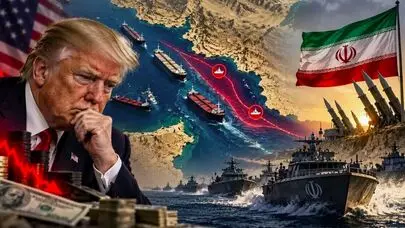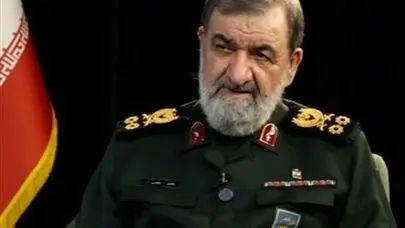
Over the past nearly seven months, one of the most significant developments in the pattern of US confrontation with Iran has been the growing prominence of a naval blockade as a tool of pressure. Washington is clearly seeking, alongside economic and political measures, to use its military capabilities to restrict Iran’s foreign trade and increase the cost of resisting its demands. The fundamental question, however, is whether a naval blockade of a country can be regarded merely as an economic measure extending sanctions, or whether, because it relies on military power and effectively deprives the targeted country of part of its sovereignty, it constitutes an act of war.
International law provides an important answer to this question. Article 3(c) of the 1974 UN General Assembly Resolution 3314 identifies the blockade of a country's ports or coasts by the armed forces of another country, subject to the conditions set out in Article 2, as an act of aggression. This provision clearly shows that a military blockade cannot be equated with economic sanctions. Sanctions may be unlawful or have far-reaching humanitarian and economic consequences. But when a state uses warships, military power and the threat of force to restrict another country's access to the sea, the issue goes beyond economic pressure and enters the realm of the use of force.
From this perspective, a naval blockade should be regarded as a form of warfare in the modern world. Such warfare may begin without a formal declaration, extensive exchanges of fire or ground operations, yet its objective may be to cripple a country's economic capacity and force it into political submission. Common Article 2 of the four Geneva Conventions also makes clear that the existence of an international armed conflict does not necessarily depend on a formal declaration of war. Therefore, the absence of such a declaration does not, in itself, change the legal nature of a military action.
Of course, a distinction must be made between a military blockade and other forms of economic restrictions or sanctions. Nor can every blockade automatically be classified as armed aggression without examining its legal basis and the circumstances surrounding it. Article 2(4) of the UN Charter prohibits the use of force against the territorial integrity or political independence of states, while Article 42 broadly recognizes the authority to take military measures, including blockades, within the framework of Security Council decisions. Consequently, the legality of such an action depends on its legal basis, the existence or absence of valid authorization, and the actual circumstances of its implementation. The political will of a major power alone cannot provide legal grounds for imposing a military blockade on another country.
The more important question, meanwhile, concerns Iran's right to respond to such a blockade. Under Article 51 of the UN Charter, the inherent right of individual and collective self-defense is preserved if an armed attack occurs. Therefore, if blockade-related actions, under specific circumstances and in terms of their scale and effects, qualify as an armed attack, Iran may lawfully invoke its right of self-defense to counter them. This right is not merely a political privilege; it derives from the fundamental principles of the international legal order. No country is required to stand by passively in the face of an attack on its sovereignty and security or to abandon all means of defense.
The practice of the International Court of Justice, particularly its rulings in the Nicaragua and Oil Platforms cases, has emphasized the need to establish the conditions for self-defense and observe the two fundamental principles of necessity and proportionality. In other words, defensive action must be necessary to repel an armed attack or threat and must not exceed what is proportionate to the defensive objective. Humanitarian law, including the principle of distinction between military and civilian targets, is also binding on the parties if an armed conflict exists.
For this reason, Iran's position should be based on a clear principle: a military blockade cannot be treated as an ordinary action without security implications while the targeted country is expected to regard it merely as an economic dispute. Iran has the right to challenge such an action on legal and security grounds, use diplomatic and legal means to end it, and, if the conditions for self-defense are met, draw on its defensive capabilities. The key is to turn this right into a coherent strategy that can be defended on the international stage.
Within this framework, Iran should pursue three courses of action simultaneously:
First, establish the legal nature of the blockade and pursue the other party's responsibility in international forums.
Second, explicitly declare that its right to self-defense in response to armed actions remains reserved.
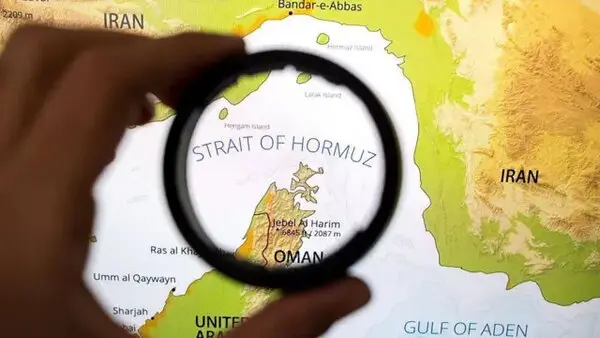
Third, maintain a clear distinction between countering the blockade and targeting the interests of neutral countries. This distinction is of strategic importance because the issue of the blockade against Iran is not limited to relations between Tehran and Washington. It could also affect energy security, global trade and freedom of navigation in the Persian Gulf, the Sea of Oman and the Strait of Hormuz.
In fact, Iran must demonstrate that the issue is not merely about oil exports or the country's foreign currency revenues. It is about resisting the normalization of the unilateral use of military power to control maritime trade and restrict the sovereignty of states. Framing the issue in this way could take it beyond the level of a bilateral dispute and help generate greater attention and support from the international community.
Another important point is that defending national sovereignty and pursuing diplomacy are not mutually exclusive. Diplomacy can lead to a lasting outcome only when it is based on mutual respect and recognition of the sovereign rights of both sides, rather than accepting military pressure as a means of imposing political will. In fact, maintaining defensive readiness and firmly asserting the right to counter a blockade, alongside diplomatic initiatives, can prevent military pressure from becoming leverage for imposing an agreement.
It must be recognized that changing the name of war to sanctions, a blockade or maritime control does not change the legal and security nature of an action. A country’s trade cannot be brought to a halt and its freedom of navigation restricted through the deployment of warships, while the targeted country is expected to treat such conduct as merely an economic dispute. A naval blockade, when the conditions established under international law are met, is an action of a military nature with legal and security consequences. Iran, too, has the right to defend its sovereignty and national security against it.
The strategic challenge is to uphold this right firmly while exercising it within the framework of necessity, proportionality and international law. Peace cannot be achieved by simply giving war a different name, and national sovereignty cannot be preserved by accepting a blockade.