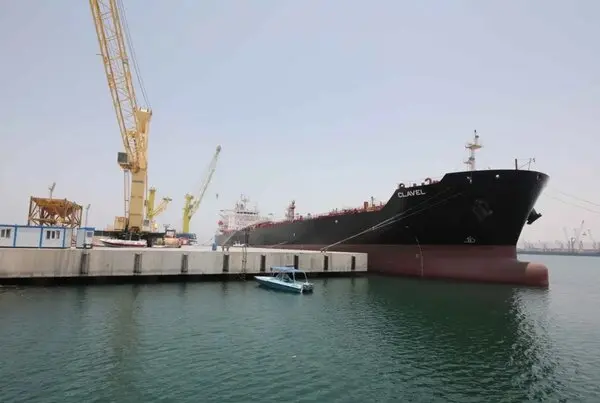
Restrictions on maritime routes and pressure on Iran’s southern ports have once again brought the country’s trade geography and the potential of its land borders and Caspian Sea access into focus. With extensive borders shared with several countries and access to diverse regional routes, Iran does not depend solely on its southern ports to maintain the flow of foreign trade. Trade figures for 2024 and 2025 indicate that the capacity of overland trade and maritime commerce through the Caspian Sea has reached approximately $22 billion. Under maritime restrictions, this capacity could play an important role in sustaining foreign trade.
According to published information, the blockade of Iran’s southern ports, which began in April 2026, has created new conditions for the country’s trade. Before the restrictions, approximately 80% of Iran’s maritime trade passed through its southern ports. The volume of maritime trade now at risk is estimated at around 163 million metric tons. These figures show that restrictions on southern routes are not merely a transportation issue; they could also affect supply chains, imports, and exports of Iranian products.
Nevertheless, the geographical spread of Iran’s trading partners makes it possible to use alternative routes. Iraq, with $8.9 billion in trade, is Iran’s largest overland trading destination, absorbing more than half of the country’s land-based exports. This makes Iran’s western border crossings one of its most important trade assets.
Turkey ranks next, with $4 billion in trade. Azerbaijan, with $2.5 billion, is another major partner in Iran’s border trade. In the north, the Caspian Sea accounts for a notable $3.4 billion in trade. This route is important because it provides access to trade with Caspian littoral states, making it even more valuable when southern routes are restricted.
There is also significant potential in the east and northeast. Iran’s trade with Turkmenistan has reached $1.1 billion, while Afghanistan, with $600 million, and Pakistan, with $300 million, are other destinations for Iran’s overland trade. Taken together, these figures illustrate a diverse network of economic ties with neighboring countries, each of which can help meet part of the country’s trade needs.
Another important consideration is that alternative routes serve different purposes. While Iraq accounts for a major share of Iran’s overland exports, the Caspian route is particularly important for access to imports. According to the information provided, it is the only import corridor available to Iran that is beyond the reach of the US Navy. The Caspian’s potential, therefore, is not limited to expanding trade with northern neighbors; it could also help supply some of the country’s import needs.
Of course, these capacities do not mean that overland and Caspian routes can fully replace maritime trade through the south. Differences in infrastructure, trade volumes, transportation capacity, and logistical constraints place limits on the extensive use of land routes. Nevertheless, developing border infrastructure, strengthening rail and road networks, streamlining customs procedures, and expanding the capacity of northern ports could enable Iran to make more effective use of these opportunities.
Ultimately, Iran’s strategic advantage is not limited to its southern coastline and access to open waters. Its network of neighboring countries, land borders, and access to the Caspian Sea are also integral parts of its geo-economic potential. At a time when pressure on southern trade routes is intensifying, activating these capacities could reduce dependence on a single trade corridor, help sustain commercial exchanges, and increase the economic costs of the blockade for the party imposing it.