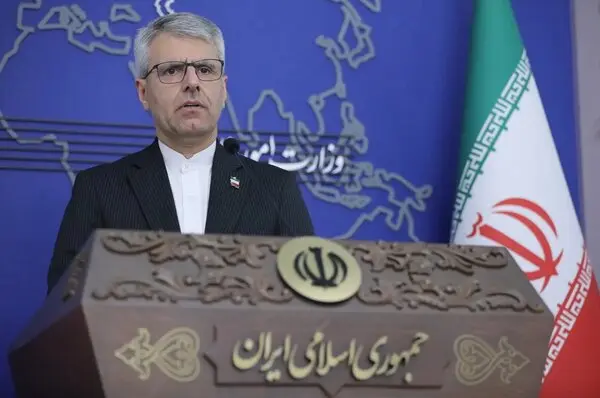
Speaking at his weekly press briefing with domestic and foreign media representatives, Baghaei was responding to a question from Nournews about reports that the White House had asked the Pentagon and US intelligence and military experts to assess Iran’s likely response to different scenarios involving a potential US attack.
“Our response and position is that they should spare themselves the trouble,” he said.
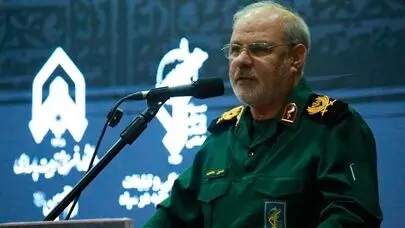
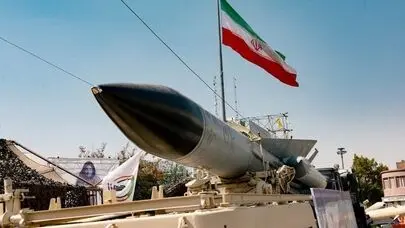
Commenting on reports that Washington had also examined the possibility of Iranian retaliatory strikes against oil and gas facilities in Persian Gulf countries, Baghaei said: “As for the scenarios they are considering and how Iran might respond, I believe US experts will receive their answer at the appropriate time from Seyyed Majid Mousavi, commander of the IRGC Aerospace Force, in a neat and elegant package. That is when they will understand our response.”
Reza Amirkhani Made a Valuable Contribution to Persian Culture and Literature
At the beginning of his weekly press briefing, Baghaei expressed condolences over the death of Reza Amirkhani, an Iranian writer and literary critic, extending his sympathies to the author's family, Iran's cultural and academic communities, Sharif University of Technology, and his friends and former classmates at Allameh High School in Tehran.
Referring to his familiarity with Amirkhani's works and their previous conversations, Baghaei said he had met and spoken with the late writer several times and had read his books.
He noted that Amirkhani's writings had influenced his own generation, adding that works such as Dastan-e Sistan, Armia, and Janestan-e Kabulestan, along with his other writings, had made a significant contribution to Persian culture and literature. His legacy, Baghaei said, would remain part of Iran's cultural memory.
Images of Children Killed in Military Attacks Must Remain Before Our Eyes
In another part of his remarks, Baghaei paid tribute to Iranian children who lost their lives in US military aggression over the past year and a half.
“The images of these children must always remain before our eyes, so that wherever and under whatever circumstances we live in Iran, we remember the innocent angels who once lived in this land,” he said.
He also expressed condolences to the bereaved families, highlighting the absence of these children from their homes, among their classmates and teachers, and in their schools.
Claims That Iran's Dams Are Military Facilities Are Baseless Lies
Responding to a question about the possibility of US attacks on Iranian dams and a report published by an American magazine alleging that these facilities have military functions, Baghaei said: “They will not dare to commit such an act.”
Describing the magazine's decision to publish the report as unprofessional and unethical, he said claims portraying Iran's dams as military facilities had no basis in reality.
He added that such allegations were part of US psychological warfare and an attempt to justify flagrant violations of international humanitarian law.
Baghaei said even the report's authors and the publication itself had realized the serious mistake they had made.
Referring to other allegations against Iran, he said they were equally baseless and amounted to a repetition of claims that had been circulated over the past 30 to 40 years to pave the way for, or justify, acts of aggression.
He also described the publication of such reports as an attempt to justify previous US actions and influence American public opinion.
Those Who Have Lost the War and Elections Are the Real “Wounded Animals”
Responding to insulting remarks by the US Treasury Secretary, who had compared the Iranian people to wounded animals, Baghaei said: “We have certainly been wounded. It would be unreasonable to expect a lion that has shown its claws and teeth when confronted by hyenas and defended itself not to have sustained injuries.”
He added that these wounds were signs of the Iranian people's resistance and perseverance.
“But we should understand that these wounds make the lion's roar louder and its claws and teeth sharper. We will therefore stand even more firmly than before in defending Iran,” he said.
Commenting on the phrase “wounded animals,” Baghaei said that since the expression had been used in the plural, it was worth asking who the real wounded animals were.
“The real wounded animals are those who have lost a war against a civilization, a culture and a nation, and have also lost an election to their own people. They are now upset that their so-called illegal operation of economic strangulation has failed to achieve its objectives,” he said.
The Foreign Ministry spokesperson also quoted a verse by Ferdowsi, the renowned Persian poet:
“Those who live in fear and sorrow
Have a miserable life worth mourning.”
Asked about suggestions that insulting language used by some US officials might stem from being away from their families and lacking affection in the harsh military environment in which they live, Baghaei said some people believed their abusive language was the result of emotional deprivation and separation from their families.
“I think this kind of fear is truly pathetic, especially since they are not even honest about their own fear. Their fear stems from the anger of free people. But there is no remedy for the consequences of one's own actions,” he added.
Iran Has Not Put Withdrawal from the NPT on Its Agenda
Asked whether Iran might withdraw from the Nuclear Non-Proliferation Treaty (NPT) amid concerns over the security of the country's nuclear information, Baghaei stressed that the Islamic Republic had not announced any decision to leave the treaty.
Noting that Iran had been a member of the NPT since 1970, he said the country had consistently taken the lead in nuclear disarmament and efforts to prevent the proliferation of nuclear weapons. He also recalled Iran's 1974 initiative to establish a nuclear-weapon-free zone in the Middle East.
Baghaei said the NPT pursues three main objectives: nuclear disarmament, preventing the proliferation of nuclear weapons, and guaranteeing countries' right to use nuclear energy for peaceful purposes.
Criticizing the performance of nuclear-armed states, particularly the United States and its allies, he said these countries had effectively stripped the treaty of its meaning.
He stressed that Iran would continue to honor its commitments as long as it remained a party to the treaty, adding that no decision to withdraw had been communicated by Iran.
Security in the Strait of Hormuz Can Be Restored Quickly if the US Fulfills Its Commitments
Responding to a question about how the other side's commitments could be verified within a two-hour timeframe for reopening the Strait of Hormuz, given the United States' record of failing to honor its commitments, Baghaei said Iran remained firmly committed to fulfilling its own obligations and expected Washington to do the same.
He said Iran's emphasis on restoring normal conditions as quickly as possible did not mean overlooking the complexities involved. Rather, it reflected the Islamic Republic's determination to pursue its rights and demands.
Baghaei stressed that Iran's conditions were neither unusual nor new. Lifting what he described as illegal and unjust sanctions and ending the naval blockade were among Iran's rights and demands, which, he said, the United States had also accepted in Islamabad on June 18.
“If the United States fulfills these commitments, security can be restored to the region in the shortest possible time,” he said.
Iran Will Use All Necessary Means to Break the Naval Blockade
Asked about reports concerning the loading of Iranian oil tankers and possible measures to break the US naval blockade, Baghaei said Iran would use various means to counter what it considers unlawful American actions.
He said these actions included a broad range of measures, from military aggression and economic sanctions to naval and economic blockades.
Referring to Iran's right to self-defense, Baghaei said these actions violated the principles of the UN Charter, including Article 2(4), and that Iran was entitled to use various means to defend itself and counter such measures.
He added that decisions on the tools and mechanisms for confronting these actions were made at the highest levels, with political, diplomatic and defense measures already underway.
Regarding specific reports published in recent days about Iranian oil tankers, Baghaei said the claims amounted to media speculation that had subsequently been repeated by various outlets, Telegram channels and social media networks.
Presence of Third-Party Military and Security Forces Near Iran's Borders Is Unacceptable
Responding to a question about Iran's position on the so-called Trump Route initiative and the possibility of US-linked forces being stationed near Iranian borders, Baghaei said Tehran would not rely solely on assurances from other parties and was closely monitoring developments in the region.
He stressed that the issue went beyond the Foreign Ministry's responsibilities and involved matters of national sovereignty.
Baghaei said Iran supported expanding economic ties and removing obstacles to regional transport routes, but such initiatives must not alter the region's political geography or undermine the security and interests of neighboring countries.
“No third party should be allowed to undermine regional security or good-neighborly relations. The presence of military or security forces near Iran's borders is unacceptable,” he said.
Referring to the longstanding relations and mutual trust between Iran and Armenia, Baghaei said Yerevan had provided Tehran with the necessary assurances. However, he stressed that Iran did not trust third parties and would continue to closely monitor developments while maintaining close contact with relevant Armenian authorities.
Some Countries Voted for Anti-Iran Resolution Under Pressure from a Few Governments
Reacting to a human rights resolution against Iran, Baghaei described the move as political, saying cases raised against the Islamic Republic under the pretext of human rights were politically motivated.
He said the countries pursuing these cases were hostile to Iran and used human rights as a tool to discredit the country.
Criticizing the silence of some countries that claim to defend human rights over the killing of Iranian women and children, Baghaei said it was difficult to believe that those same governments were genuinely concerned about human rights in Iran.
He stressed that Iran had the confidence and capacity to address its domestic challenges, describing Iranian society as mature and questioning.
“Domestic issues should be addressed and resolved within the country,” he said.
Referring to the 76 votes in favor of the resolution, Baghaei said some of those votes had followed the positions adopted by a handful of key European Union countries.
He also thanked the countries that voted against the resolution or chose not to support it.
Claims About the Threat of Iran's Nuclear Weapons Replaced by the “Dirty Bomb” Narrative
Responding to allegations that Iran would pose a greater threat if it possessed certain types of weapons, Baghaei described the argument as a malicious fallacy.
He said Iran was currently defending itself and had taken no action against any country in the region before the February 28 attack.
Arguing that portraying Iran's defensive response as evidence of a greater threat in the event that it possessed certain weapons was an attempt to evade accountability, Baghaei said the American public deserved answers about the reasons behind the launch of what he called an illegal and unjust war against Iran and its consequences.
He noted that allegations about Iran's nuclear program had been repeated for the past 30 years but had failed to sufficiently persuade public opinion or justify the claims being made.
“Now the other side has resorted to other lies about Iran's so-called dirty bomb and allegations concerning the country's dams,” he said.
Baghaei described these allegations as attempts to justify illegal military action, stressing that there was no justification for such actions and that those responsible must answer to their own people and the international community.
Israeli Occupation Is the Main Threat to Lebanon's Independence and Sovereignty
Reacting to remarks by the Lebanese president about Iran's alleged interference in Lebanon's decision-making, Baghaei stressed that the Islamic Republic fully respected the Lebanese people's culture, identity, sovereignty and territorial integrity.
Speaking at his weekly press briefing, he said that if the remarks referred to Iran's positions during the negotiations that led to the Islamabad understanding, it was important to emphasize that respect for Lebanon's sovereignty and territorial integrity had always been among Iran's foremost demands.
Baghaei said Tehran sought friendly relations with Lebanon based on mutual respect.
From Iran's perspective, he added, Lebanon's main problem was the Israeli regime's occupation, continued attacks, violations of the country's sovereignty and territorial integrity, and threats against the Lebanese people.
The Foreign Ministry spokesperson also described the emergence of the Lebanese resistance movement in response to aggression and occupation as a source of pride for Lebanon, the Islamic world and the region. He criticized the United States for supporting Israeli actions against Lebanon.
ECO Summit to Be Held in Tehran on December 3–4 with Heads of State and Government
Foreign Ministry Spokesperson Esmaeil Baghaei announced that the summit of the Economic Cooperation Organization (ECO) would be held in Tehran on December 3 and 4, with the participation of heads of state and government.
He said the meeting was the organization's regular summit of member states.
Referring to the recent meeting of ECO member-state ministers in Pakistan, Baghaei said several resolutions had been adopted there and would be reviewed and approved by participating presidents and prime ministers at the Tehran summit.
He added that the office of the Iranian president would announce details of the participating foreign officials in due course, but expected member states to attend at a high level.
Most participants, he said, would be heads of state or government, while some countries would be represented by their foreign ministers. Special guests might also attend.
Iran Has Faced US Threats for 50 Years and Will Not Back Down
Reacting to recent US threats and rhetoric, Baghaei said the Islamic Republic had been facing similar threats for nearly 50 years.
He added that over the past two years, US officials had issued threats almost daily while repeatedly claiming victory.
The Iranian people, he said, had demonstrated that they would not back down in the face of such threats or surrender their homeland, rights or dignity because of threatening rhetoric.
Baghaei said Iran considered itself to be in the right and viewed US actions as illegal attempts to impose Washington's demands on the country.
He added that the ultimate outcome of US threats had been actions that, in Iran's view, amounted to crimes.
“Such threats will not force Iran to retreat. On the contrary, they will make the country more determined, united and cohesive in confronting what we consider the hostile actions of the United States and its allies,” he said.