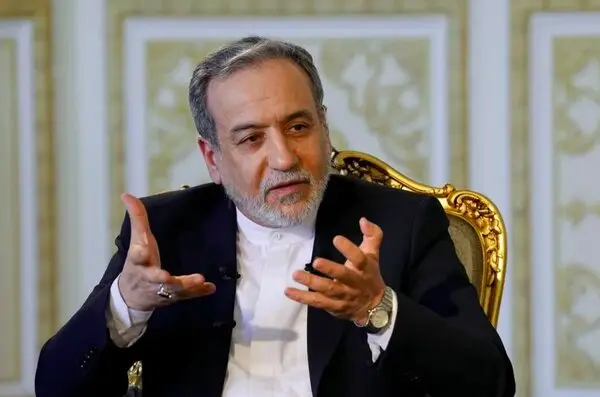
He said Washington had not accepted the proposal despite Tehran's readiness to shorten the timeframe, even to two hours. Araghchi also stressed that Iran's 60% enriched uranium stockpile would not be removed from the country and that Tehran continued to seek a lasting and dignified agreement to prevent another war.
Araghchi has revealed details of one of Tehran's most significant diplomatic initiatives to end confrontation with the US and return to negotiations. The initiative was initially drawn up as a seven-day plan but was subsequently revised into a two-day proposal following consultations with mediators and with the aim of accelerating the diplomatic process.
Araghchi's remarks in the interview provide a clearer picture of Tehran's diplomatic calculations, the conditions for reopening the Strait of Hormuz, remaining differences with Washington and Iran's red lines in any potential negotiations. The foreign minister stressed that Tehran remains ready to reach an agreement but is unwilling to accept a deal that could lead to another war in the future.
Araghchi also reported that mediation channels with Qatar and Pakistan remained active and reiterated that Iran's stockpile of uranium enriched to 60% would not be taken out of the country. He also addressed the debate over a possible change in Iran's nuclear doctrine, the positions of Russia and China, Benjamin Netanyahu's moves and differences within the US decision-making structure.
Iran's 48-Hour Proposal: US on Day One, the Strait of Hormuz on Day Two
Araghchi, outlining the details of Iran's diplomatic initiative, said Tehran had reached the Islamabad memorandum of understanding following lengthy negotiations. According to him, the US president and Iran's president had signed the relevant texts, but Washington's violation of one of its key provisions once again pushed the situation towards confrontation.
After the Islamabad memorandum became inoperative, Iran drew up a seven-day plan incorporating the commitments undertaken by the US under the memorandum, along with several new demands, including the lifting of newly imposed sanctions.
The plan was submitted to the US side through a Qatari intermediary in early October, and exchanges of messages and proposals between the two sides continued for approximately two months. Araghchi explained that during these consultations, the Americans also put forward demands, one or two of which were incorporated into Iran's proposal to ensure that the proposed framework covered the demands of both sides.
Under the initial version, the US was to fulfil its commitments during the first five or six days, Iran would reopen the Strait of Hormuz on the sixth day, and negotiations to reach a final agreement would begin on the seventh day.
However, following the mediators' recommendation and given the limited time remaining before the US elections, Tehran agreed to compress the timetable, turning the seven-day plan into a two-day initiative.
Araghchi explained the mechanism of the proposal, saying: "On the first day, the Americans would carry out their actions and fulfil their commitments, and on the second day, we would reopen the Strait of Hormuz and negotiations between Iran and the US would begin."
He stressed that the negotiations were not expected to reach a conclusion on the second day. Rather, the objective was to launch talks immediately, without imposing a limited deadline for their completion.
The foreign minister said the two-day plan remained on the table, stressing that Iran was ready to reach an agreement, but Washington must first revise its position and take the necessary confidence-building measures.
Araghchi also pointed to Tehran's flexibility regarding the timetable for implementing the conditions, saying that if the US wanted to shorten the timeframe from two days to one day or even two hours, Iran had no objection. What mattered was fulfilling Iran's demands.
He noted that the proposed plan did not exclusively include Tehran's demands but also covered US requests, stressing that the conditions could be discussed in terms of how they were arranged and implemented. However, reopening the Strait of Hormuz would remain contingent on meeting Iran's demands.
60% Enriched Uranium, Nuclear Doctrine and Tehran's Red Lines
In response to a question about the possibility of diluting the uranium or offering alternative solutions, Araghchi stressed that a formula could be found to resolve the issue, but Tehran had two clear red lines: first, the material would not be taken out of the country; and second, the existing stockpile would be used in accordance with Iran's needs.
Referring to various proposals put forward by intermediaries, he said some of these formulas could be examined, each having its own advantages and considerations.
The foreign minister stressed that the nuclear stockpile issue could not be considered separately and independently of other matters. Instead, it had to be addressed as part of a comprehensive package, with national interests taken into account.
He also noted that final decisions on these issues were made by the negotiating committee of the Supreme National Security Council and subsequently submitted to the council itself for approval, following the relevant legal and decision-making procedures.
In another part of the interview, Araghchi addressed the debate over changing Iran's nuclear doctrine, an issue that has attracted greater attention among experts and intellectual circles following attacks on the country's nuclear facilities.
Araghchi noted that both supporters and opponents of changing the nuclear doctrine had their own arguments, stressing that raising and examining the issue in expert circles was not problematic and could even help clarify the various aspects of this strategic decision.
According to him, supporters of a change in the nuclear doctrine argue that existing frameworks, including membership in the Treaty on the Non-Proliferation of Nuclear Weapons (NPT) and the International Atomic Energy Agency's safeguards, have failed to prevent attacks on Iran's nuclear facilities. On the other hand, changing these frameworks would also entail significant costs and consequences for the country.
Asked about Moscow and Beijing's positions, the foreign minister said Russia and China held opposing views on the issue.
Araghchi stressed that Iran's nuclear doctrine had not changed so far, stating: "Iran's official positions remain unchanged, and any potential decision on this issue must be examined in light of the country's strategic interests and costs."
Netanyahu and Pro-War Factions: Araghchi's Account of Divisions in Washington
The foreign minister went on to address why Iran's two-day proposal had remained unanswered and the decision-making climate in the US, speaking of different factions within Washington's political and decision-making structures.
He said there were differing views within the White House on how to deal with Iran: one group favoured war, another continued to pursue negotiations and an agreement, while a third believed Iran could be forced to accept US demands through sanctions and economic pressure without entering into war.
He highlighted the role of Benjamin Netanyahu, the prime minister of the Zionist regime, saying: "Netanyahu is trying to once again push the US towards war with Iran."
Referring to some claims about the possibility of an Iranian chemical attack on Washington, the assassination of leaders and the concealment of missiles beneath dams, Araghchi described these statements as baseless and ridiculous, saying it was astonishing that some US political officials accepted such claims.
He said Trump was also caught in a complex situation between these different viewpoints, stressing that the US president repeatedly changed his positions, making it difficult to assess how serious Washington was about reaching an agreement.
The foreign minister stated that Iran had not received a response from the US to its proposal even before Trump's recent remarks, adding that Tehran's first expectation was for Washington to explicitly declare that it wanted an agreement.
Araghchi also stressed that, in addition to a change in the US position, Iran required a series of confidence-building measures before re-entering negotiations to ensure that the other side was serious about pursuing diplomacy this time.
He went on to address the nature of the agreement Iran sought, saying the "neither war nor peace" situation was undesirable and had to end, but that ending it should not come at any cost. Tehran was seeking a good, honorable and dignified agreement that would guarantee the war would not happen again.
Referring to previous experiences of negotiations and conflict, he stressed that Iran did not want to sign an agreement that would be violated only a few months later, leaving the country exposed to another war.
Araghchi said in this regard: "What is the point of reaching an agreement today only for it to be violated again two months later and for war to resume?"
The foreign minister also stressed that diplomatic agreements naturally involve give-and-take, but Iran should not make concessions that the other side could portray as its own victory.
Qatar and Pakistan: Iran's Two Communication Channels with US
Araghchi went on to address the role of regional countries in mediating between Tehran and Washington, announcing that Qatar and Pakistan remained Iran's two main communication channels with the US.
According to him, the two countries relay messages and proposals from both sides and are holding consultations to find a middle ground.
The foreign minister stressed that these exchanges were a normal part of diplomatic activity and, contrary to some speculation, not every visit or flight from regional countries to Iran necessarily meant the presence of negotiators or the delivery of a political message.
Araghchi stated that Tehran's communication channels with Washington were currently limited to Qatar and Pakistan, saying Iran saw no reason to change the existing intermediaries, reduce their number or add a new mediator.
He also stressed that all contacts and diplomatic movements were conducted under the supervision of the country's responsible authorities, and that detailed reports of meetings and exchanged messages were submitted to the relevant authorities to inform decisions on subsequent steps.
Assessing the role of regional countries, the foreign minister said the experience of the recent war had shown regional governments the consequences of war for their security and economies. Rejecting the notion that regional countries wanted Iran's economic blockade to continue, he stressed that lasting peace could not be limited to only part of the region, and that security and prosperity must encompass all regional countries.
Araghchi also referred to the experience of foreign military bases in the region, identifying one of the lessons of the war as the need for regional countries to rely on their domestic capabilities and intra-regional security cooperation.
At the end, the foreign minister stressed that Tehran continued to pursue diplomacy. Asked whether the balance tilted more towards war or negotiations, he said: "We are men of diplomacy, and we still have hope in diplomacy."