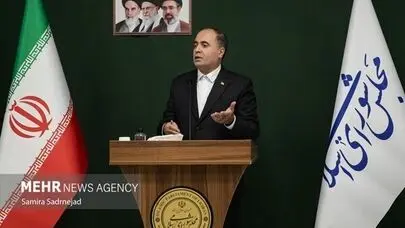
Sachs, president of the UN Sustainable Development Solutions Network, addressed the seminar in a video message organized by the Center for Peace and Environment and the Water Diplomacy Association.
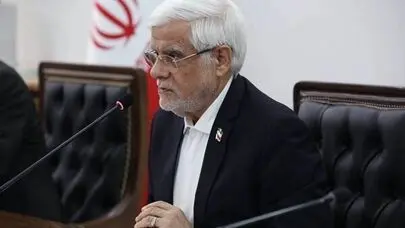
The event brought together scholars, civil society activists, media, and senior officials from Iran's environment, women, and peace ministries, along with representatives of UN and partner agencies based in Tehran.
In his remarks, Sachs argued that a leader who treats an adversary’s people as expendable is the same kind of leader “prepared to burn the fields, poison the wells, and foul the air.”
“A leader like Donald Trump, who decides that an adversary’s people do not count and that overwhelming force can settle a political problem, is the same kind of leader who is prepared to burn the fields, poison the wells, and foul the air,” he said.
He also cited historical cases from ancient Shechem to the US use of Agent Orange in Vietnam and Iraq's chemical weapons attacks, including at Sardasht in 1987, as other examples of this mindset.
“A political system that treats nature as something to be plundered for short-term profit finds it all too easy to treat other peoples in the same way,” Sachs added.
He pointed to the war in Gaza, citing a September 2025 UN Environment Programme assessment that found unprecedented damage to Gaza’s soils, freshwater supplies, and coastline, with recovery from some damage potentially taking decades.
The professor said Gaza had lost about 97 percent of its tree crops and 95 percent of its shrubland, and that by late July 2025, 86 percent of agricultural land had been damaged.
“The destruction of Gaza’s land, water, and trees cannot be separated from the brutal and brazen destruction of its people. They are one campaign.”
Turning to Iran, Sachs described the June 2025 12-day war and a larger US-Israeli war that began on February 28, 2026, which he condemned as “a brazen and illegal war launched without justification from the United Nations Security Council.”
“This is a brazen and illegal war launched without justification from the United Nations Security Council, of course, with no armed attack preceding by Iran that could conceivably justify ‘self-defense’ under Article 51 and in stark violation of the UN’s Charter prohibition on the use of force.”
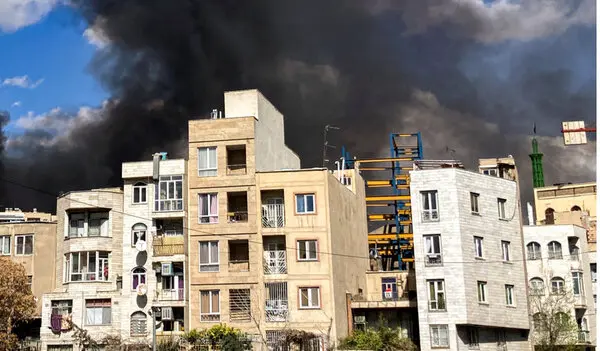
He said airstrikes on March 7, 2026 hit four oil storage and refinery sites in and around Tehran, blanketing a metropolitan area of more than 9 million people in smoke and “oil-laden black rain” contaminated with sulphuric compounds and trace metals.
“The toxic chemicals, persistent pollutants, and heavy metals released by these attacks are likely to cause serious health damages and environmental damages for decades.”
He also condemned strikes on the South Pars gas field and refineries at Asa Louie and a US attack on a desalination plant on Qeshm Island.
Satellite oceanographers recorded a sharp rise in oil pollution in the Persian Gulf in March 2026 compared with a year earlier, he said, and the war’s first two weeks emitted an estimated 5 million tonnes of carbon dioxide.
He called for an immediate end to the war on Iran and to the killing and destruction in Gaza, and urged enforcement of international law, including Additional Protocol I to the Geneva Conventions and the Rome Statute.
The concept note for the seminar described the environment as “the silent victim” of war and said the damage done to land, water, and air in wartime is often so long-lasting that “even long-term peace can never compensate.”
It noted that West Asia has witnessed continued violence and conflict over the past decade, “mainly due to foreign invasion or interference.”
Sachs closed with verses by the 13th-century Persian poet Saadi of Shiraz — woven into a carpet at UN headquarters — on the unity of the children of Adam, adding that “our interconnected body includes the land, the water, the air.”
He said he and his wife looked forward to visiting Tehran in person “as soon as possible.”