NOURNEWS – A thematic analysis of statements made over the past two weeks by four senior US administration officials regarding Iran and the Strait of Hormuz, alongside official and media activity in Europe surrounding cyberattacks on food retailers’ refrigeration systems, points to an effort to stir European public opinion and bring it into alignment with the United States.
A thematic analysis of statements made over the past two weeks by four senior US administration officials regarding Iran and the Strait of Hormuz, alongside official and media activity in Europe surrounding cyberattacks on food retailers’ refrigeration systems, points to an effort to stir European public opinion and bring it into alignment with the United States.
A. US Officials
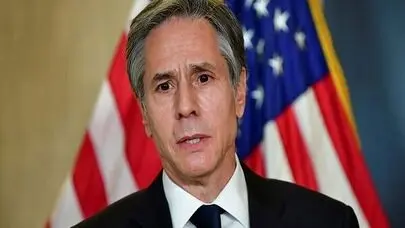
The rhetorical structure, repetition, disparagement and semantic coordination in the statements of US officials operate on four levels: Trump provides the political and strategic framing of the conflict and defines the red lines; Hegseth provides the military framing, deterrence and operational control; Scott Bessent focuses on economic pressure, financial blockade and restricting Iran’s resources; and Rubio provides the diplomatic and international framing and the effort to build coalitions.
An important point is that Trump, Bessent and Rubio have all emphasized the use of nonmilitary instruments instead of resuming a large-scale war, and the continuation of pressure without a broader military conflict. This runs counter to the media narrative that a military attack is imminent. The psychological impact of this narrative, which is being amplified both inside and outside Iran, has been greater than that of an actual attack. Its objective is to destabilize Iranian society psychologically and economically. (A detailed thematic analysis is not presented here.)
In this context, two important measures by the US Treasury Department are worth noting: targeting what the department has called a “global maritime fraud network” that supports the Iranian government, and sanctioning eight money-transfer service companies in Canada while cutting EXC Global off from the US financial system over allegations that it facilitated Iran-related financial activities.
If these statements alone are taken as the basis for analysis, they point to a strategy of “economic strangulation,” followed, at the next stage, by “preparation for a military attack,” rather than the other way around. In other words, the climate of expectation surrounding an imminent attack is itself part of the same effort to destabilize Iranians psychologically and economically.
Taken together, the statements of these officials indicate an emphasis on an economic strategy built around the following elements:
- Turning control of the Strait of Hormuz into an instrument for exercising strategic sovereignty.
- Replacing a large-scale war with an economic and financial blockade.
- Internationalizing the conflict and sharing the security costs of the Strait of Hormuz.
- Presenting the security of the Strait as a global interest. This includes calling for the participation of European and Asian countries, using the G7 to build political and economic consensus, and seeking to turn US pressure into collective action.
- Promoting a narrative of victory and Iran’s structural exhaustion.
The result is a strategy of maintaining tensions and extending them to Europe and the wider world without returning to all-out war. This is the most important conclusion to emerge from the overall thematic analysis.
The key point in the statements made over the past two weeks is that the United States is seeking to promote the idea that achieving its objectives toward Iran does not necessarily require a prolonged, large-scale war. Within this framework, a naval blockade, financial pressure, restrictions on foreign-currency revenues and international coalition-building can work in combination. The military threat is also being maintained as a backing for this pressure.
B. The European Union
In a joint G7 statement issued on November 11, the group's foreign ministers declared that, in the absence of a diplomatic solution, they would continue economic and political restrictions on Iran. They also expressed support for a multinational defense initiative led by France and the United Kingdom to facilitate the resumption of maritime traffic. The statement signals the transformation of the US administration’s position into a collective framework.
Another important issue is unfolding in this context: cyberattacks on the refrigeration systems of European grocery stores. Regardless of which country carried out these attacks, their only effect is to serve the interests of the United States and Israel, while needlessly exposing European citizens to threats to their food security. Iran should explicitly place this issue on its agenda, both domestically and in international and European forums, so that it can clear itself of these accusations.
A wave of activity surrounding this issue has emerged in Europe. Government officials, judicial reports, assessments by specialized agencies, and coverage by reputable European newspapers and media outlets are all seeking to investigate what happened. Given Europe's political and media pluralism, Iran has an opportunity to clear itself of the accusations through technical and specialized evidence.
This issue should, it seems, be taken up seriously by Iran. An initial review includes the following:
- France: The attack has been officially attributed to the Islamic Revolutionary Guard Corps (IRGC), and the Paris prosecutor has announced details of the judicial investigation.
- Belgian interior minister: Belgian security services have found indications of possible links between the recent cyberattacks and known Iranian actors.
- German foreign minister: A warning has been issued about hybrid attacks, without any official attribution to Iran.
- EU foreign policy chief: If these cyber incidents in Europe are attributed to Iran, they would also require a strong response from the EU.
- European Commission spokesperson: The European Union stands in full solidarity with France.
- European Commissioner for Agriculture and Food: These attacks constitute a deliberate attempt to disrupt our food supply chain and undermine consumer confidence in it.
Official reports by European and French cybersecurity agencies: This area is particularly important in terms of technical evidence. Le Monde, The Guardian, AFP, Reuters, German and Austrian media outlets, and others have covered the issue and are examining it through their reporting.
According to published reports, the following countries have been affected by incidents involving grocery store refrigeration systems: France, Belgium, Sweden, the Netherlands, Estonia, Luxembourg, Finland, Ireland, Italy, Germany, the United Kingdom and Romania.
It is clear that these attacks have been orchestrated with the aim of turning European public opinion against Iran.
In response to the French accusations, Foreign Minister Abbas Araghchi wrote on the social media platform X: “The French government cannot even control its own refrigerators, let alone address its citizens’ problems, and shifts the blame for its own failures onto others.”
What I can say about the media environment is that these remarks are not sufficient in the face of the wave of activity underway in Europe across political, judicial and media circles, as well as in technical reports. They are incomplete and imprecise, and, moreover... This campaign and its alignment with US efforts, as outlined in the thematic analysis of the statements by the four US officials, show that Iran’s diplomatic and security apparatus must do far more than this. In other words, it must intensify diplomatic activity, directly address European public opinion and provide detailed technical reports on the issue.
Such a cyber operation could only be carried out by Israel and its agents. Although it may please some naïve individuals, it is in no way consistent with Iran’s national security strategy. Moreover, the religious prohibition on nuclear bombs was precisely motivated by the need to prevent ordinary people from becoming victims of this kind of mass harm.