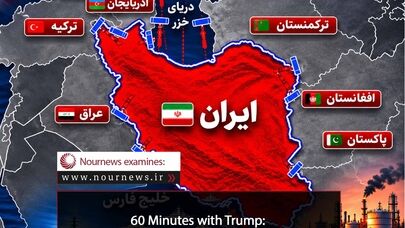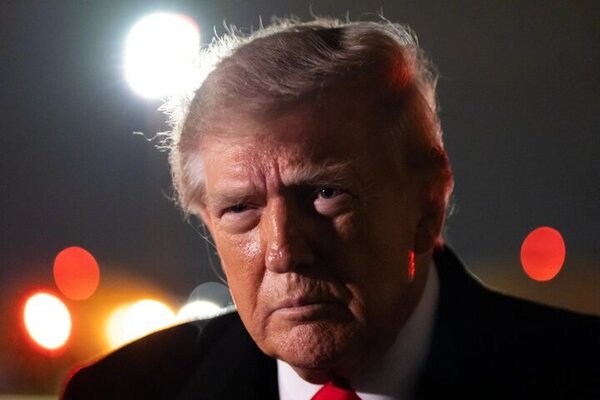
In his interview with Stephen A. Smith, host of Straight Shooter, Donald Trump once again reiterated his hardline positions on Iran, ranging from claims that he had prevented Iran from acquiring nuclear weapons and accusations that Tehran supports terrorism to threats to destroy the country’s energy infrastructure, bridges and industrial capacity. Yet the most significant part of his remarks was not the repetition of military threats, but his acknowledgment that Arab countries had urged Washington to refrain from escalating its attacks and continue economic pressure instead. Coupled with his claim that he could end the war immediately, this points to the complexity of Washington’s calculations over whether to continue the confrontation, particularly in the aftermath of the Republicans’ defeat in the US congressional elections.
During the interview, which lasted about 40 minutes, Trump claimed that Iran was the world’s leading state sponsor of terrorism and held the leaders of the Islamic Republic responsible for the deaths of large numbers of American service members. At the same time, he sought to distinguish between the Iranian people and the country’s political establishment, saying: “I don’t hate the people of Iran, but I think the leadership of that country has been a great, horrible disaster.”
The US president went on to repeat the false and unsubstantiated claim that 75,000 protesters had been killed in Iran, adding that the figure could be even higher. Trump made the allegation without presenting any documents or independent evidence to substantiate it during the interview. He also reiterated his claim that Iran had been seeking to acquire nuclear weapons, saying the US had taken that capability away from Iran and would not allow Tehran to obtain such weapons.
A War Trump Says He Had No Choice but to Fight
Asked why the US had entered the war, Trump claimed that the decision had not been optional. “The war was something that I had to do, regardless of anything else,” he said. Referring to the approaching midterm elections, the US president also insisted that political and electoral difficulties could not have prevented him from deciding to launch the war.
The remarks came as Trump acknowledged elsewhere in the interview that rising oil and gasoline prices had contributed to the Republicans’ electoral defeat. He conceded that the war and its economic consequences had imposed a short-term political cost on his administration, although he claimed that this was negligible compared with what he described as “stopping the largest state sponsor of terrorism and preventing Iran from getting a nuclear weapon”.
Acknowledgment That Arab Countries Have Called for Restraint
One of the most significant parts of the interview concerned Trump’s explanation for why the war had remained at its current level. He claimed he had the ability to end the war immediately but had decided, at the request of regional countries, to pursue a longer course that he described as “more civilised”.
“I could end the war right now,” Trump said. He then named Saudi Arabia, Qatar, Kuwait, the United Arab Emirates and Bahrain, claiming that these countries wanted the current situation to be maintained and the period of waiting to continue. According to Trump, Saudi Arabia had asked him to preserve the status quo for the time being, while the other countries he named also preferred continued economic pressure on Iran over an escalation of military attacks.
This part of Trump’s remarks suggests that an understanding may have been reached between the US and some countries on the southern shores of the Persian Gulf to maintain and intensify the naval blockade of Iran, in an effort to defeat the country at a lower cost in a war in which military force has failed to achieve its objectives.
Trump also included Israel among the countries the US claims to be protecting, saying Washington’s continued military presence was intended to support countries that, in his view, faced threats. However, unlike the Arab countries he named, he did not say that Israel had made any specific request to postpone further attacks.
Trump’s remarks are significant for two reasons. First, the US president is effectively attributing the continuation of the current situation to the wishes of his regional allies. Second, his comments suggest that, at least at the time of the interview, an escalation of military operations was facing reservations and opposition among some of Washington’s regional partners.
It should be noted, however, that Trump’s account of these countries’ positions does not, in itself, amount to official confirmation from them.
Threat to Destroy Iran’s Infrastructure in Three Days
Another part of the interview focused on direct threats against Iran’s critical infrastructure. The host asked Trump whether the US would already have carried out more extensive attacks had regional countries not opposed such action. Trump answered in the affirmative, claiming that Washington had so far refrained from targeting much of Iran’s bridges, energy facilities and industrial capacity.
“We left most of the bridges in Iran untouched. We knocked down one big bridge because they treated us very badly,” Trump said. He also claimed that the US had not damaged Iran’s electricity-generating capacity or industrial capabilities and had not targeted its energy facilities.
The US president then issued a direct threat, saying that if he decided to launch such attacks, he could destroy Iran’s energy network, bridges and industrial production capacity. He put the time required for such an operation at three days, saying: “One day for each.” This clarification provides a more precise account of his earlier claim that all these facilities could be destroyed in a single day: Trump subsequently identified energy infrastructure, bridges and industrial capacity as three separate targets.
Pickaxe Mountain: A Threat of Another Round of Attacks?
Elsewhere in his remarks, Trump raised the facility he referred to as “Pickaxe Mountain” as a possible target for an attack. He claimed that Iran’s nuclear facilities had already been struck and said of this particular site: “I may hit it, and I may not.”
Trump also claimed that activity at the facility was currently limited, but warned that it would be bombed if operations resumed there. His remarks indicate that, despite his claim to have destroyed Iran’s nuclear capabilities, the threat of further attacks remains part of his public rhetoric.
From Claims of Victory to Concerns over the Cost of War
Taken together, Trump’s remarks in the interview present a two-sided picture of Washington’s stated strategy. On the one hand, he claims to have severely weakened Iran’s nuclear and military capabilities and says he could destroy the country’s critical infrastructure in a short period of time. On the other, he says the war could be ended immediately but argues that the requests of regional allies, along with economic and political considerations, have made maintaining the current situation the preferred option.
Trump’s acknowledgment that the war has affected energy prices and the Republicans’ electoral performance also shows that the costs of confrontation with Iran have spilled over into US domestic politics. Under these circumstances, military threats against Iran’s infrastructure must be assessed alongside the political and regional constraints facing the US administration, some of which Trump himself acknowledged, at least in this interview.
What emerges from the interview is neither a definitive declaration that the war is over nor a clear indication of a final decision to escalate it. Rather, it points to Trump’s effort to maintain pressure on Iran, project military strength and, at the same time, manage the political and economic costs by maintaining and strengthening the naval blockade, which amounts to a continuation of the war.