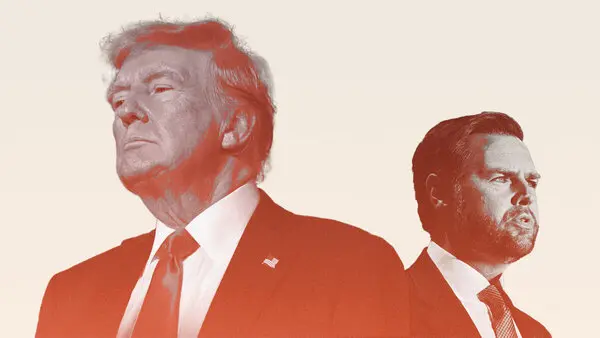
Nearly a week after the U.S. midterm elections, their underlying causes and far-reaching implications have yet to receive the analytical scrutiny they warrant. The significance of this unprecedented development was such that figures at the highest levels of the U.S. political establishment felt compelled to comment on it. One of the most notable reactions came from Vice President JD Vance, who took to X following the Republicans’ electoral defeat.
However, his post should not be dismissed as a simple assessment of the reasons behind the party’s failure at the polls. There are indications that his remarks should be analyzed in the context of a much broader political development: the beginning of an effort to reshape the Republican Party’s public image and restore its political standing.
In his analysis of the Republican defeat, Vance identified four factors that had influenced voters’ behavior: the war with Iran, economic difficulties and the rising cost of living, the departure from the “America First” policy, and, finally, the need to reconsider the U.S. relationship with Israel.
The decisive point, however, was his emphasis on the war with Iran as the most significant factor behind the defeat. He effectively raised the question of whether continuing the war was worth losing control of Congress in the midterm elections. This goes beyond an electoral assessment and amounts to an attempt to distance himself politically from a decision made directly under Trump’s presidency.
Distancing Himself from Defeat or Positioning Himself for the Future?
What makes Vance’s remarks significant is that, rather than blaming the defeat on weak candidates, campaign shortcomings, or declining voter turnout, he has placed responsibility on one of the Trump administration’s most consequential policy decisions.
He argues that some voters who supported the Republicans in 2024 turned away from the party in the latest elections. This analysis suggests that the Republicans’ problem is not simply their failure to mobilize their traditional support base; rather, part of their electorate has become dissatisfied with the administration’s policies. In effect, Vance is arguing that the Republicans have lost voters because they have strayed from their campaign promises.
It should not be forgotten, however, that Vance himself is the vice president and one of the key figures in the administration. He therefore cannot entirely shift responsibility for the government's decisions onto Trump. Nevertheless, he appears to be trying to separate the political cost of those decisions from his own personal record. There is little doubt that restoring his own political standing is part of this effort to establish a distinction between himself and the administration's course. It would not even be far-fetched to suggest that the attempt to differentiate between the White House's top two officials could be part of a coordinated strategy agreed upon at the highest levels of the Republican Party.
It is also important to remember that one of the fundamental principles of the MAGA movement has been the “America First” slogan and opposition to costly military interventions abroad. A significant portion of Trump's voters expected his administration to focus on the domestic economy, employment, inflation control, and the cost of living rather than embroiling the country in foreign wars.
The war with Iran has seriously challenged that promise. Rising military expenditures, concerns over an energy crisis, and the economic pressures resulting from the conflict have reinforced a question in the minds of American voters: Why should Washington spend its resources on a foreign conflict?
By highlighting this contradiction, Vance is now seeking to portray himself as an advocate of a return to original MAGA principles: opposition to military interventionism, the endless expenditure of American resources overseas, and the prioritization of foreign commitments over domestic interests.
From this perspective, he is laying the groundwork for a form of “post-Trump MAGA” within the Republican Party—a movement that preserves Trump's political legacy while portraying Trump himself as responsible for its deviations from its original principles.
Vance’s reference to the need for a change in the U.S. relationship with Israel is also particularly significant. Some segments of the Republican electorate, especially younger voters and economic nationalist factions, have become increasingly sensitive to the costs of America's foreign commitments and their impact on domestic interests. By bringing this issue into his assessment of the electoral defeat, Vance is effectively extending his criticism beyond the war with Iran and raising the broader question of whether U.S. policy in the Middle East needs to be reassessed.
This position does not necessarily imply severing ties with Israel. Rather, it points to a potential change in the nature and scope of Washington's commitments. Such an approach could enhance Vance's electoral appeal, but it would also face resistance from more traditional factions within the Republican Party.
Is Vance Seeking to Succeed Trump?
One question is likely on the minds of almost every international affairs analyst and political observer: Is Vance already setting his sights on victory in the 2028 presidential election?
There are indications that the answer may be yes, at least as a serious political possibility. Vance occupies a unique position: he is vice president, has direct access to the MAGA base, and can present himself as the continuation of Trump's political project while distancing himself, in the eyes of American voters, from some of the president's unpopular and misguided decisions.
He wants to benefit from his close association with Trump while ensuring that, should public dissatisfaction grow, the political costs of the administration's failed policies fall primarily on the president himself.
Some analysts see Marco Rubio as his potential rival. Rubio brings foreign policy experience and established connections within the Republican establishment. However, he does not appear to have particularly strong prospects of emerging as a serious contender in this race. Nevertheless, if Rubio enters the contest, the 2028 election could become a battleground between two competing visions of the Republican Party's future: a nationalist Republicanism opposed to costly foreign interventions and a more traditional form of Republicanism.
Another possibility worth considering is Vance's voluntary and early resignation as vice president. If Trump responds to the electoral defeat by undertaking sweeping cabinet changes, figures such as Defense Secretary Pete Hegseth are likely to be among the first in line for dismissal. Rubio's position could also be affected by a reassessment of the administration's foreign policy.
Vance, however, is in a different position. He is not an appointed cabinet secretary whom the president can simply remove. The vice president's position derives directly from the electoral process. Consequently, if Vance concludes that remaining in the administration would do more harm than good to his political future by making him appear responsible for Trump's failures, he may consider resigning as a way to preserve his political capital.
It is even possible to envisage an amicable arrangement between Trump and Vance, under which Trump publicly thanks his deputy for his service and agrees to his departure.
In conclusion, Vance's latest post should be seen as more than a mere reaction to the Republicans' electoral defeat. He appears to have realized that the continuation of the war with Iran and the departure from the “America First” pledge could become major weaknesses for the Trump administration and the Republican Party as a whole.
Vance intends to use this situation to redefine his political identity: preserving the MAGA legacy, criticizing its deviations, and presenting himself as the figure capable of leading the movement after Trump.
In other words, he does not want to fight Trumpism. On the contrary, he wants to become its heir—and, in his own interpretation, the champion of its uncorrupted and authentic form. His unprecedented post can be regarded as one of the first clear signs of this strategy.
At this point, whether Vance's differences with Trump are genuine or politically staged is no longer the central issue. The more important question for him is whether he can free the MAGA movement from its dependence on Trump's personality and make it his own political legacy.
The contest over the answer to that question is likely to become one of the most significant developments in American domestic politics in the run-up to the 2028 presidential election.