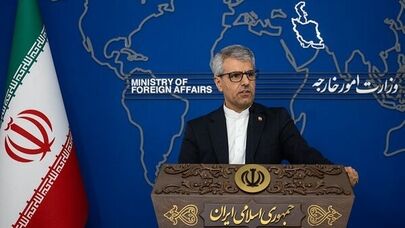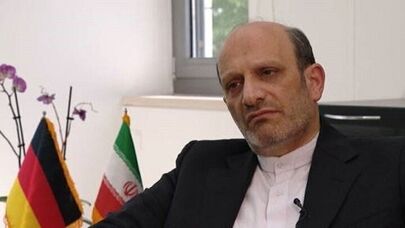
For several years, German leaders have sacrificed their country's international standing by hosting politically bankrupt figures who lack popular support and have a dismal record of opposing Iran's national interests. Once again, under the banner of the Friedrich Naumann Foundation's “Freedom Prize,” they have staged another farcical spectacle. In this performance, they have claimed to present Reza Pahlavi with the Freedom Prize on behalf of the Iranian people. Pahlavi is the same individual who described the massacre of schoolchildren in Minab as natural and as a cost of war, yet sent condolences over the deaths of three American soldiers and extended a hand of friendship and cooperation to Netanyahu, the killer of Iranian women and children. This move comes against the backdrop of Germany's historical past and Friedrich Merz's own conduct, including his description of Netanyahu as the man doing the West's dirty work in killing the Iranian people. These facts show that Berlin is not only unqualified to assume a humanitarian and freedom-loving posture, but, in light of its record and the involvement cited here, should also be held accountable for allegations of crimes against humanity.
From Georgetown Spectacle to the Frankfurt Scandal: Representation Without a People
The Germans have made themselves an object of ridicule around the world, despite the undeniable facts surrounding the individual they call the representative of the Iranian people. Even the self-proclaimed members of the Georgetown Alliance, from Masih Alinejad and Nazanin Boniadi to Golshifteh Farahani, Abdullah Mohtadi, Shirin Ebadi, and Hamed Esmaeilion, are no longer standing alongside Pahlavi and have announced their separation from him.
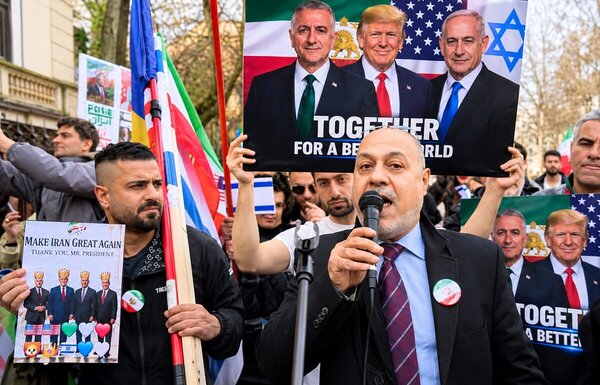
Last year, Germany also sacrificed the Munich Security Conference to host Pahlavi. However, the country's police later announced that the crowd at his rally numbered around 20,000 to 30,000, contrary to the claim that 250,000 people had attended. This year, too, despite the grandiose claims, the Freedom Prize ceremony failed to draw more than approximately 20,000 people from among the millions of Iranians living in Europe.
How can someone who has officially supported military aggression by the US and the Zionist regime, described the killing of Minab schoolchildren as a cost of war, and shed tears for American soldiers killed in the conflict be presented as a symbol of the struggle for freedom and the salvation of the Iranian people? Such positions do not merit a Freedom Prize. They warrant accountability for siding with aggressors and criminals. Germany has once again sacrificed its reputation for political maneuvering.
Merz: A Chancellor Caught in a Crisis of Legitimacy and Public Discontent
The record of German Chancellor Friedrich Merz presents a picture that differs sharply from Berlin's claims to champion freedom. State and local election results point to a major defeat for the governing coalition, signaling a decline in his government's political support. In a poll measuring the popularity of German politicians, Merz also ranked last among the 20 figures assessed, scoring just two out of a possible 10 points.
The consequences of warmongering against Iran and Russia, together with the resulting economic crisis, have placed additional pressure on German society. Merz cannot use spectacles such as the Freedom Prize ceremony to cover up the economic crisis, public discontent, and political demands for his government's removal.
Germany's Historical and Contemporary Record: Freedom Under Siege
Germany wants to present itself as a symbol of human rights and humanity through the spectacle of its Freedom Prize. Yet the two world wars and the country's historical legacy reveal part of the reality of its past. In contemporary Germany, too, human rights organizations have raised concerns about the state of civil liberties. Irene Khan, the UN Special Rapporteur on freedom of expression, has spoken of the shrinking space for freedom of expression in Germany.
Muslims, Black people, immigrants, and other people of color also face security threats. Since the outbreak of the Gaza war and the genocide, pro-Palestinian protests have faced bans, restrictions on speech, and police action. The detention of hundreds of people during protests over living conditions, as well as the governing coalition's agreement on a draft law that would allow the Federal Intelligence Service to enter homes covertly, subject to approval by oversight bodies, have raised serious questions about the limits of freedom and privacy in Germany.
From Sanctions and Support for Aggression to Shifting the Balance of Power
German leaders claim to support the Iranian people and freedom, even though Germany has played an active role in unilateral sanctions against Iran. Alena Douhan, the UN Special Rapporteur on the negative impact of unilateral coercive measures, has described these sanctions as contrary to the UN Charter and a violation of fundamental rights, and has called for their removal and for those responsible to be held accountable. Merz also openly supported the Zionist regime's aggression against Iran, saying that Netanyahu was doing the West's dirty work.
During the Ramadan War, Germany and some other European countries, including France and the UK, adopted supportive positions rather than condemning the aggression. According to the NATO secretary general, 5,000 European sorties played a role in these acts of aggression. Germany cannot claim to support the Iranian people while standing alongside those responsible for sanctions, aggression, and killing.
The decisive point is that, in this hybrid war, which ranges from human rights spectacles to economic and military pressure, one reality remains unchanged: the Strait of Hormuz will not be reopened through threats and pressure, and the economic costs of these policies will be borne by Germany and the other countries siding with the US and the Zionist regime.
Moreover, as the IRGC spokesman has announced, the geographical restrictions on the range of Iran's missiles have been lifted. Any country under the illusion that it can benefit from siding with the aggressors must be prepared to pay the price for its choice. The era of striking and escaping without consequences is over. The future balance of power will be shaped not according to the West's will, but with Iran and the Resistance at its center.