Nournews: The heavy defeat of Republicans in the United States midterm elections has turned the Iran issue into a controversial topic in assessments of the performance of Donald Trump’s administration.
In his initial reactions to the defeat, the US president acknowledged that the Iran issue was probably one of the reasons behind the Republicans’ failure. This admission, along with his reference to rising petroleum prices, has once again drawn attention to the costs of the war and the crisis in the Strait of Hormuz.
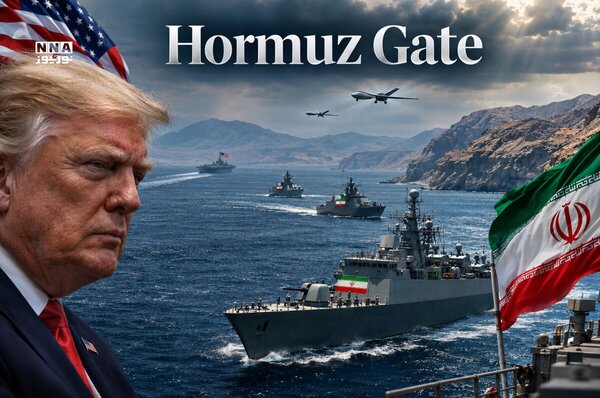
What can be called “Hormuz Gate” is not merely a crisis in the region’s military and maritime dynamics, but a series of economic, energy-related and political consequences that have extended to the US and affected the Trump administration’s electoral calculations.
In his remarks on the reasons behind the Republicans’ defeat, Trump claimed that people supported his actions regarding Iran but were probably unprepared to endure their short-term consequences, particularly having to pay more for petroleum.
However, he emphasized that his administration’s achievements regarding Iran were important from the American public’s point of view.
Trump has taken this position at a time when rising energy costs, concerns over continued disruptions in the oil market and the economic effects of regional tensions have been among the main criticisms of US foreign policy.
Hormuz Gate: A Cost Beyond War
Trump’s admission is important because he has linked his administration’s policies regarding Iran to the electoral costs borne by Republicans.
As a result, the Iran issue is no longer merely a national security and foreign policy issue in the US. It has also become an influential factor affecting voters’ livelihoods and the ruling party’s standing, and has emerged as one of the most important issues in US domestic politics.
However, Trump has also spoken about whether he intends to change this approach. He has announced that the US currently has no plan for an immediate attack on Iran but has not ruled out the possibility of taking other measures.
Trump told Politico that his decision would serve US interests in the long term, adding that Washington would assess whether another war was necessary.
He made it clear that the US mission in Iran had not yet ended and that either the current mission would continue or another measure would be taken.
Admitting Failure Without Changing Course
All these remarks highlight a major contradiction: Trump acknowledges the impact of the Iran issue and the costs resulting from it on the Republicans’ defeat, but, on the other hand, continues to speak about the continuation of the US mission and the possibility of military action.
Under such circumstances, Hormuz Gate has become a symbol of the political and economic costs of the US conflict with Iran — a crisis whose implications have extended beyond rising fuel prices and economic pressure and have directly affected the US elections.
Now, the main question is whether Trump’s admission of the electoral costs of the Iran issue will lead to a revision of policy at the White House, or whether he intends to continue along the same path of confrontation and pressure, despite the experience demonstrating its high costs, while rejecting Congress’s decisions through a hesitant response.