Nournews: The U.S. war against Iran, alongside its military and geopolitical consequences, has created a striking equation in the American economy—one in which major oil companies have posted extraordinary profits on one side, while ordinary Americans have faced a sharp rise in living costs on the other. A report published by The New York Times on October 30, 2026, shows that rising energy prices and disruptions to global supplies of crude oil and refined petroleum products have created a major economic opportunity for parts of the U.S. oil industry.
According to the report, more than 50 major U.S. oil and gas companies, most of them involved in oil production or refining, earned a combined profit of about $132 billion between April and September 2026. The figure is a conservative estimate, as it does not include potential profits from March—the first month of the war—or October. The calculations were based on company performance, data from S&P Global Market Intelligence, and analysts’ estimates compiled by FactSet.
A comparison with the performance of the same companies during the corresponding period in 2025 puts the scale of the profit surge into sharper perspective. Between April and September last year, they reported less than $47 billion in profits, meaning that this year’s profits have nearly tripled.
An examination of quarterly profits in the U.S. oil industry between 2021 and 2026 also shows that corporate profitability peaked following Russia’s invasion of Ukraine in 2022 before entering a downward trend. Profits declined in 2023 and 2024 and rose slightly in 2025. But with the outbreak of the Iran war in 2026, the two red bars representing the quarters under review show an unprecedented surge, with estimated combined profits for the two quarters reaching $132 billion. The vertical scale of the chart measures quarterly profits in billions of dollars, at levels of $10 billion, $30 billion, $50 billion and $70 billion.
The surge has not been driven solely by higher crude oil prices. U.S. refineries, in particular, have benefited from wartime conditions, as damage to fuel-production facilities in West Asia and Russia has reduced global refining capacity and sharply increased the profit margins of refineries that have remained operational. At the same time, U.S. producers have earned more from higher oil prices without having to bear the risks and operational costs of working in war zones.
The performance of major companies also confirms this trend. ExxonMobil and Chevron, two U.S. oil giants, reported their highest quarterly profits in recent years in their third-quarter 2026 financial results. Exxon’s profit more than doubled, while Chevron’s nearly tripled.
Yet the average U.S. oil price between April and September this year stood at around $90 a barrel, compared with roughly $100 during the same period in 2022 following the outbreak of the war in Ukraine. The comparison suggests that this year’s surge in profitability has not simply been the result of historically high oil prices, with wider refining margins also playing a significant role.
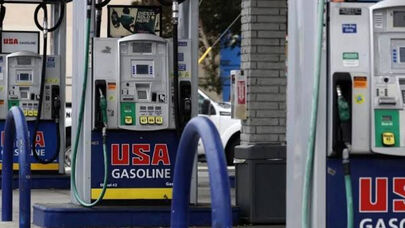
On the other side of the equation, however, American consumers have faced a heavy bill. According to an analysis by Brown University’s Climate Solutions Lab, the additional amount paid by U.S. consumers for gasoline and diesel since the start of U.S. and Israeli attacks on Iran on February 28, 2026, through the week ending with the publication of the report, had reached about $147 billion. The average additional cost for each American household is estimated at more than $1,100.
These costs are not limited to what consumers pay at the pump. Higher diesel prices, given diesel’s role in road transportation, shipping and energy production, can also raise the cost of transporting goods and services—and ultimately increase the price of everyday household purchases.
Taken together, these figures paint a clear picture of the uneven distribution of the war’s benefits and costs: major oil companies are profiting from disruptions in the global energy market, while ordinary citizens in the United States and Europe are paying the direct and indirect price. In this way, a war whose costs are being passed on to economies and people’s livelihoods has become an unprecedented opportunity for some major energy companies to accumulate profits.