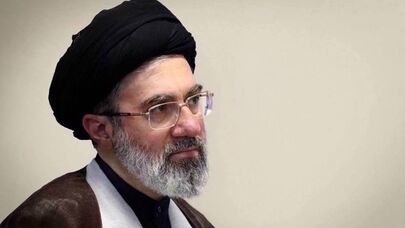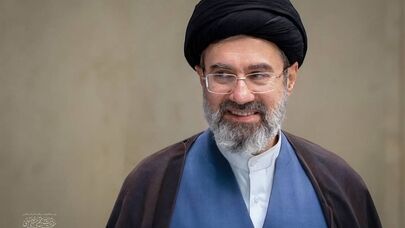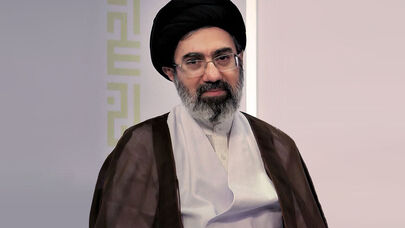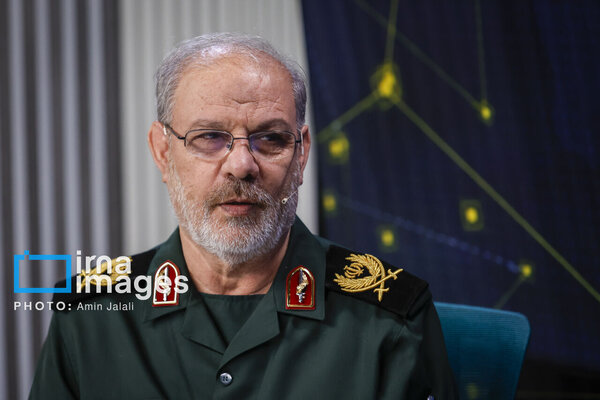
Addressing a ceremony of an IRGC security unit in Kerman Province on Sunday, Brigadier General Hossein Mohebbi welcomed the order from Commander-in-Chief Ayatollah Sayyid Mojtaba Hosseini Khamenei to senior military commanders on countering aggressors.
Stating that the Leader's directives have “opened a new chapter in the war,” he said the Iranian Armed Forces are now more prepared than before to deliver a decisive response to the enemy.
Mohebbi added that the IRGC has already placed the identification of new targets and the planning of operations across new geographical areas on its agenda.
Iran is engaged in a battle with one of the world's most militarily powerful nations which, he noted, in collusion with the vilest terrorist entity—the Zionist regime—waged wars against the Iranian nation.
What matters most, however, he continued, is Iran's victory over the aggressors, a reference to the two wars imposed by the US and the Israeli regime over the past two years. “Our victory lay in preventing the enemy from attaining its objectives,” he added.
Referring to the US pretexts for its presence in the region, he said Washington's justification of providing security proved futile as it failed to keep the Strait of Hormuz open—even for a few days or a few hours—despite possessing the world's largest navy.
Pointing to the strategic defeat for the United States, he said the American doctrine was to secure its own interests by establishing numerous bases and deploying weaponry, but the entire world realized that the US does not possess an impenetrable, high-tech intelligence system to secure its allies.
He also taunted the US claim of technology inaccessible to any other nation and beyond the reach of any arms, saying the most advanced aerial technology, embodied in F-35 aircraft, was brought down and the most sophisticated underwater technology was snared as easily as catching a fish, and so were the ground-based systems, including Patriot missiles.
Mohebbi underscored that yet another strategic defeat for the US was in the economic sphere, as Washington had long made a habit of offloading the costs of war onto other nations; however, in this conflict, it was the American economy that suffered the most severe damage.