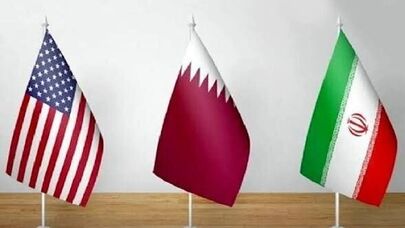
Nournews: Qatar’s latest trip to Tehran should be viewed as part of a series of diplomatic moves pursued in recent days to prevent a further escalation of the military confrontation and explore the possibility of reaching an agreement between Iran and the United States. The visit comes after Qatar, within a short period, both delivered a message from Washington to Tehran and put forward proposals aimed at establishing a framework for ending the war.
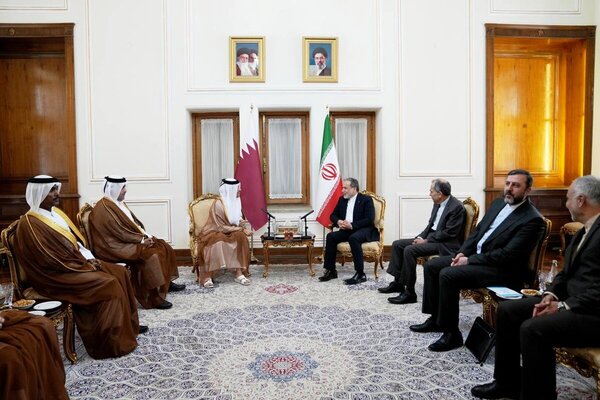
According to published reports, a high-level Qatari delegation arrived in Tehran on Friday morning, the eighth day of Aban, to hold talks with senior officials of the Islamic Republic of Iran on bilateral relations and the latest regional developments. The visit came after Reuters had reported that Qatari mediators were returning to Tehran in coordination with Washington as part of efforts to reach an agreement.
The significance of the mission becomes clearer when viewed alongside the Qataris’ previous visit and their delivery of a letter from JD Vance, the U.S. vice president, to Mohsen Rezaei, secretary of Iran’s Supreme National Security Council. Donald Trump has confirmed that the letter was sent and that he approved the communication, but claimed that it concerned the provision of medical equipment and supplies to Iran. The New York Times and The Wall Street Journal, however, have reported that the letter was related to exploring the possibility of resuming negotiations and reaching a framework for an agreement between Tehran and Washington.
Reports have also emerged that Vance is prepared to hold direct talks with Iranian officials and that a meeting could potentially take place in Doha or Istanbul. So far, however, neither such a meeting nor an agreement on its timing and the composition of the negotiating delegations has been officially confirmed.
Qatar’s Proposal: The First Test for a Deal
Another important aspect of the recent diplomatic activity is a seven-day proposal that, according to Reuters, Qatar presented during its previous visit to Tehran. The proposal was aimed at creating a period of confidence-building and laying the groundwork for an agreement between Iran and the United States, with reciprocal steps by the two sides to be taken within a specified timeframe.
The response from Iranian officials, however, suggests that Tehran has serious reservations about the initial proposals. One Iranian official described them as unacceptable and stressed Iran’s determination to maintain its positions on the nuclear issue. From this perspective, Qatar’s new mission could be seen as an effort to bring the two sides’ positions closer together and explore the possibility of revising the earlier proposals.
The Main Dispute: The Blockade or the Nuclear Issue?
Reuters has reported a fundamental disagreement between Tehran and Washington over where negotiations should begin. The United States wants Iran’s nuclear program to be on the agenda from the outset, while Tehran insists that the naval blockade, restrictions on oil exports and U.S. economic pressure must be addressed before any new talks begin.
The dispute shows that the issue is not simply whether the two sides will return to the negotiating table. They also differ over the sequencing of steps and the nature of any potential agreement. Washington is seeking to address the nuclear issue, while Tehran does not want to enter negotiations under continued military and economic pressure when the outcome could already be shaped by unilateral U.S. demands.
From this perspective, one of the Qatari delegation’s key tasks may be to obtain Tehran’s response to Vance’s letter and convey Iran’s views on the initial conditions for negotiations to Washington. Details of the delegation’s talks and the outcome of its meetings, however, have not yet been officially released.
Regional Diplomacy Alongside the Washington Channel
Qatar’s diplomatic activity in Tehran is also notable amid increased regional consultations. Visits by Saudi, Pakistani and Turkish officials to Tehran, as well as a meeting between Iranian President Masoud Pezeshkian and Qatar’s Emir Sheikh Tamim bin Hamad Al Thani on the sidelines of the Moscow summit, suggest that efforts to manage the crisis are not limited to direct contacts between Tehran and Washington.
Qatar, meanwhile, is well positioned to deliver messages and facilitate dialogue because of its close ties with the United States and its political relations with Iran. The repeated visits by Qatari officials to Tehran also indicate that Doha is actively pursuing this diplomatic track—one that could, with the involvement of other regional countries, help create conditions for reducing tensions.
At the same time, Donald Trump’s continued military threats and reports that new options for attacking Iran are being considered indicate that diplomacy is still being pursued alongside the option of military pressure. This makes it all the more important to distinguish between declarations of readiness for negotiations and a genuine agreement on the terms of those negotiations.
What Will Tehran’s Response to Washington Be?
Taken together, recent developments suggest that Vance’s letter, Qatar’s new proposal and the return of the country’s mediation delegation are interconnected parts of a diplomatic effort to prevent the crisis from entering a new phase. Even so, it is still too early to speak of an agreement taking shape—or even of the definite start of formal negotiations.
The key question is how far Washington is prepared to go in accepting Iran’s demands and changing an approach based on pressure and preconditions. Tehran, for its part, must determine under what arrangements it would be willing to enter negotiations and what guarantees it considers necessary to prevent a renewed military confrontation.
Under these circumstances, the Qatari delegation’s second visit is more than a routine bilateral consultation. It is a test of whether the current deadlock can be overcome. The central question is whether Doha can turn the current diplomatic process into the starting point for a practical agreement, or whether disagreements over the blockade, the Strait of Hormuz and the nuclear issue will continue to prevent the two sides from returning to the negotiating track.