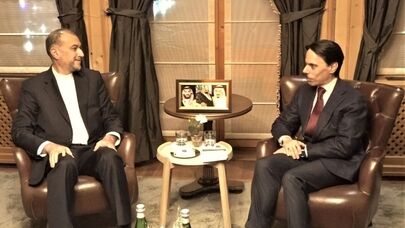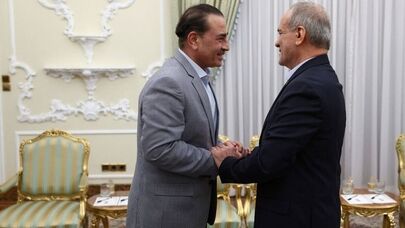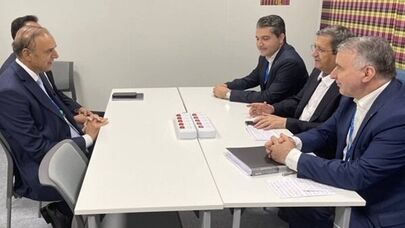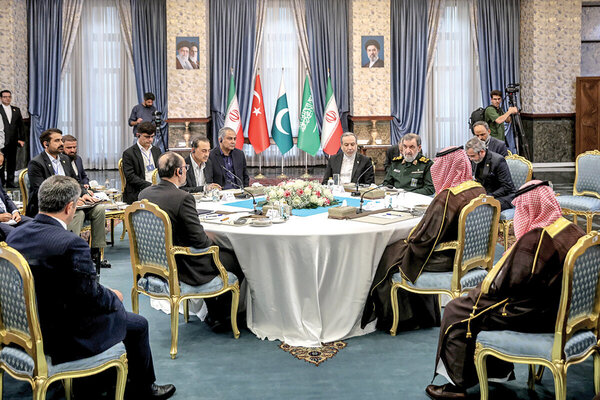
The simultaneous arrival in Tehran on Monday, October 26, of Saudi Defense Minister Khalid bin Salman, Pakistan’s army chief Asim Munir and Türkiye’s intelligence chief Ibrahim Kalin quickly turned from a diplomatic news story into a major issue in Iran’s political landscape and beyond. In Tehran, Khalid bin Salman, Asim Munir and Ibrahim Kalin met with senior officials of the Islamic Republic, including Masoud Pezeshkian, Mohsen Rezaei and Abbas Araghchi. The significance of this lineup lay not only in the seniority of the officials involved. All three countries had recently signed a joint defense agreement known as the Mecca Pact, and this was the first high-level contact between Iran and all three members of the pact since the regional war intensified.
The significance of the meeting was such that, immediately after it took place, two sharply different overarching interpretations emerged inside the country. One view sees the Tehran meeting as a sign that regional diplomacy is becoming more active and that regional countries are, in practice, acknowledging the necessity of Iran’s participation in future security arrangements. Another takes a skeptical view of the three countries, interpreting their presence in Tehran as an attempt to constrain Iran’s leverage, particularly in relation to the United States and the Yemen front. Each of these perspectives also encompasses more specific currents of thought that are worth examining and categorizing.
What Did Domestic Voices Say, and How Did They Analyze the Meeting?
- The Official Narrative: “Regional Security Is Impossible Without Iran”
Iran’s official narrative was built from the outset around the concept of “endogenous security.” Ali Bagheri Kani, Deputy Secretary of the Supreme National Security Council, announced that the proposal to hold the meeting had been raised during Asim Munir’s visit to Tehran the previous week, and that its purpose was to consult on regional security. Foreign Ministry spokesman Esmaeil Baghaei also described the meeting as an opportunity to develop a regional security mechanism based on the interests of regional countries. In this narrative, more important than the meeting’s immediate outcome was the fact that officials from the three countries belonging to the Mecca Pact had come to Tehran. In other words, Tehran wants to demonstrate that even under military pressure and with the possibility of renewed war, regional countries must engage with Iran to ensure their own security.
Mohsen Rezaei also spoke of a “positive atmosphere” in the talks after the meeting and stressed that a new regional dynamic was taking shape. The final statement, however, was highly cautious: the four countries agreed only to continue dialogue to strengthen cooperation on regional peace and security, and announced no specific agreement on the war, Yemen, the Strait of Hormuz or the nuclear issue.
- Pro-Diplomacy Voices: “Tehran Is Back at the Center of Regional Affairs”
A significant segment of the media and analysts close to the government and the reformist camp viewed the meeting positively. In its edition published today, the newspaper Iran chose the headline “Never Without Iran” for its coverage. Its central argument is that the presence of officials from the three countries in Tehran, at a time when the region is caught between the threat of war and diplomatic efforts, shows that no regional order can be conceived without Iran’s participation.
Within the same camp, Hassan Beheshtipour analyzed the meeting in terms of the possibility of establishing a new regional security order. In an article that was circulated by Khabaronline and on social media, he stressed that an immediate new order should not be expected to emerge from the meeting, but argued that the four countries’ agreement to hold talks under such circumstances was significant in itself. Beheshtipour also emphasized that “diplomacy” and “defense readiness” are not necessarily in conflict. This perspective can be summed up in one sentence: the Tehran meeting is not a final outcome, but a test of whether a regional security architecture can be built without foreign powers monopolizing power.
- The Analytical and Moderate View: “The Meeting Matters, but Its Purpose Remains Unclear”
In a report titled “Behind Closed Doors at the Tehran Meeting,” the newspaper Donya-ye Eqtesad adopted a more cautious approach. Its central question was whether regional countries could agree on a common framework for containing crises, one in which regional dialogue and cooperation would play a greater role in providing security.
From this perspective, the main issue is neither “Iran’s diplomatic victory” nor a “deception operation,” but what was actually discussed behind closed doors in Tehran. Was a message or proposal concerning Iran-US negotiations presented? Was the goal to manage the Yemen crisis? Did the three countries come to persuade Tehran to change some of its positions, or are they genuinely seeking to establish a new security mechanism? These analyses deliberately avoid premature judgments and defer conclusions about the meeting’s significance until its subsequent results become clearer.
4. The Moderate Principlist Camp: “A Diplomatic Opportunity, but From a Position of Strength”
Media outlets representing moderate Principlists and those close to the official establishment largely welcomed the meeting, while stressing that the talks should not be interpreted as a retreat by Iran. In its report, Tasnim framed the meeting around the idea that the recent war had shown that regional security could be ensured only with the participation of regional countries. The outlet also emphasized that the meeting had been held at Pakistan’s proposal and with Iran’s agreement. From this perspective, the presence of Saudi Arabia, Türkiye and Pakistan in Tehran could be interpreted as a sign of Iran’s growing weight in the regional security equation, rather than necessarily as an indication that Tehran was moving closer to the positions of those three countries.
5. Kayhan and the Hardline Camp: “Water or Mirage?”
By contrast, the sharpest attack came from Hossein Shariatmadari and the newspaper Kayhan. In an article titled “The Tehran Summit: Water or Mirage?”, Shariatmadari questioned why Türkiye, Saudi Arabia and Pakistan should be regarded as credible mediators between Iran and the United States when all three countries maintain strategic ties with Washington. He also pointed to their positions during the war and their relations with the United States and Israel, expressing doubts about the real purpose of their visit. The central focus of Kayhan’s criticism, however, was Yemen and the Houthis. Shariatmadari is concerned that cooperation with countries belonging to the Mecca Pact could lead to pressure on Iran to distance itself from the Houthis. He has stated explicitly that Tehran will not abandon its support for them.
One notable aspect of Kayhan’s argument is that the newspaper simultaneously views the foreign delegations’ presence in Tehran as evidence that pressure from Iran has been successful, while warning that negotiations could eliminate that very leverage. Its logic, therefore, is that if Iran’s pressure brought these countries to Tehran, it should not surrender the leverage gained through that pressure at the negotiating table. This position reflects a broader divide within the Principlist camp over a strategic question: should the leverage created during the war be used to secure an agreement, or should maintaining pressure itself remain the primary objective?
6. Farhikhtegan: “Iran Must Be Part of the New Security Equation, but Not at the Cost of Limiting Its Response”
The newspaper Farhikhtegan has taken a position different from Kayhan’s, while continuing to emphasize deterrence. Its headline today rests on the idea that if the Tehran meeting was held merely to limit Iran’s response in the event of a new war, it would have little value. If, however, it can consolidate Iran’s role in a new security equation, it becomes significant. In this view, regional cooperation is not rejected, but regional diplomacy must complement deterrence rather than replace it.
7. Social Media: From a “New Order” to Doubts About the Meeting’s Real Mission
Social media reflected much the same divide seen in the media. Analyses aligned with the diplomatic approach focused primarily on the fact that, for the first time, three countries belonging to a defense pact ostensibly formed in response to regional threats had come to Tehran. This, they argued, was itself a sign of Iran’s importance in any future arrangements.
By contrast, some Principlist and anti-diplomacy accounts raised other questions: Why should Saudi Arabia engage with Iran amid Houthi attacks? Was the simultaneous presence of three military and security officials intended to convey a message from the United States? And should Tehran not wait for practical action from the other side before making concessions? Meanwhile, posts discussing Hassan Beheshtipour’s analysis also gained attention. He characterized the meeting not as a definitive “new order,” but as a test of whether such an order could emerge. The domestic debate can therefore be summarized in three main camps:
A) Diplomatic welcome: The meeting is a sign that efforts to exclude Iran from regional affairs have failed.
B) Conditional welcome: Dialogue is welcome, but only if conducted from a position of strength and with deterrence maintained.
C) Strategic skepticism: The three countries belonging to the Mecca Pact cannot be neutral mediators, and their main objective may be to constrain Iran’s leverage.
How Did Foreign Voices Analyze the Meeting?
Outside Iran, the Tehran meeting also prompted several different interpretations, but there is one important distinction: a significant portion of the foreign media has focused less on the prospect of a “new regional order” and more on whether the meeting could prevent another round of war involving Iran, the United States and Israel.
1. American and Western Media: “An Effort to Prevent the Next War”
Reuters primarily described the meeting as an effort to reduce tensions and prevent the war from escalating again. The news agency reported that discussions covered a regional non-aggression mechanism, the resumption of Iran-US negotiations, Houthi attacks on Saudi Arabia and disruptions in the Strait of Hormuz. Reuters also referred to a possible proposal put forward by Pakistan to bring Tehran and Washington closer together, under which members of the Mecca Pact and Qatar could serve as guarantors
The Washington Post also analyzed the meeting against the backdrop of concerns about a possible resumption of US and Israeli attacks, presenting it as an effort to reduce tensions. In this account, Tehran became the venue for diplomatic consultations held amid growing concerns about a new attack. The Financial Times likewise viewed the meeting as part of efforts by Qatar and Pakistan to reach an interim agreement. Some reports have suggested that such an agreement could involve reopening the Strait of Hormuz in exchange for reduced US pressure and Iran’s access to financial resources.
As a result, much of the Western media has portrayed Tehran primarily as the site of last-ditch diplomatic efforts ahead of a possible return to war.
2. Al Jazeera and Arab Media: The Main Issues Are Gulf Security and Yemen
Al Jazeera placed greater emphasis on Saudi Arabia’s direct interests. In its account, Houthi attacks on Saudi Arabia and security threats against Riyadh were among the main reasons for the Saudi delegation’s presence in Tehran. This interpretation is consistent with Saudi Arabia’s own official account. Raed Kremli, Saudi deputy foreign minister, wrote on X that the visit by the delegation of countries belonging to the Mecca Pact was part of efforts to reduce tensions, advance diplomatic solutions and support mediation by Qatar and Pakistan. The Saudi position, therefore, cannot be understood solely as “mediation between Iran and the United States”; Saudi Arabia’s own security and the Houthi attacks are also central to Riyadh’s calculations.
3. Turkish Media: Emphasis on “Regional Security”
Turkish media outlets generally viewed the talks positively. Anadolu Agency, Hürriyet, Yeni Şafak, Daily Sabah and Habertürk emphasized concepts such as regional security, dialogue, Islamic cooperation and de-escalation. Some highlighted Pezeshkian’s remarks on cooperation among Muslim countries and the need to strengthen regional security and development. This approach is also consistent with Ankara’s broader policy: Türkiye is a member of the Mecca Pact, but it does not want Iran to be excluded from regional security arrangements.
4. Pakistan: Tehran as Part of the Mediation Process
In Pakistani media, the meeting’s significance stems above all from Asim Munir’s role and Islamabad’s mediation efforts. The Pakistani newspaper The Express Tribune reported that the meeting had been held at Asim Munir’s proposal and that, although no specific agreement had been reached, the four countries’ decision to continue dialogue was highly significant. The newspaper stressed that the meeting had announced no new agreement on a ceasefire, Yemen or the Iran-US crisis. From this perspective, Pakistan is seeking to consolidate its position as a regional mediator between Tehran, Riyadh and Washington.
5. Russia: The Meeting’s Geopolitical Significance
Moscow also took note of the meeting. Mikhail Ulyanov, Russia’s representative, said in response to the Tehran meeting that the significance of this development could not be underestimated. This brief reaction does not, unlike some media analyses, amount to Russian support for any specific proposal. It does, however, indicate that Moscow is also monitoring the meeting of the four countries in the context of possible changes to regional security arrangements.
6. An Important Concurrent Development: Oman’s Proposal for Regional Security Without US Leadership
One of the most significant foreign policy positions expressed around the time of the Tehran meeting came from Omani Foreign Minister Badr Albusaidi. He proposed a non-aggression pact among the six members of the Gulf Cooperation Council, Iran and Iraq, arguing that regional countries should assume greater responsibility for their own security and that the United States should no longer be the region’s principal security provider.
This position is particularly significant because it suggests that an idea Tehran has advocated for years, namely “regional security without the presence of foreign powers,” is now being discussed more seriously than before in some Arab capitals. A report by The Guardian, however, notes that many regional countries remain skeptical of such a pact because of the damage caused by attacks from Iran and forces aligned with it.
- Israel and Pro-Israeli Media: The Meeting Against the Backdrop of a Possible New War
Israeli media largely viewed the Tehran meeting not as a positive security agreement, but as part of regional countries’ efforts to manage the consequences of the war and their concerns about another round of conflict. The Times of Israel described the meeting as the first high-level contact between Iran and all three members of the Mecca Pact since the crisis escalated, while also emphasizing the continuation of Houthi attacks and regional security pressures. From this perspective, the meeting’s significance for Israel largely comes down to one question: if a new round of war begins, will regional countries be willing to stand alongside the United States and Israel, or will they seek to contain the crisis through negotiations?
One Meeting, Multiple Narratives
A review of positions expressed over the past two days shows that the significance of the Tehran meeting extends beyond its formal, one-day outcome. The official result was limited: the four countries agreed to continue discussions on regional peace and security. But the seniority of the delegations and the timing of the meeting have led each political camp to interpret it through its own strategic narrative.
Inside Iran, the main divide concerns the question of how regional diplomacy should relate to deterrence and the leverage created during the war. Kayhan is concerned about losing that leverage and limiting Iran’s support for the Houthis. Pro-diplomacy groups, by contrast, see the meeting as an opportunity to consolidate Iran’s role in future security arrangements. Between these positions is a camp that considers the meeting important but regards conclusions about its real objectives as premature.
Outside Iran, the question is somewhat different: can the Tehran meeting prevent a return to war? American and European media have largely approached the issue from this perspective. Saudi Arabia has placed the Yemen attacks and its own security at the center of its concerns; Pakistan has emphasized its mediating role; Türkiye has focused on regional security and dialogue; and Oman has gone further by proposing a broader security architecture involving Iran, Iraq and the Gulf countries.
Overall, perhaps the most important point is that none of the four countries has yet announced a new security agreement. For now, the meeting has created a “channel,” not a “security system.” Yet that channel is politically and geopolitically significant, particularly at a time when the risk of renewed war has increased and three countries belonging to the Mecca defense pact have found it necessary to come to Tehran to hold talks with Iran.